
Can Dogs Eat Strawberry Ice Cream
If you’re enjoying a bowl of strawberry ice cream on a warm afternoon, it’s only natural to wonder whether your dog can have a spoonful too. After all, strawberries are safe for dogs, so strawberry ice cream should be fine, right?
Unfortunately, it’s not quite that simple.
Dogs can eat a very small amount of strawberry ice cream, but it’s not a treat that veterinarians generally recommend. While strawberries themselves are safe for most dogs, traditional strawberry ice cream contains ingredients that can cause digestive upset and other health problems.
The good news is that there are plenty of healthier frozen alternatives that allow your dog to enjoy the flavor of strawberries without the extra sugar, fat, and dairy.

This post may contain affiliate links. Please read my disclosure policy for more information.
Quick Answer: Can Dogs Eat Strawberry Ice Cream?
| Question | Answer |
|---|---|
| Is strawberry ice cream toxic to dogs? | Usually no |
| Is it healthy for dogs? | No |
| Can dogs have a small lick? | Generally yes |
| Should dogs eat it regularly? | No |
| Are homemade frozen strawberry treats better? | Absolutely |
A small lick is unlikely to harm most healthy dogs, but strawberry ice cream shouldn’t become a regular part of your dog’s diet.
Why Strawberry Ice Cream Isn’t the Best Treat for Dogs
1. Most Dogs Struggle to Digest Dairy
One of the biggest concerns with strawberry ice cream is the dairy content.
Puppies naturally produce large amounts of lactase, the enzyme needed to digest their mother’s milk. As dogs mature, many produce much less of this enzyme, making them partially or completely lactose intolerant.
When lactose-intolerant dogs eat ice cream, they may experience:
- Gas
- Bloating
- Diarrhea
- Stomach pain
- Vomiting
Some dogs can tolerate small amounts of dairy, while others react after only a few licks.
2. Strawberry Ice Cream Is High in Sugar
Even though strawberries contain natural sugars, commercial strawberry ice cream usually contains far more added sugar than fresh fruit.
Too much sugar can contribute to:
- Weight gain
- Obesity
- Dental problems
- Increased diabetes risk
- Excess calorie consumption
Treats should make up no more than 10% of your dog’s daily calorie intake, and sugary desserts can quickly exceed that recommendation.
3. The Fat Content Can Be a Problem
Ice cream doesn’t just contain sugar. It’s also rich in fat.
High-fat foods can trigger digestive upset and, in some dogs, may contribute to pancreatitis, a painful inflammation of the pancreas. Dogs already at risk include those that are:
- Overweight
- Older
- Small breeds
- Prone to digestive issues
- Previously diagnosed with pancreatitis
Signs of pancreatitis include:
- Vomiting
- Loss of appetite
- Lethargy
- Abdominal pain
- Diarrhea
If your dog develops these symptoms after eating a large amount of ice cream, contact your veterinarian.
4. Some Ingredients Can Be Dangerous
Not all strawberry ice cream is made with just strawberries, milk, and cream.
Many commercial brands contain additional ingredients that can be harmful to dogs, including:
Xylitol
This artificial sweetener is extremely toxic to dogs and can cause:
- Rapid insulin release
- Low blood sugar
- Seizures
- Liver failure
Always check labels carefully, especially on “sugar-free” products.
Nuts
Some premium ice creams contain nut-based ingredients.
Macadamia nuts are toxic to dogs and should always be avoided.
Artificial Flavorings and Syrups
Many strawberry ice creams contain:
- Artificial colors
- Strawberry syrups
- Preservatives
- Flavor enhancers
These ingredients offer no nutritional benefit and can upset sensitive stomachs.
Are Strawberries Safe for Dogs?
Yes. Fresh strawberries are considered safe for most dogs when served in moderation. They contain:
- Vitamin C
- Fiber
- Antioxidants
- Potassium
- Manganese
Strawberries are also relatively low in calories, making them a much healthier option than strawberry-flavored desserts. Some evidence suggests that the antioxidants found in strawberries may help support immune health and healthy aging.
How Many Strawberries Can Dogs Eat?
A good guideline is:
| Dog Size | Suggested Serving |
| Extra small dogs (under 10 lbs) | ½ to 1 strawberry |
| Small dogs (10–20 lbs) | 1 strawberry |
| Medium dogs (20–50 lbs) | 2 strawberries |
| Large dogs (50–80 lbs) | 3 strawberries |
| Giant dogs (80+ lbs) | 4 strawberries |
Always wash strawberries thoroughly, remove the stem, and cut them into bite-sized pieces before serving.
What If My Dog Accidentally Ate Strawberry Ice Cream?
Don’t panic.
A few licks of regular strawberry ice cream will probably cause nothing more than mild stomach upset in most healthy dogs. However, monitor your dog closely for:
- Vomiting
- Diarrhea
- Excessive gas
- Loss of appetite
- Lethargy
- Weakness
Contact your veterinarian immediately if:
- Your dog ate a large amount
- The ice cream was sugar-free
- The ingredients included xylitol
- Your dog has diabetes
- Your dog has a history of pancreatitis
Even if symptoms seem mild at first, it’s always worth seeking veterinary advice if you’re concerned.
Healthier Alternatives to Strawberry Ice Cream for Dogs
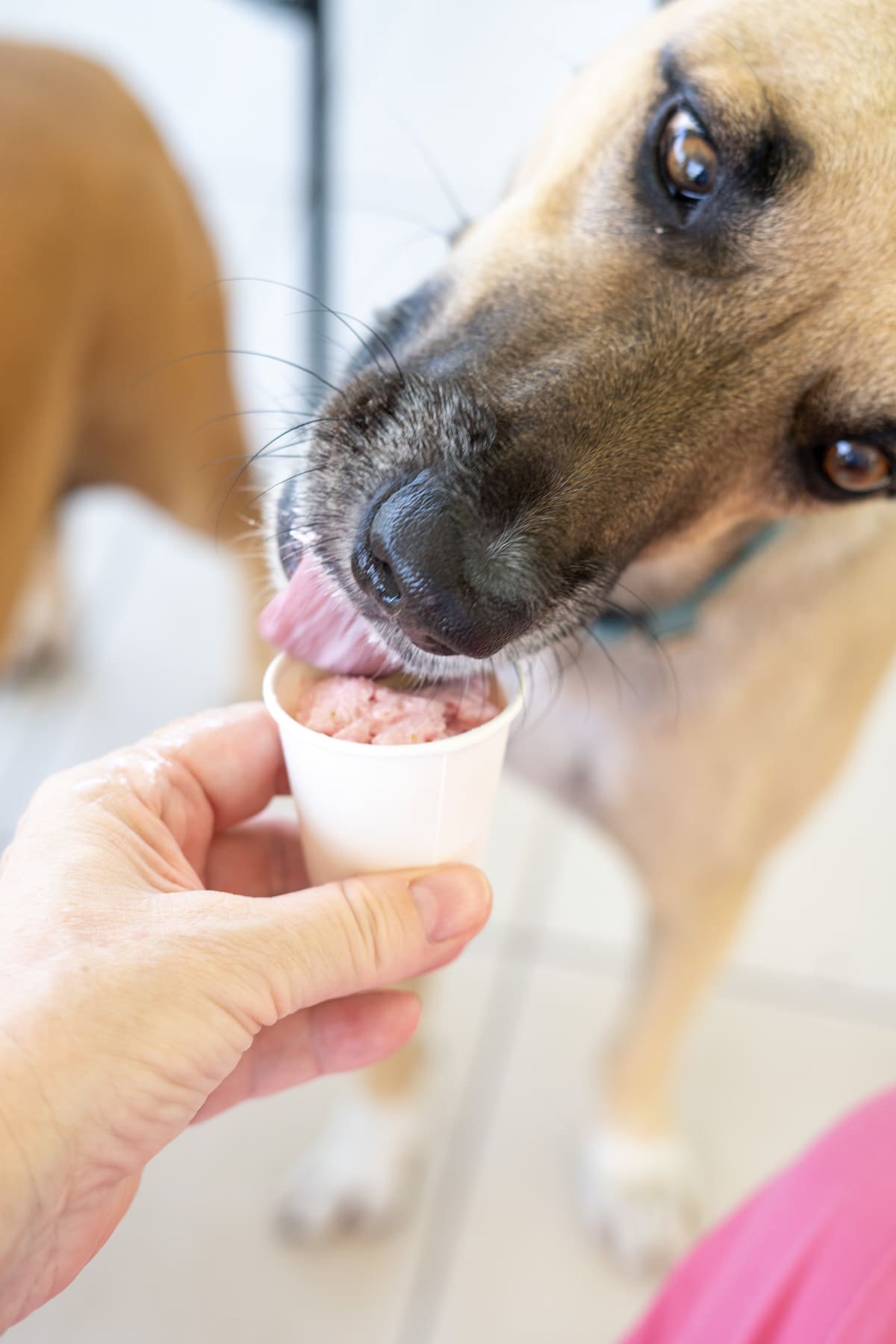
Instead of sharing your dessert, try these dog-friendly frozen treats and dog ice cream recipes.
Strawberry Banana Dog Ice Cream
Apple Strawberry Dog Ice Cream
Frozen Watermelon Strawberry Frozen Treats
We offer a guide on dog ice cream HERE.
FAQs
It’s best to avoid it. Fast-food ice cream is typically high in sugar, fat, and dairy.
No. Puppies have sensitive digestive systems, and sugary dairy products can easily upset their stomachs.
No. Sugar-free products may contain xylitol, which is highly toxic to dogs.
Plain, unsweetened yogurt is usually a better choice than ice cream, but strawberry-flavored frozen yogurt often contains added sugar and should still be limited.
Not necessarily. Sorbet contains less dairy, but it’s still very high in sugar.