
Egg Bites For Dogs
These cottage cheese egg bites for dogs are soft, tasty and easy to make with just two main ingredients. Eggs and cottage cheese are whisked together, poured into a silicone mini muffin tray and baked until gently set.
The basic recipe is delicious on its own, but you can also add finely chopped red bell pepper, spinach or canned sardines. Divide the mixture between several bowls before adding the extras, and you can bake a selection of flavors in the same tray.
These mini egg bites can be served as an occasional breakfast addition, a high-value reward or a small snack. Their soft texture also makes them suitable for many senior dogs and dogs that find crunchy biscuits difficult to chew. All of our dogs loved these egg bite treats, although they are a big fan of egg dishes. We add a couple to their morning breakfast bowl as a treat.

This post may contain affiliate links. Please read my disclosure policy for more information.
Are Egg Bites Good for Dogs?
Cooked eggs can be a useful addition to a dog’s diet. They provide high-quality protein along with fat, vitamins and minerals. Eggs also contain nutrients such as vitamin B12, riboflavin, selenium and choline.
Dogs should be given fully cooked eggs without added salt, butter or seasoning. Although some people feed raw eggs, cooking reduces the risk of exposure to bacteria such as Salmonella.
Eggs are beneficial ingredients, but an egg by itself does not constitute a complete meal. These bites should be offered as treats, toppers or occasional additions to an otherwise complete and balanced diet.
Why Your Dog Will Love These Egg Bites
- Eggs and cottage cheese give the bites a naturally rich, savory aroma.
- Their soft texture makes them suitable for puppies, older dogs and dogs that struggle with crunchy treats.
- The miniature size is convenient for portioning and training.
- They can be broken or crumbled over your dog’s regular food.
- Red bell pepper, spinach and sardines let you offer different flavors from the same batch.
- They contain no flour, making them a useful option for dogs that cannot tolerate certain grains.

Is One Egg a Day Too Much for a Dog?
Whether one egg a day is too much depends on the dog’s size, health, activity level and regular diet. One large egg contains approximately 70–75 calories, which can be a substantial extra for a small dog but a relatively modest amount for a large, active dog.
For example, if a small dog needs around 250 calories a day, one 70-calorie egg would provide more than a quarter of its daily calories. That is too much to add as a treat without reducing another part of the diet. The same egg would represent a much smaller portion of a large dog’s daily energy needs.
The familiar guideline that treats and extras should provide no more than about 10% of a dog’s daily calories is helpful here. Based on that guideline, a whole egg every day is usually more appropriate for a larger dog than for a small one. Smaller dogs may do better with part of an egg or one small egg bite.
A daily egg may also be unsuitable for dogs that:
- Need to lose weight
- Have pancreatitis or require a low-fat diet
- Have a health condition requiring a controlled diet
- Are already eating several treats or table-food additions
- Have a known sensitivity to eggs
If you want to add egg to your dog’s food every day, particularly for a small dog or one with a medical condition, ask your veterinarian how it fits into the dog’s total diet. The egg should be counted as part of the day’s calories rather than simply added on top.
Because this recipe divides four eggs between approximately 20–24 bites, each bite contains only about one-sixth to one-fifth of an egg before the cottage cheese and optional additions are considered.
For more information about portions, preparation and possible cautions, read our complete guide to scrambled eggs for dogs
Can Dogs Eat Cottage Cheese?
Many dogs can eat a small amount of plain cottage cheese. It adds protein, calcium and a creamy texture that helps keep these egg bites soft.
However, cottage cheese is a dairy product and contains some lactose. Dogs that are sensitive to dairy may experience gas, loose stools or an upset stomach. Introduce a small piece first if your dog has not eaten cottage cheese before.
Choose an unflavored cottage cheese without onion, garlic, herbs or other added seasonings. A lower-sodium variety is preferable because regular cottage cheese can contain a considerable amount of salt.
Ingredients
This recipe is simple with just 2 ingredients but can be tweaked with your own dog’s favorite additions. We have some variation suggestions below.
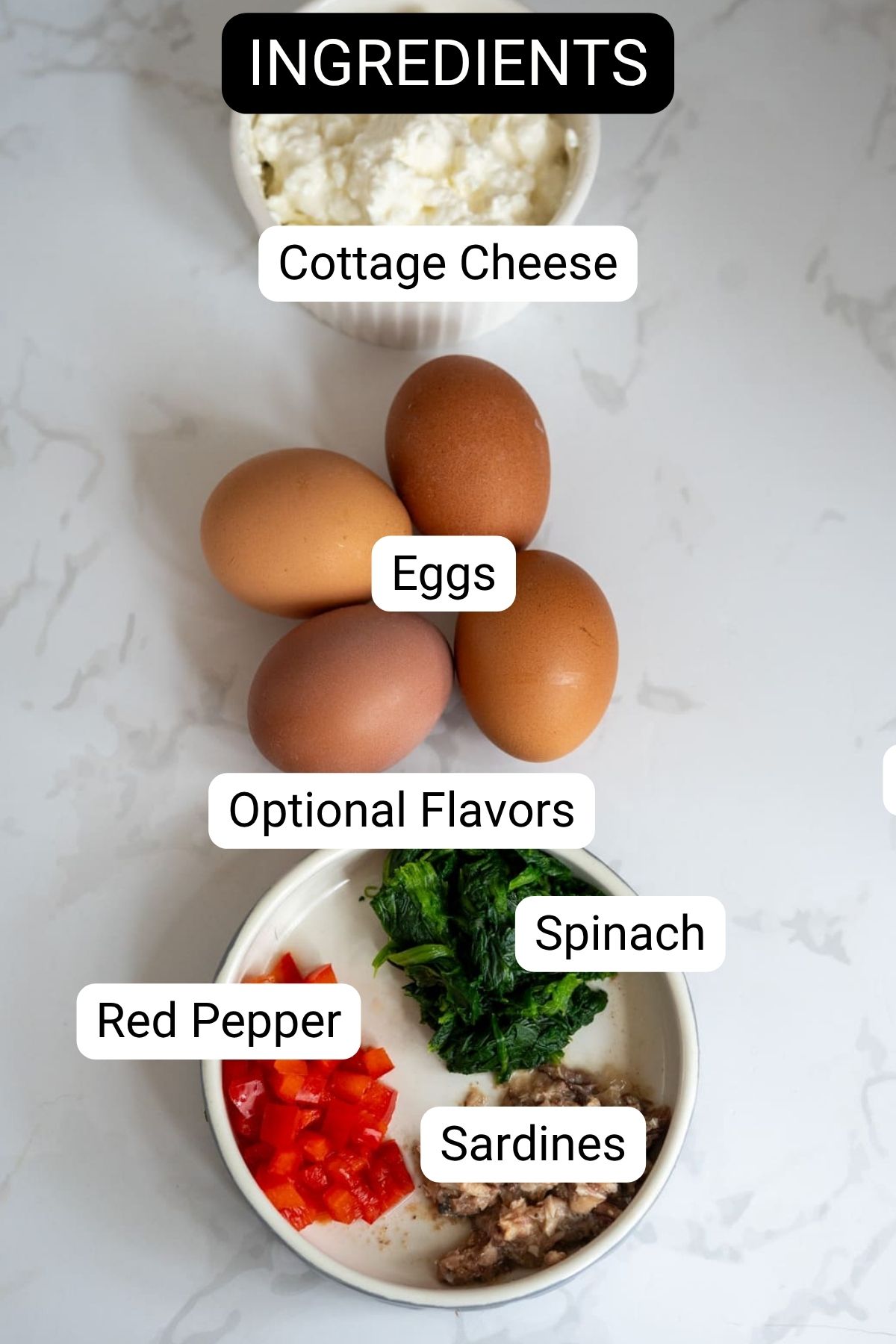
- Eggs: Provide high-quality protein, healthy fats and nutrients including vitamin B12, selenium and choline. They also help the bites hold their shape as they bake.
- Cottage cheese: Gives the egg bites a soft, creamy texture while adding protein and calcium. Choose plain, preferably lower-sodium cottage cheese without herbs or seasonings.
Optional flavor additions
- Red bell pepper: Adds natural sweetness, color and a slight crunch. Remove the seeds and white membrane, then chop it finely.
- Canned sardines: Add an irresistible savory flavor along with protein and beneficial omega-3 fatty acids. Use sardines packed in spring water with no added salt.
- Spinach: Adds color, fiber and small amounts of vitamins and minerals. Chop it finely and use it sparingly, especially for dogs with kidney problems or a history of calcium oxalate bladder stones.
How To Make Egg Bites For Dogs
This is an easy recipe to make. We use silicone molds but you could use an oiled muffin tin.
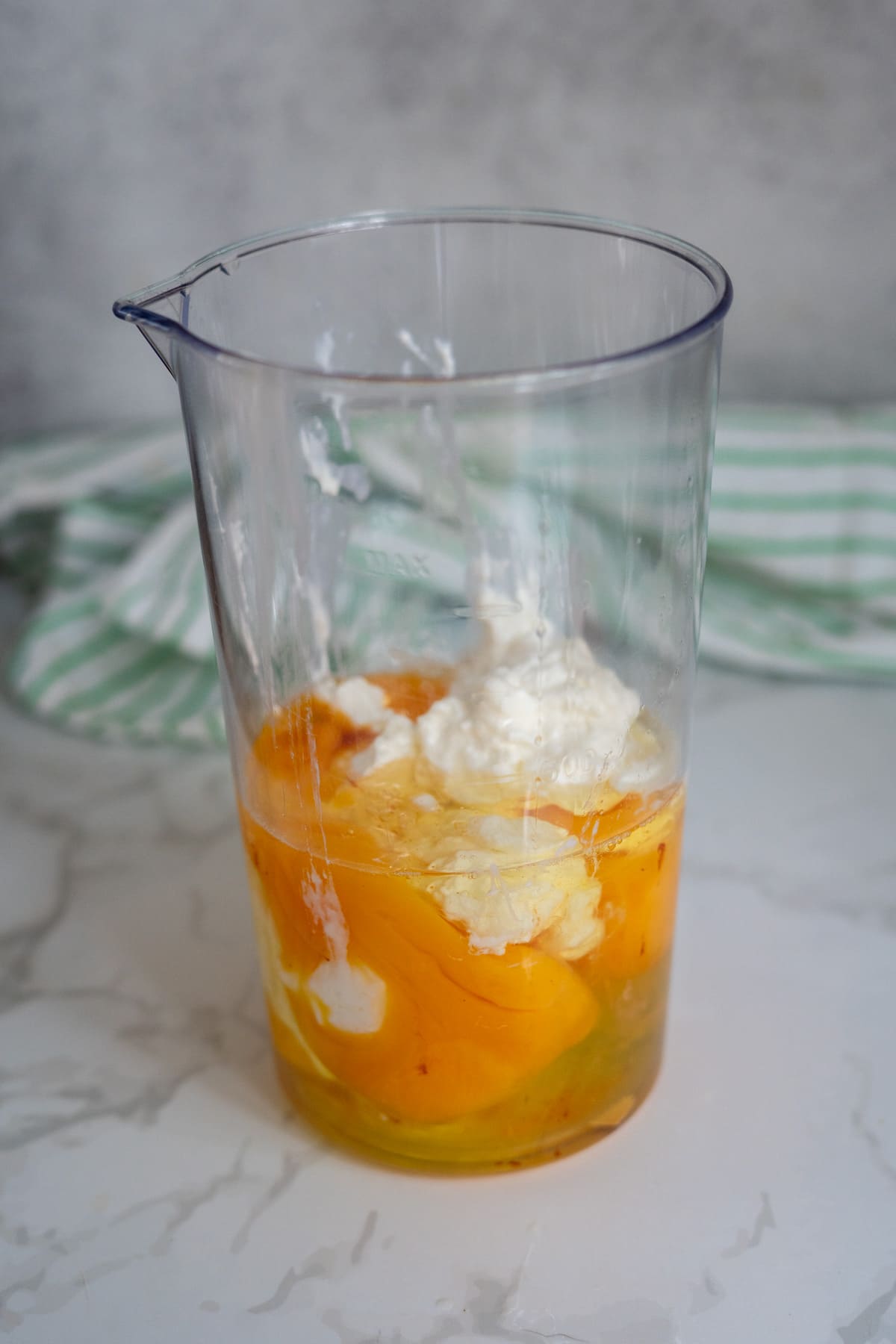
Add eggs and cottage cheese to a bowl or container.
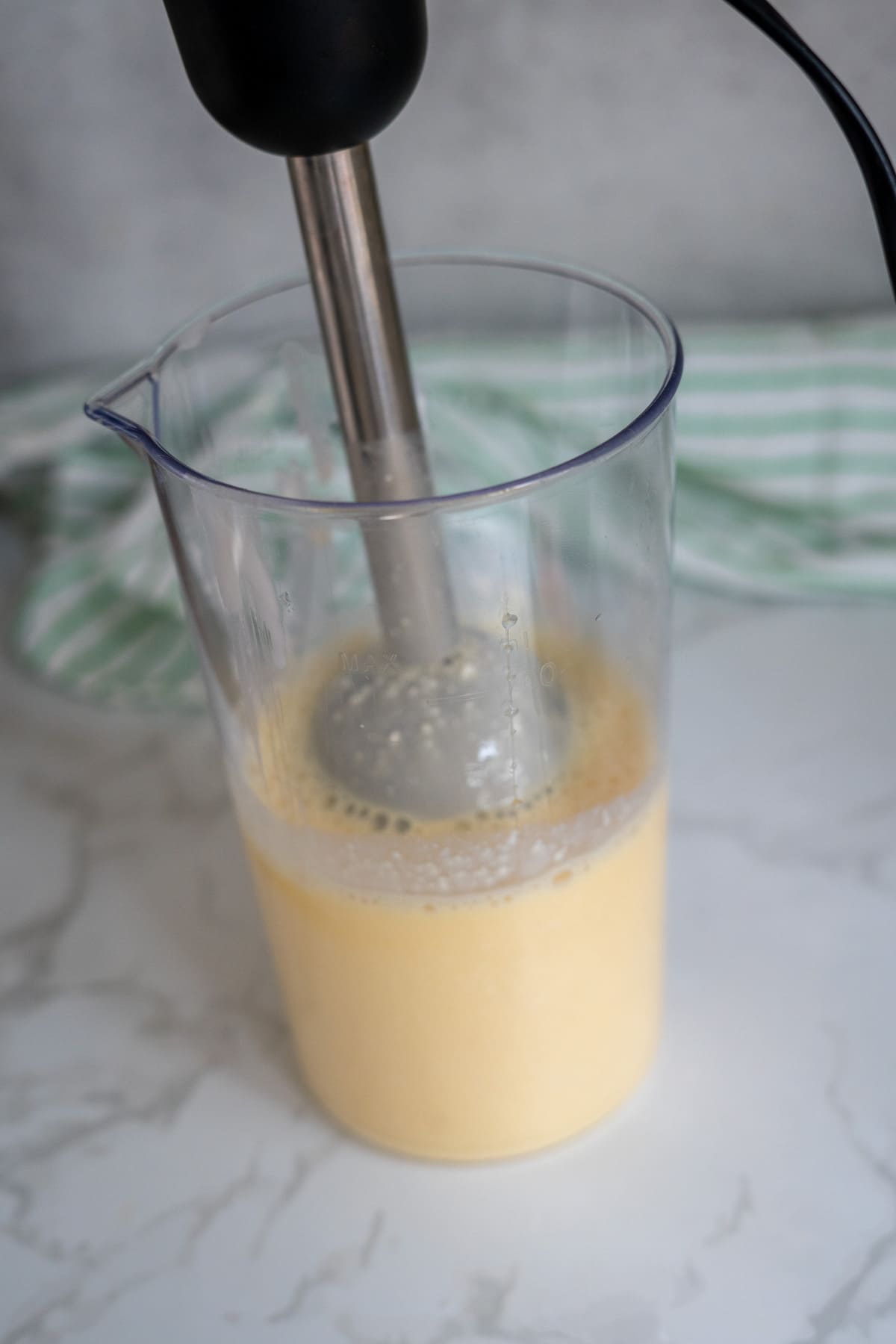
Blend together.
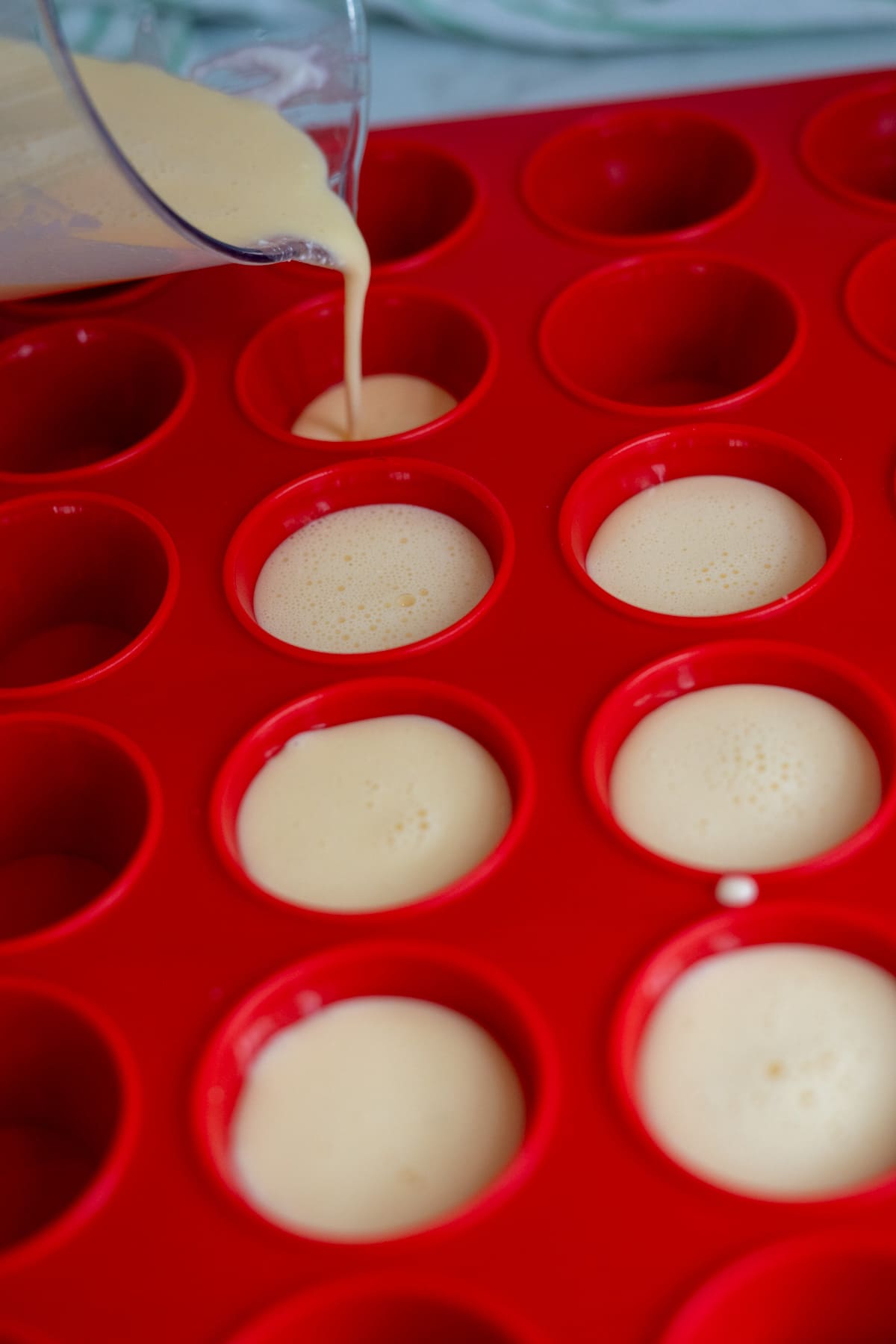
Pour into mini muffin molds.
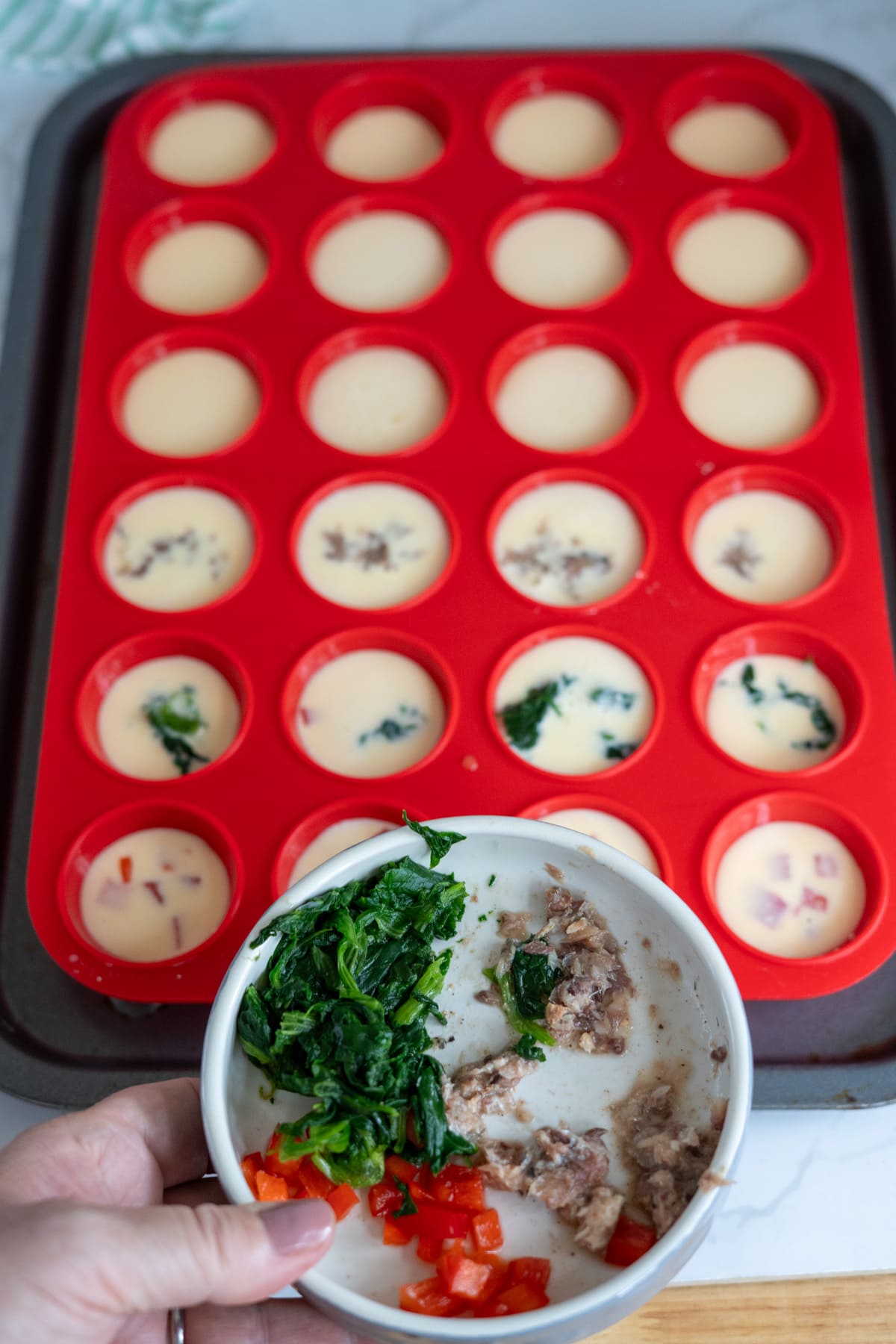
Add any optional fillings.
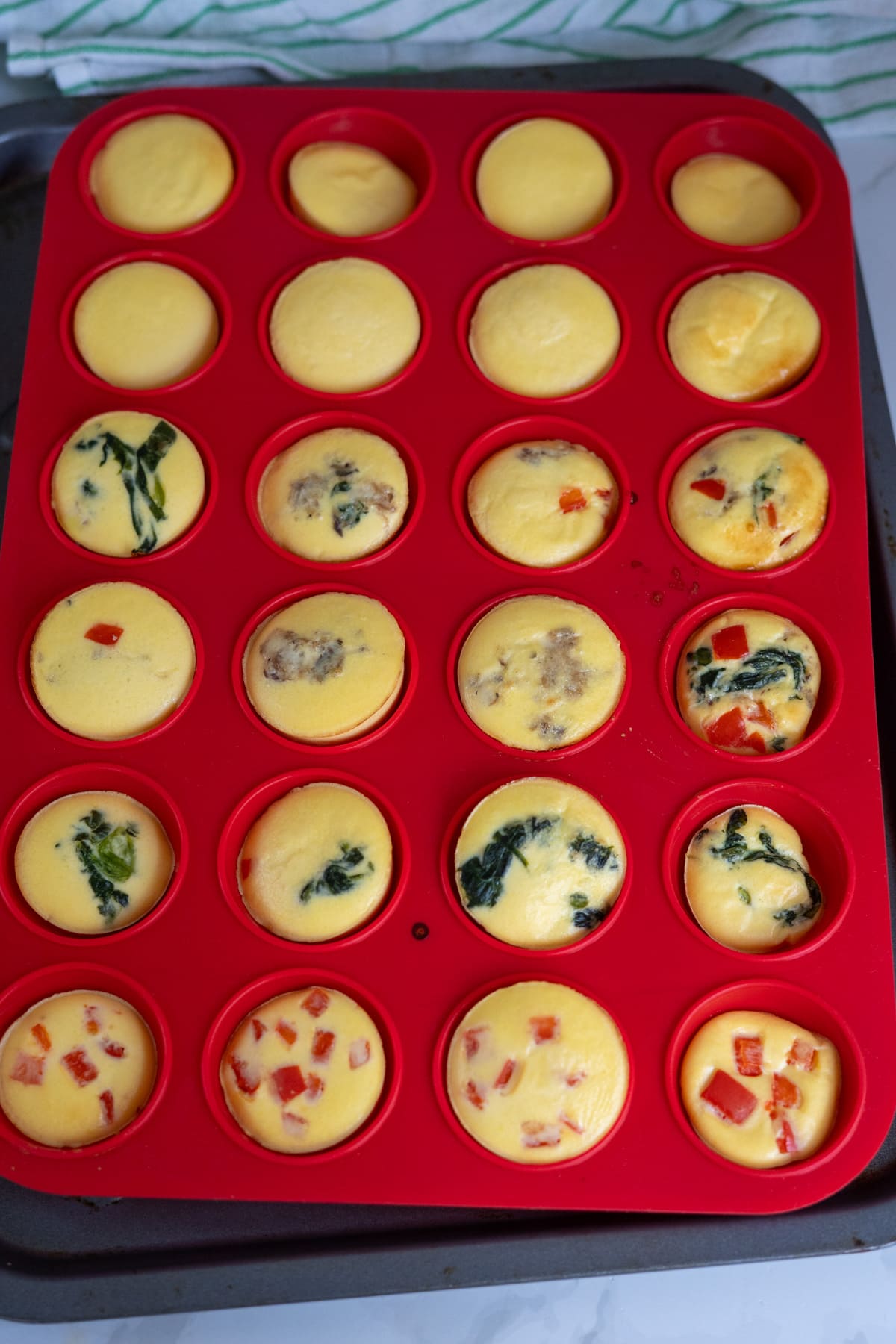
Bake for 20 minutes until firm.

Cool and serve as a treat.
Other Egg Bite Variations
Keep the additional ingredients finely chopped and use only a small amount so the egg bites hold together properly.
- Turkey and parsley: Add 2–3 tablespoons of cooked ground turkey and 1 teaspoon of finely chopped parsley.
- Chicken and carrot: Mix in 2 tablespoons of cooked shredded chicken and 1 tablespoon of finely grated carrot.
- Salmon and zucchini: Add 2 tablespoons of cooked, flaked salmon and 1 tablespoon of grated zucchini. Squeeze excess moisture from the zucchini first.
- Beef and broccoli: Combine 2 tablespoons of cooked lean ground beef with 1 tablespoon of finely chopped cooked broccoli.
- Pumpkin: Stir 2 tablespoons of plain pumpkin purée into the complete mixture. Avoid sweetened pumpkin pie filling.
- Sweet potato: Add 2 tablespoons of cooked and mashed sweet potato.
- Green bean and turkey: Mix in 1 tablespoon of finely chopped cooked green beans and 2 tablespoons of cooked ground turkey.
- Pea and salmon: Add 1 tablespoon of cooked, lightly mashed peas and 2 tablespoons of cooked salmon.
- Apple and cinnamon: Mix in 2 tablespoons of finely grated peeled apple and a small pinch of Ceylon cinnamon. Remove the apple core and seeds.
- Blueberry: Add 2 tablespoons of fresh or frozen blueberries. Cut or lightly mash larger berries, particularly when serving small dogs.
- Dill and salmon: Combine 2 tablespoons of cooked salmon with ½ teaspoon of finely chopped fresh dill.
- Beef liver: Add 1–2 tablespoons of finely chopped cooked beef liver. Keep the quantity modest because liver is rich in vitamin A.
Use plain, unseasoned cooked meat and fish, and avoid onion, garlic, salt, sauces and fatty processed meats. When using moist ingredients such as pumpkin or zucchini, limit the quantity to prevent soggy egg bites.

Recipe Tips
- Drain watery cottage cheese before measuring it to prevent overly wet bites.
- Use a silicone tray with small cavities rather than a standard muffin pan.
- Place the silicone mold on a baking sheet before filling it.
- Chop vegetables finely so they soften and remain easy to eat.
- Avoid salt, pepper, garlic, onion and seasoning blends.
- Do not use sardines packed in brine or flavored sauce.
- Blend the base mixture for a smoother, more uniform texture.
- Do not overfill the cavities, as the eggs will rise while baking.
- Let the bites cool before removing them; they become firmer as they rest.
Storage
Allow the egg bites to cool completely before storing them.
- Refrigerator: Keep them in an airtight container for up to 3 days.
- Freezer: Freeze for up to 2 months. Freeze them separately on a tray first, then transfer them to a freezer-safe container or bag.
- Defrosting: Thaw the required number overnight in the refrigerator. Individual bites can also be left at room temperature briefly until defrosted.
Serve the bites cool or gently warmed. Check the center carefully before giving a warmed bite to your dog.
How Many Egg Bites Does This Recipe Make?
The recipe makes approximately 20–24 mini egg bites. The exact yield will depend on the dimensions of your muffin tray and how deeply you fill each cavity.
As cottage cheese brands vary in moisture content, the finished yield and baking time may also differ slightly.
How Many Egg Bites Can a Dog Have?
The appropriate serving depends on your dog’s size, calorie requirements and the other treats received that day. As a general starting point:
| Dog’s size | Suggested portion |
|---|---|
| Extra-small dog | ½ mini bite |
| Small dog | ½–1 mini bite |
| Medium dog | 1–2 mini bites |
| Large dog | 2–3 mini bites |
| Extra-large dog | 3–4 mini bites |
These are occasional treat portions rather than daily feeding requirements. Begin with less if the recipe is new to your dog, particularly because it contains dairy.
The calories will vary by the type of cottage cheese and the flavor additions used. Based on a yield of 24, a plain bite will commonly provide approximately 20–25 calories. Check the labels on your ingredients if you need a more precise figure.
Ways to Serve Dog Egg Bites
These versatile little bites can be served in several ways:
- Offer one as an occasional breakfast treat.
- Break them into smaller pieces for training.
- Crumble one over dry food to encourage a reluctant eater.
- Add a bite to a dog-friendly breakfast bowl.
- Use a small piece to conceal medication, provided your dog’s medicine can be given with food.
- Serve a thawed bite as a cool snack on a warm day.

Can You Make These Without Cottage Cheese?
You can prepare simple baked egg bites without cottage cheese, although they will be firmer and less creamy. Whisk the eggs with a tablespoon or two of water, add a small amount of your chosen filling and bake as directed. Begin checking them a few minutes earlier because the mixture may cook more quickly.
Can Puppies Eat Egg Bites?
A healthy puppy that has been weaned can generally have a very small taste of a fully cooked egg bite. However, puppies have specific nutritional requirements for growth, so treats should remain a small part of their diet.
Start with a tiny piece and watch for digestive upset. Avoid using these bites to replace a puppy’s complete and balanced food.
More Breakfast Ideas for Dogs
Looking for more ways to make breakfast a little more special? Try these dog-friendly recipes:

Egg Bites For Dogs
Equipment
Need Metric Measurements?
Use the button options below to toggle between US cups and Metric grams.
Ingredients
- 4 large eggs
- 1 cup cottage cheese unflavored
Instructions
- Preheat the oven to 350°F/175°C.
- Place the silicone mini muffin tray on a firm baking sheet. Silicone trays can bend easily, so the baking sheet makes the filled tray much safer to move.
- Crack the eggs into a mixing bowl or blender and add the cottage cheese. Blend until smooth.
- Pour the mixture into the mini muffin cavities, filling each one approximately three-quarters full. Add any optional fillings of choice.
- Bake for 12–16 minutes, until the egg bites are set in the center and lightly golden around the edges. They may puff up while baking and settle slightly as they cool.
- Allow the bites to cool in the tray for about 5 minutes before removing them.
- Cool completely before serving one to your dog. Store any leftovers in an airtight container in the refrigerator.
Video
Notes
- Introduce a small piece first if your dog has not eaten eggs or cottage cheese before.
- Store in the fridge for up to 3 days or freeze for up to 2 months.
- These egg bites are treats or meal toppers and are not a complete and balanced meal.
Nutrition
The information shown is an estimate provided by an online nutrition calculator.