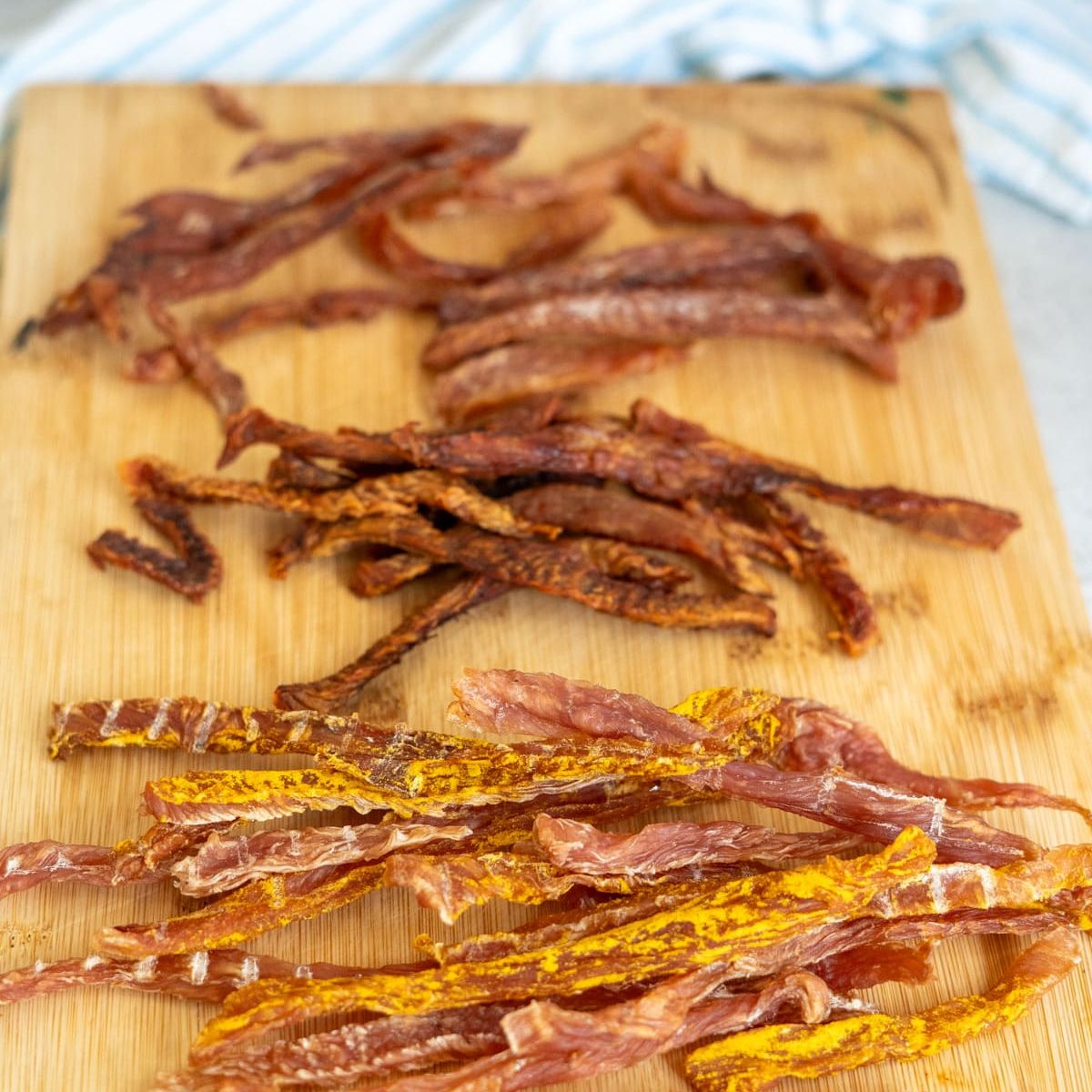
Turkey Jerky For Dogs
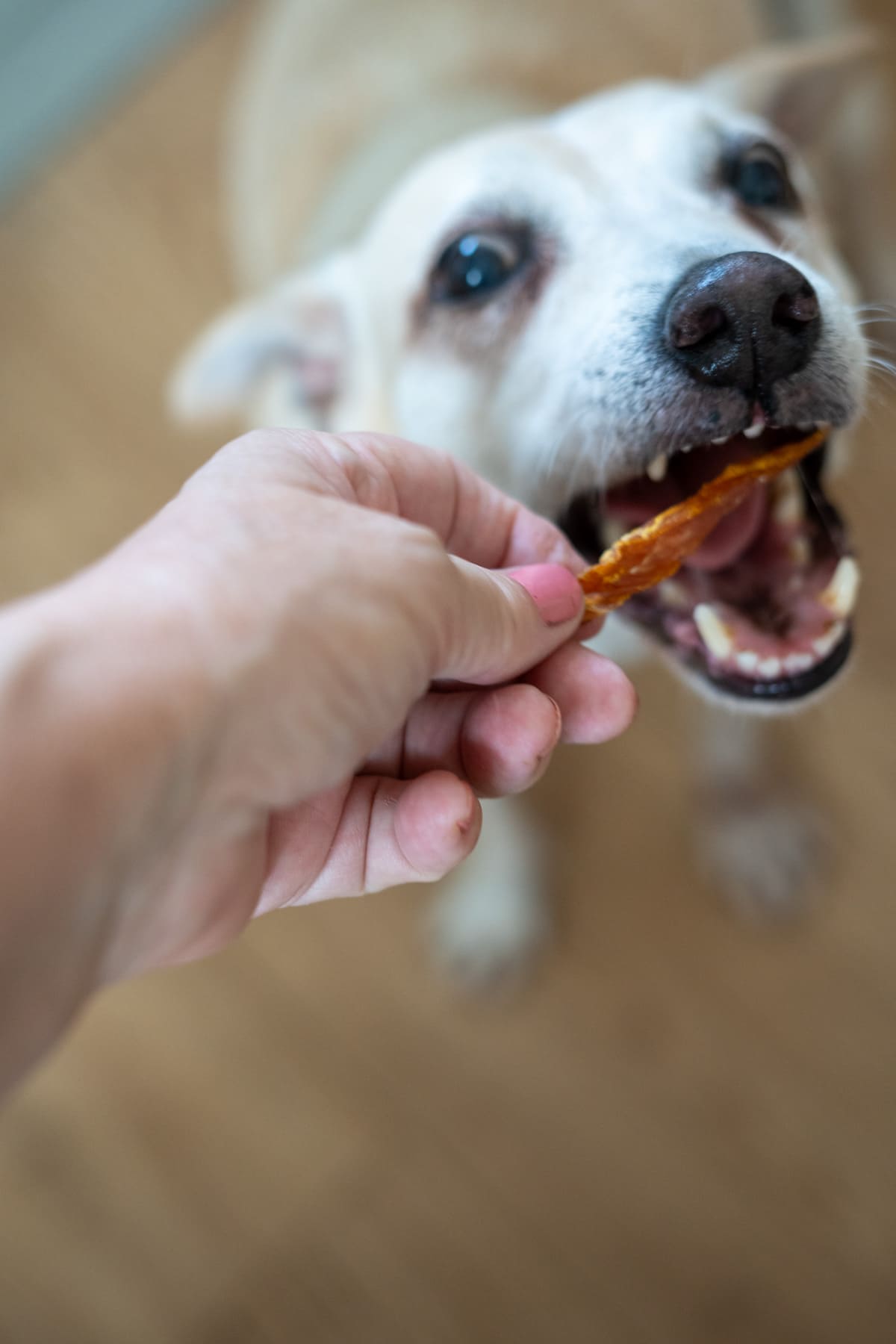
Homemade turkey jerky for dogs is a simple, high-protein treat made with lean turkey and a few dog-friendly ingredients. The thin strips are slowly dried until chewy, creating an irresistible treat without the salt, sugar, preservatives or seasonings often found in jerky made for people.
You can make this turkey dog jerky in a dehydrator, oven or air fryer. Keep it plain for a one-ingredient dog treat, or add colour and flavour with pumpkin powder, beetroot powder, cranberries or another dog-safe ingredient.
Turkey jerky can be cut into long strips for a satisfying chew or sliced into small pieces for training rewards. Because you control exactly what goes into it, it is also a useful option for dogs with sensitivities to common proteins or unnecessary additives.
This post may contain affiliate links. Please read my disclosure policy for more information.
Why Turkey Jerky Works So Well as a Dog Treat
Turkey breast is about as clean a protein as you can hand your dog. It’s lower in fat than beef or pork, which means less risk of an upset stomach, and it’s a common “novel protein” for dogs with chicken sensitivities. Plenty of dogs who react to chicken do fine on turkey.
The other advantage is control. When you make it yourself, there’s no added sodium, no propylene glycol, no mystery “meat byproduct.” Just turkey and whatever flavor you add.
One caution up front: never season with onion powder, and skip anything containing xylitol. Both show up in seasoning blends meant for human food and both are dangerous for dogs.
Choosing and Prepping the Turkey
Use turkey breast, not thigh or leg meat. Breast meat is leaner, which matters a lot here — fat doesn’t dehydrate the same way muscle does, and fatty jerky spoils faster and can upset a dog’s stomach.
- Trim off all visible fat and any skin.
- Freeze the breast for 30–45 minutes before slicing. This firms it up enough to get clean, even cuts, which matters more than people expect — uneven slices dry unevenly, and a thick chunk in the middle of a batch is where bacteria can hide.
- Slice against the grain, about 1/8 to 1/4 inch thick. Against the grain gives a more tender bite; with the grain gives a chewier, more traditional jerky texture. Either works for dogs.
Ingredients
We use turkey breasts but the flavorings are optional. To be honest I was playing with pumpkin and beetroot powders the day before, so wanted to use them in another recipe!
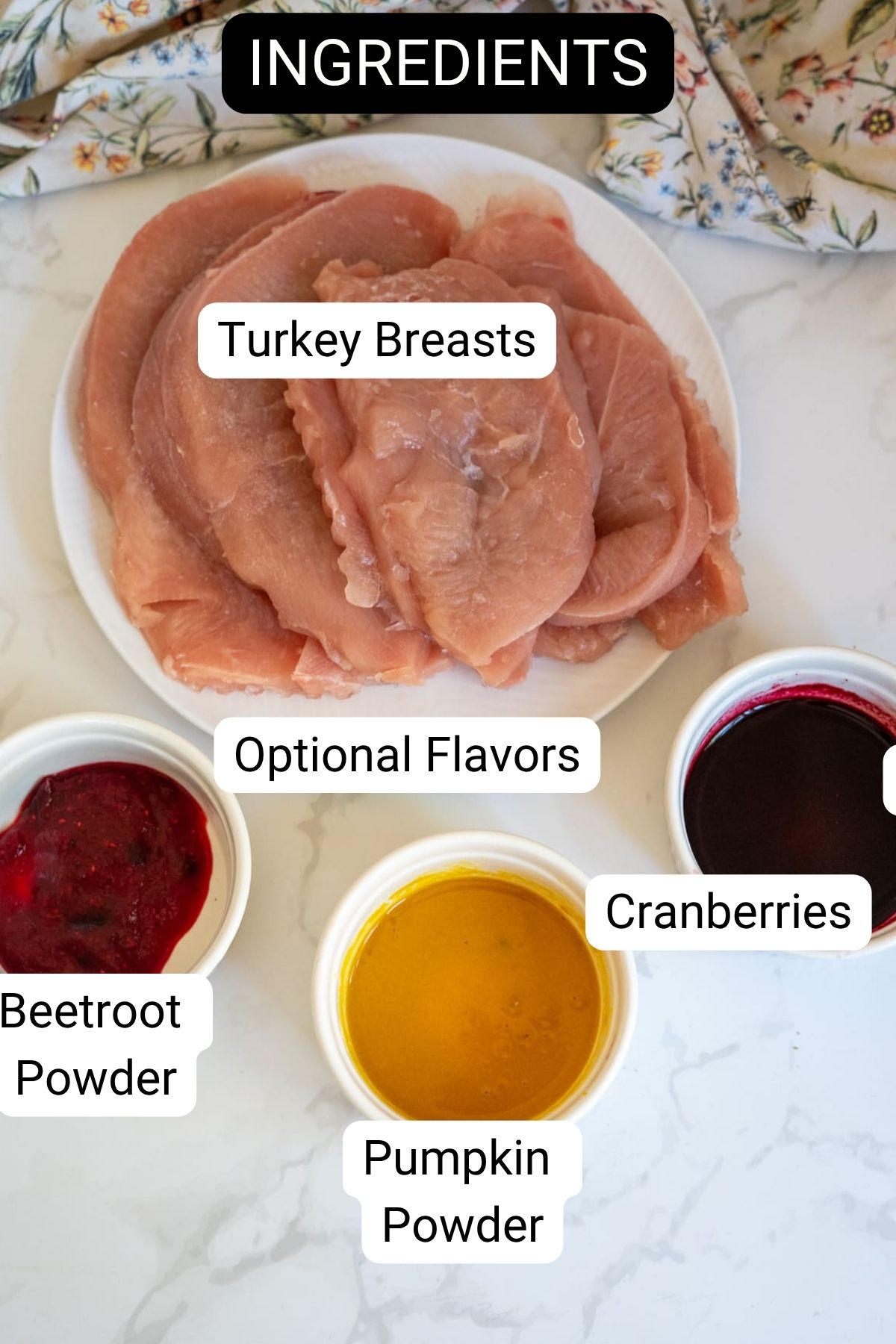
Skinless, boneless turkey breast – Naturally high in protein
Optional flavouring
Choose one flavor for the whole batch or divide the turkey into smaller portions and make several flavors. We added water with the powders to make a light paste.
- 1 to 2 teaspoons pumpkin powder
- ½ to 1 teaspoon beetroot powder
- 1 to 2 tablespoons finely chopped or puréed plain cranberries
Use unsweetened powders made from the named fruit or vegetable. Check that they do not contain sugar, salt, preservatives, artificial sweeteners or spice blends.
How To Make Turkey Jerky for Dogs
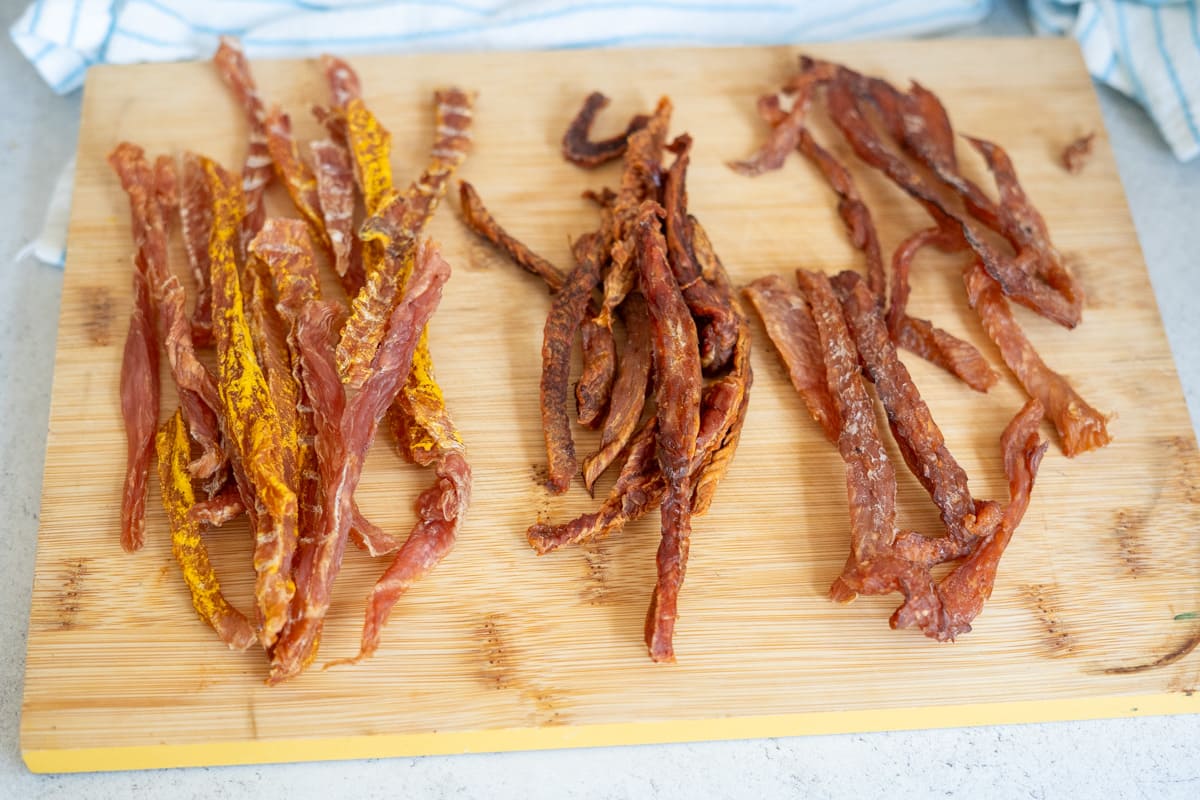
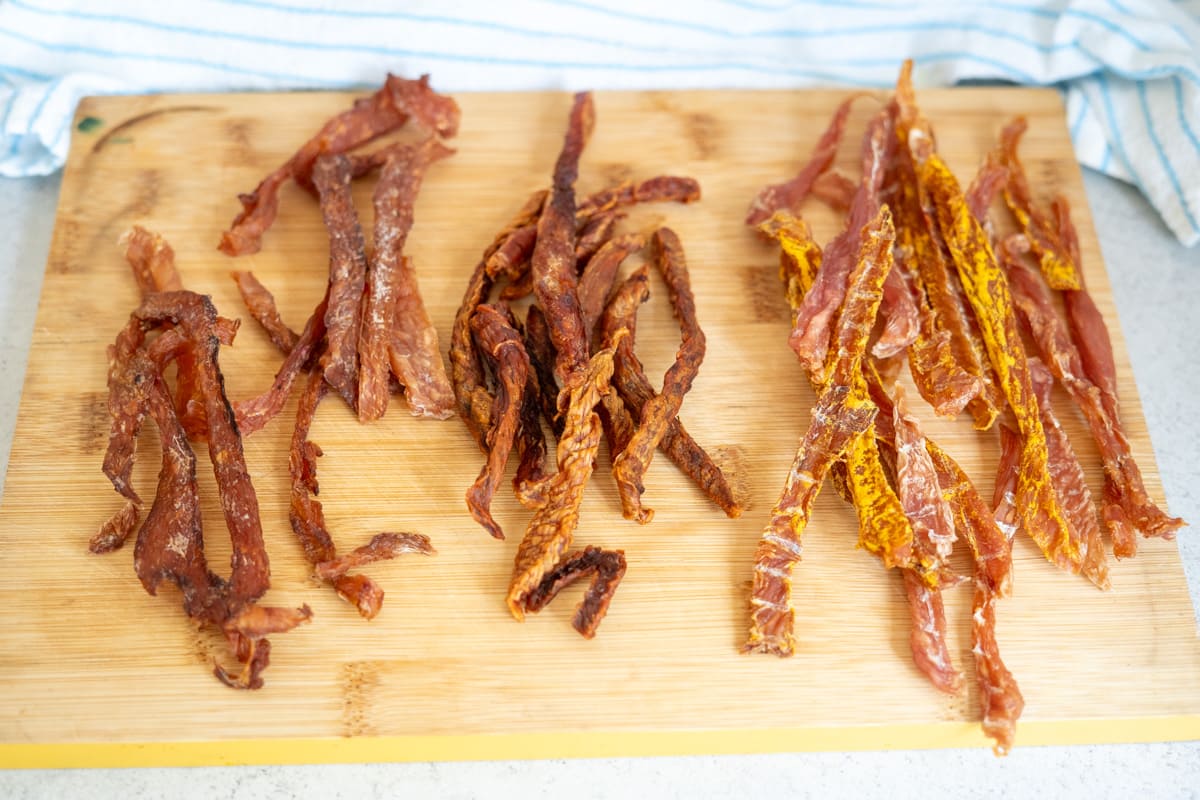
We made this 3 different ways, with the dehydrator being a favorite, but that’s a personal opinion. All worked out fine and my dogs did not reject any of them! (They rarely reject food though!).
We partially freeze the turkey breast to make the cutting of it easier.
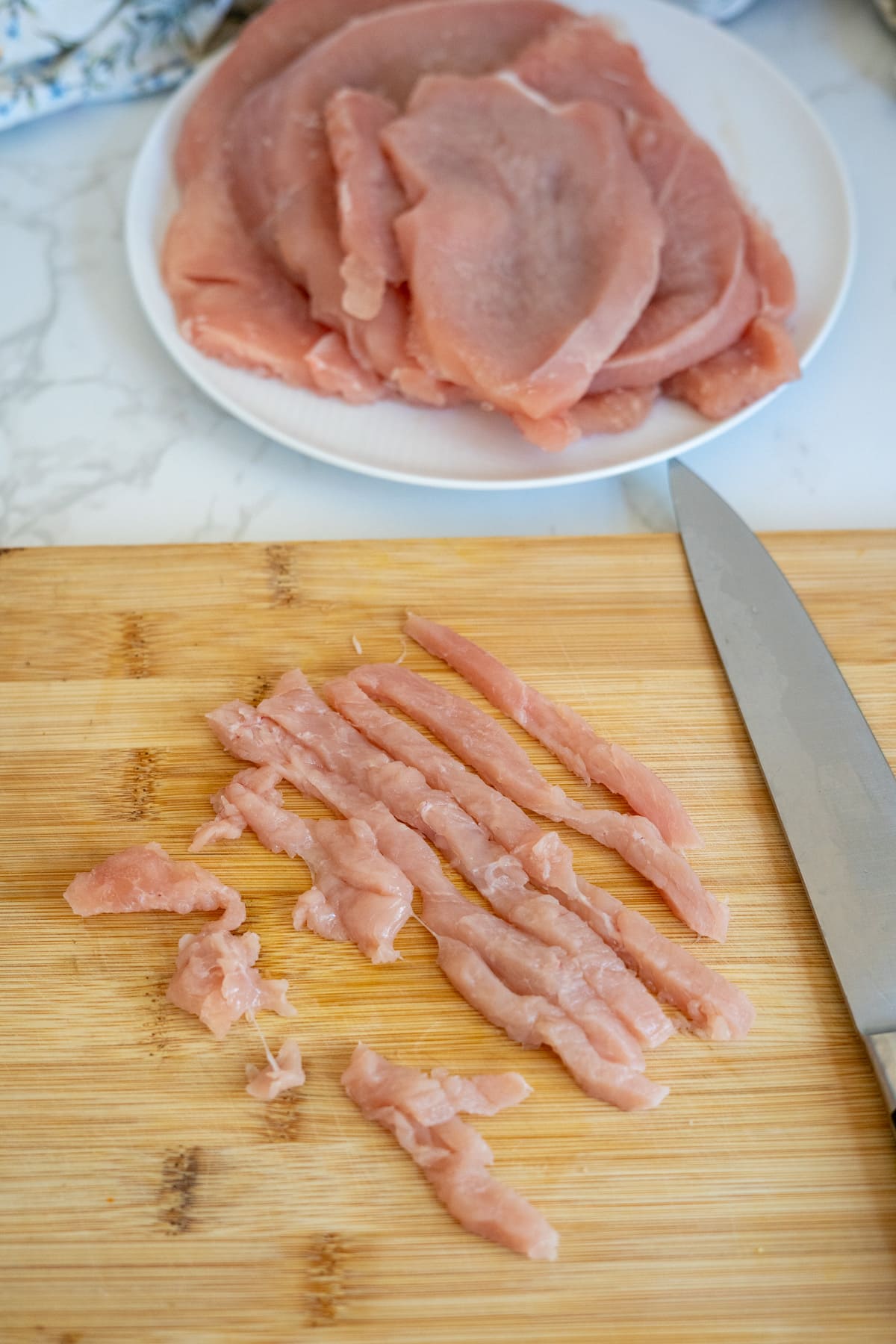
Thinly slice the turkey breasts
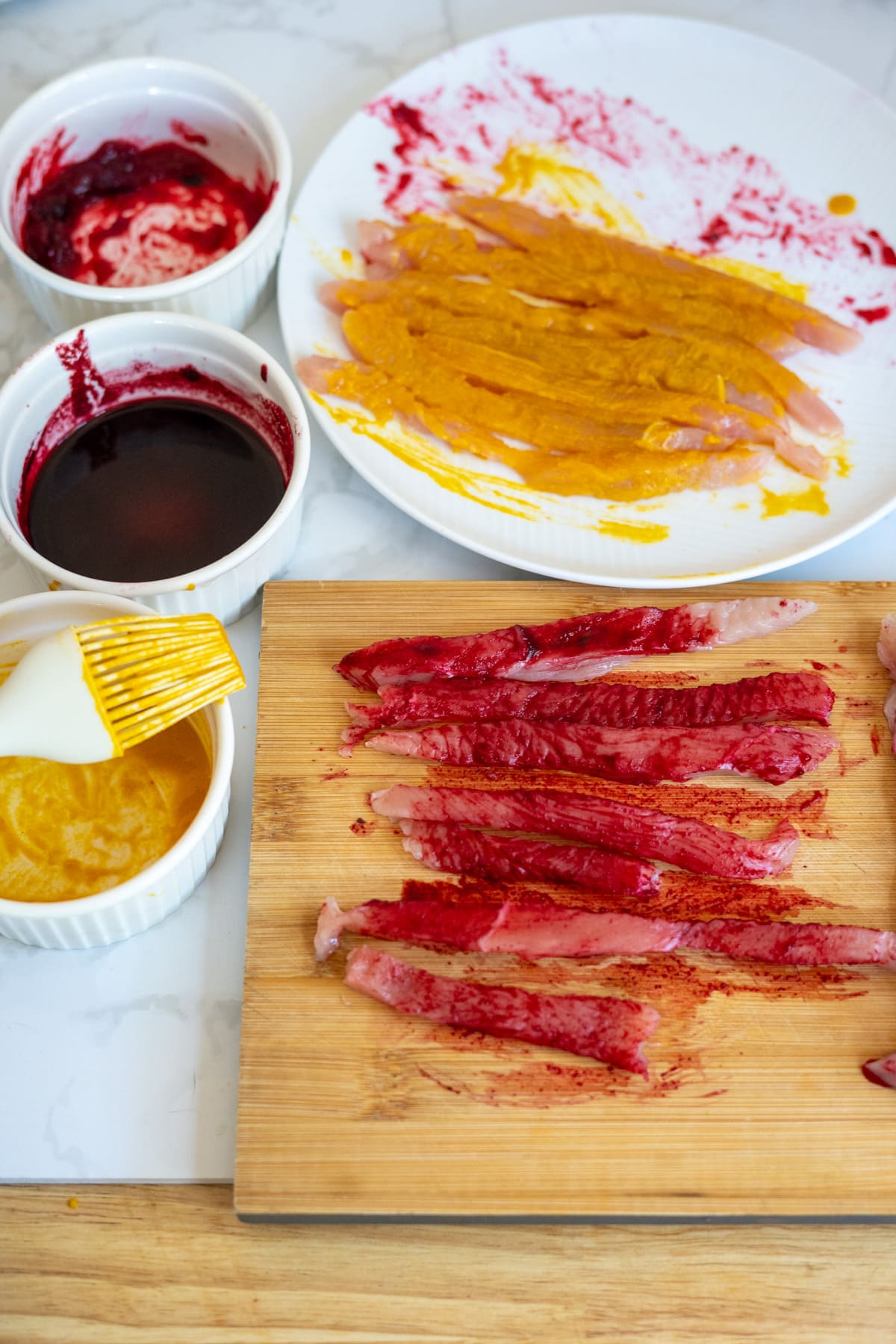
Optional dog friendly flavoring
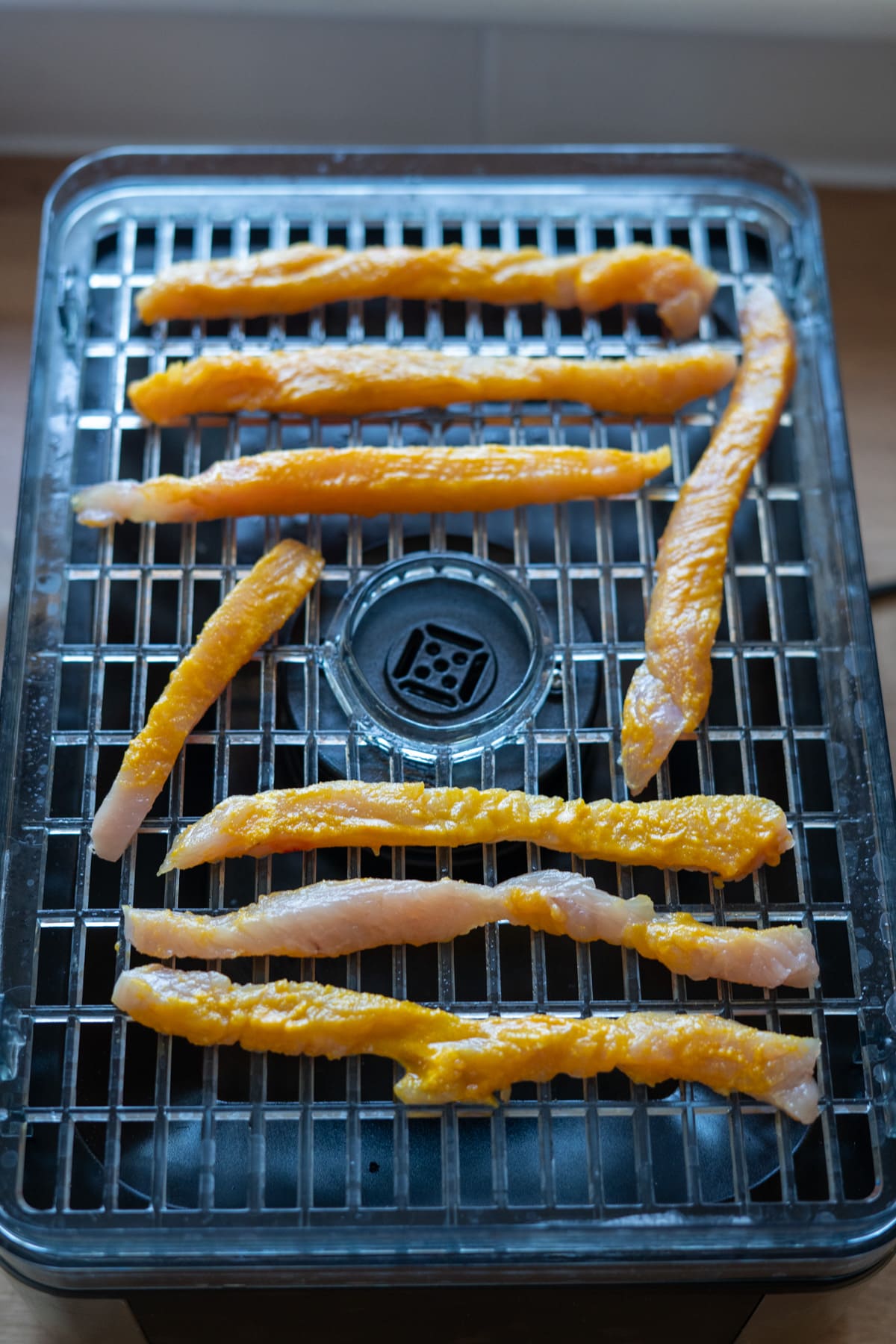
Place strips on a dehydrator tray
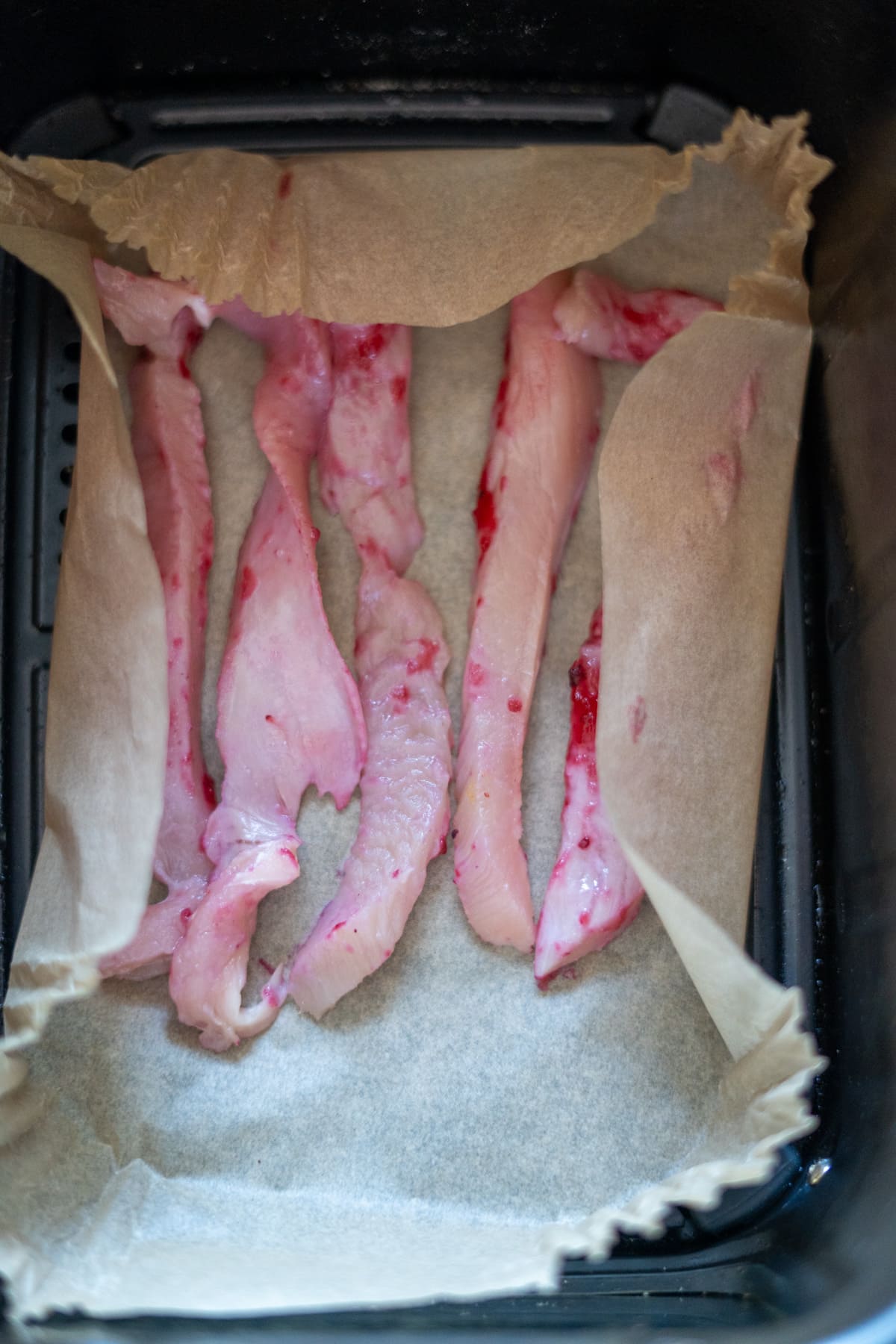
Or place into an air fryer
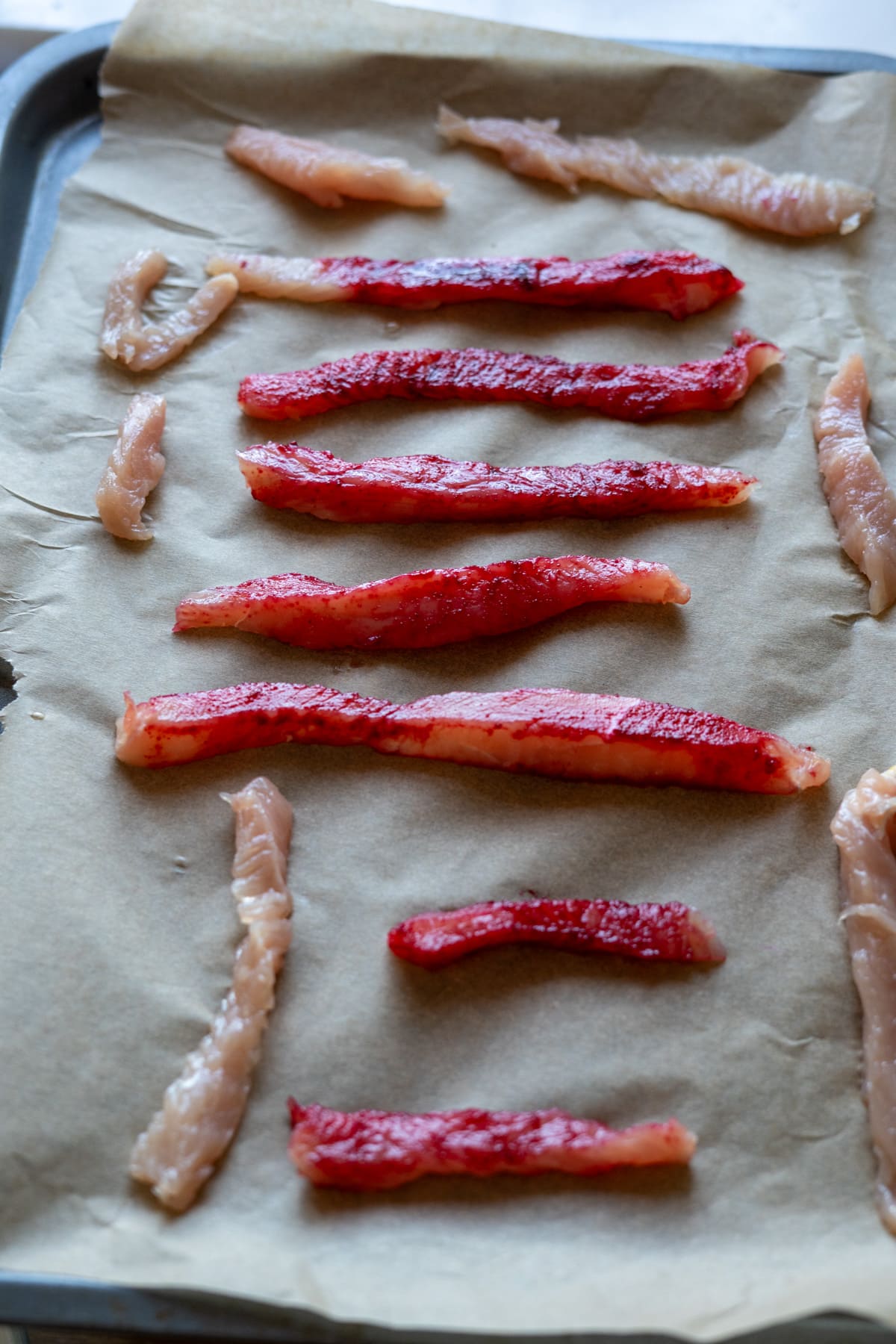
Or on a prepared baking tray for the oven
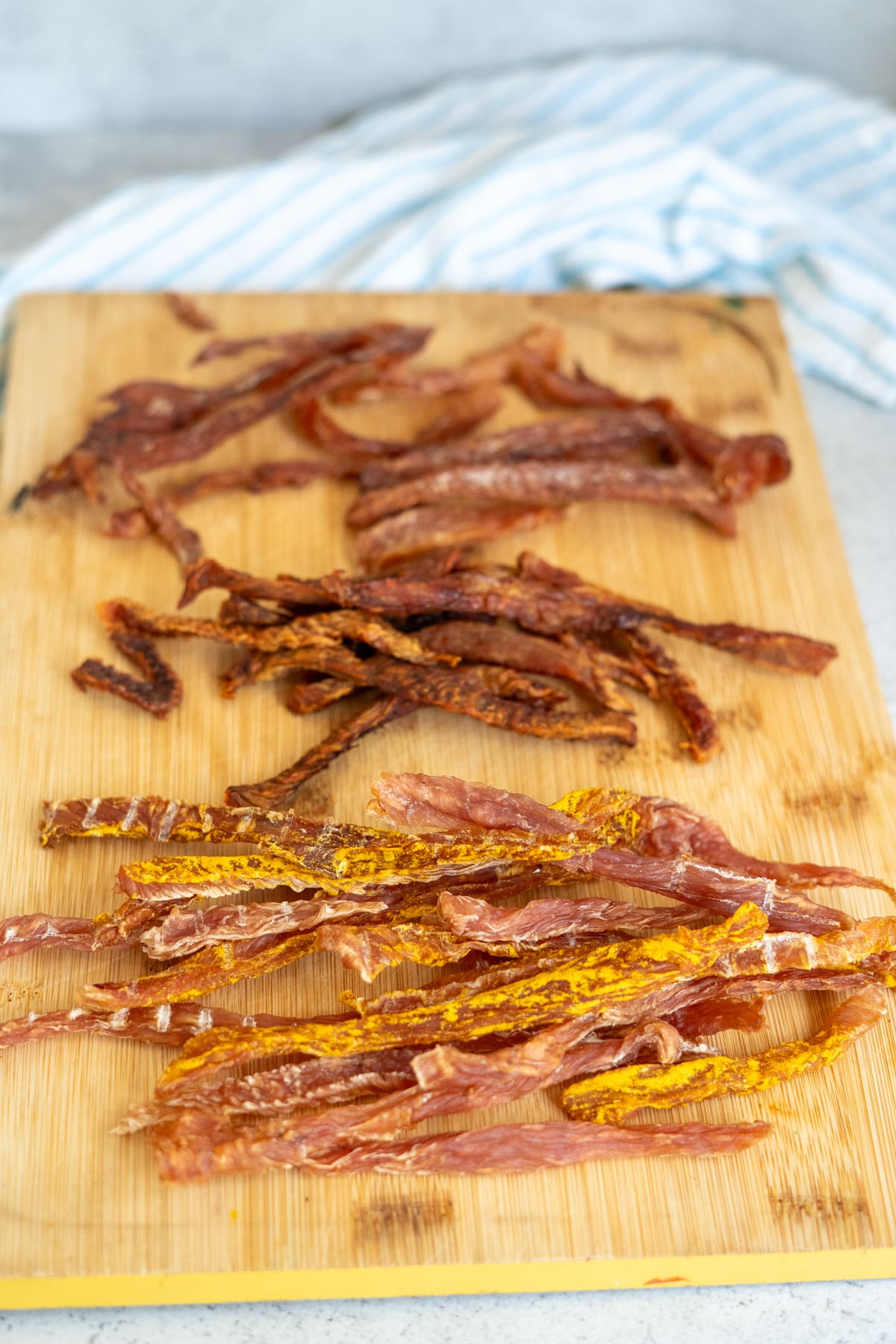
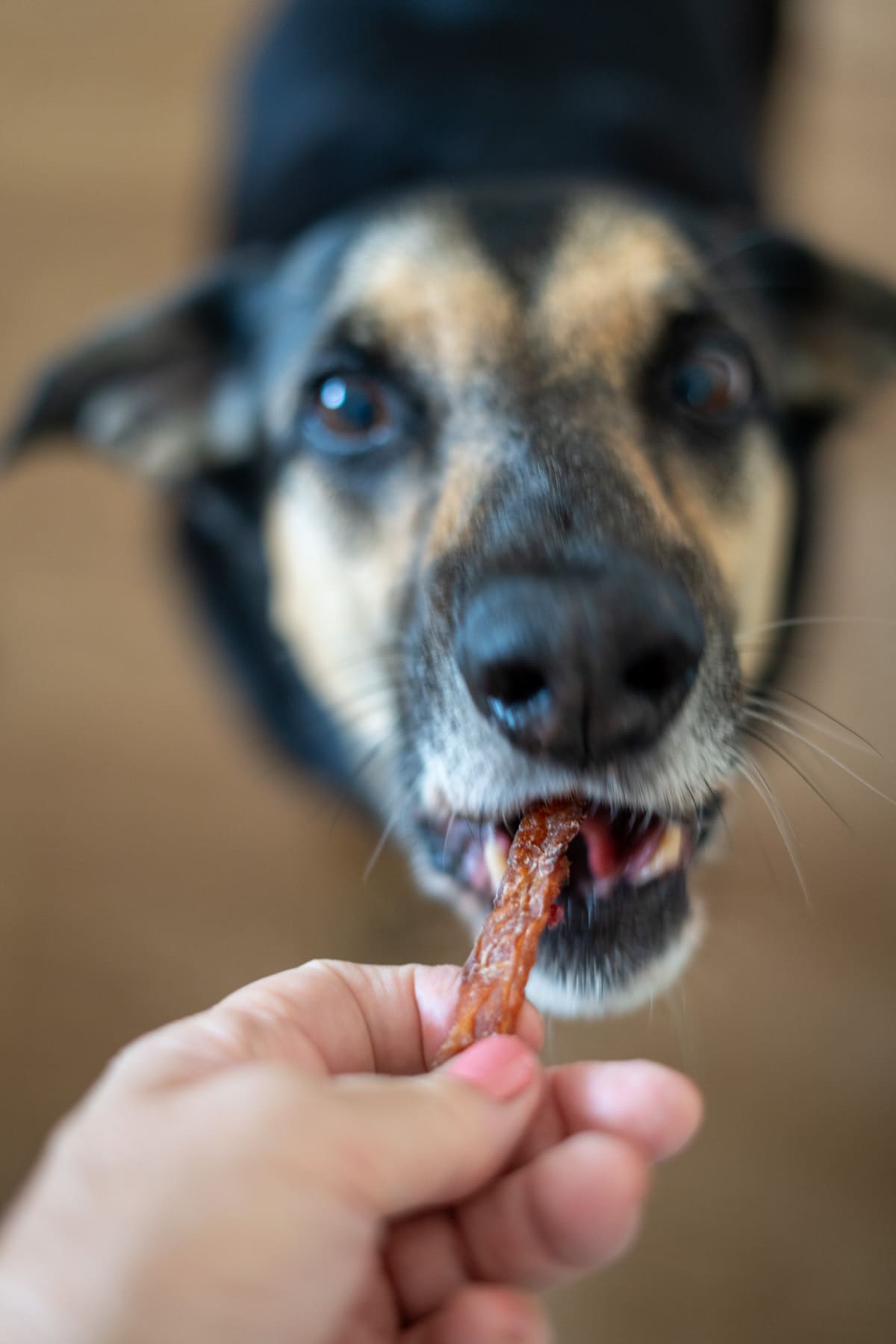
A crunchy snack for the dogs
How to Tell When Turkey Jerky Is Done
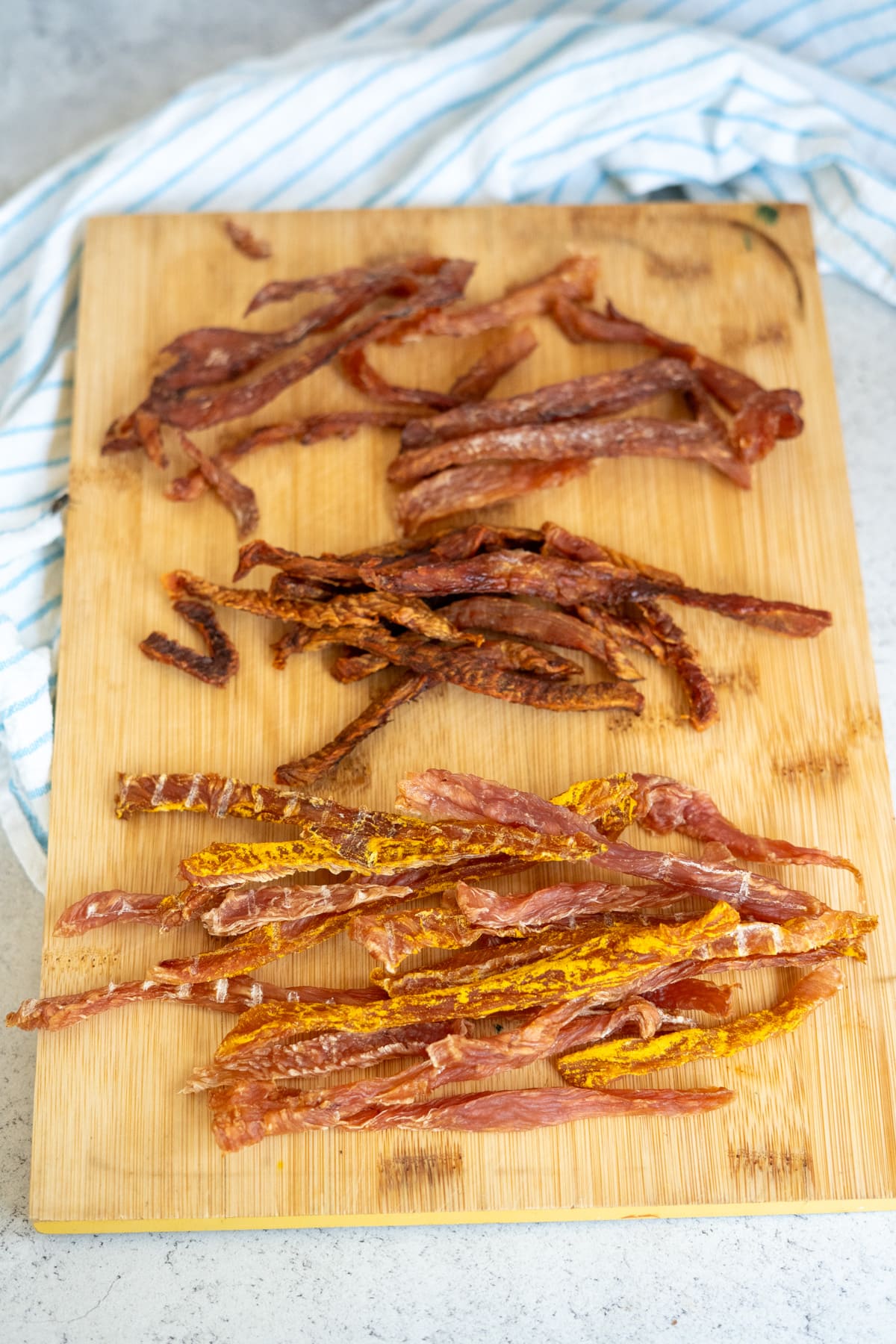
Properly dried turkey jerky should:
- Feel dry on the surface
- Have no wet, soft or spongy areas
- Appear darker and smaller than the original strips
- Bend without releasing moisture
- Tear into fibrous strands
- Feel firm rather than squishy
Very thin jerky may become crisp and snap when bent. Thicker strips are more likely to remain leathery and chewy.
Break open the thickest piece and examine the centre. There should be no visible moisture.
Flavoured jerky can be harder to judge by colour alone. Beetroot and cranberry naturally give the meat a deep red colour, so rely on texture, dryness and the initial temperature check rather than appearance.
Recipe Tips
- Use lean turkey breast – Turkey breast has less fat than skin-on turkey or many cuts of thigh meat. This helps the jerky dry evenly and reduces the risk of it becoming rancid during storage.
- Cut the strips evenly – Uneven pieces do not finish at the same time. Thin sections may become brittle while thicker sections remain moist. A sharp knife makes a considerable difference. Partially freezing the turkey first also helps produce neater slices.
- Do not overlap the turkey – Air needs to circulate around each strip. Overlapping pieces trap moisture and create uneven drying.
- Check each piece separately – Jerky positioned near the heating element or fan may finish first. Remove completed pieces and return the others to the appliance.
- Make training treats – Cut the raw turkey into small pieces, or snip the finished strips into bite-sized rewards with clean kitchen scissors. For frequent training, keep the pieces very small. Dogs are usually more interested in the smell and flavour than the size of the reward.
- Keep a plain batch – When introducing a new ingredient, leave some turkey unflavoured. This makes it easier to identify the cause if your dog experiences digestive upset.
Pawsome Dehydrating Tip
Let treats cool before storing: Make sure dehydrated treats are completely cool and dry before putting them into a container. Any remaining warmth or moisture can create condensation and shorten their storage life.
Flavor Variations
Plain turkey jerky is already a hit with most dogs, but these mix-ins add variety and, in a few cases, extra nutritional benefits. Blend each into a thin marinade or paste and coat the strips for 15–20 minutes before drying — turkey doesn’t need long marinating since it’s going straight into a low, slow drying process anyway.
Pumpkin Turkey Jerky
Mix 2 tablespoons of plain canned pumpkin (not pie filling — check the label for added sugar and spices) with a splash of water to thin it into a brushable consistency. Pumpkin adds fiber and is gentle on digestion, which makes this a good variation for dogs with sensitive stomachs.
Beetroot Turkey Jerky
Grate a small raw beet and simmer it in a little water for 5 minutes to soften, then blend into a thin paste. Beetroot brings a slightly sweet, earthy flavor dogs tend to like, plus a dose of folate and manganese. The color will stain your cutting board a bright pink — use a board you don’t mind sacrificing.
Cranberry Turkey Jerky
Simmer 1/4 cup of fresh or frozen cranberries with 2 tablespoons of water until they burst, then mash into a chunky paste (no sugar added — skip the canned cranberry sauce). Cranberries are commonly associated with urinary tract health in dogs, though they’re not a substitute for treatment if a dog actually has a UTI.
Peanut Butter Turkey Jerky
Use a thin layer of plain, unsweetened peanut butter — the kind with no xylitol, ever. Warm it slightly so it spreads easily. This is the flavor that disappears fastest in most households with dogs.
Blueberry Turkey Jerky
Mash a handful of fresh blueberries into a rough paste. Milder and sweeter than cranberry, and a good option if you want something that isn’t tart.
Storage
Cooled, fully dried turkey jerky keeps:
- 1–2 weeks in an airtight container at room temperature
- Up to 2 months in the refrigerator
- Up to 6 months in the freezer
Check treats periodically for any sign of moisture, mold, or off smell before feeding — homemade jerky doesn’t have preservatives, so it won’t warn you the way commercial treats sometimes do with a long “best by” date.
How Much to Feed
Jerky is a treat, not a meal replacement. Treats generally shouldn’t make up more than 10% of a dog’s daily calories. For a medium-sized dog, that’s usually one or two small strips a day — less for smaller breeds, and always factor it into the rest of their food for the day if your dog is watching their weight.
The appropriate amount depends on the dog’s size, age, health, activity level and regular diet.
As a rough starting point:
| Dog size | Suggested serving |
|---|---|
| Extra-small dogs | ½ small piece |
| Small dogs | 1 small piece |
| Medium dogs | 1 to 2 small pieces |
| Large dogs | 2 to 3 small pieces |
| Extra-large dogs | 3 to 4 small pieces |
These amounts assume each small piece is approximately 1 inch or 2.5 cm long. Reduce the amount when using larger or thicker strips.
Turkey jerky is concentrated because most of its water has been removed. A small dried piece represents more meat than its size may suggest.
Introduce it gradually and monitor your dog for vomiting, diarrhoea, itching or other unusual symptoms.
Dogs with pancreatitis, kidney disease, food allergies or medically prescribed diets should only receive new treats with veterinary approval.
Can You Use Ground Turkey?
Ground turkey can be used, although it produces a different style of jerky.
Choose lean ground turkey and press it between two sheets of parchment paper to approximately ¼ inch or 6 mm thick. Remove the top sheet and score the mixture into strips.
Ground poultry must also reach an internal temperature of 165°F or 74°C.
Dry it in a dehydrator, oven or air fryer until completely firm and dry. Ground turkey jerky can be more crumbly than sliced breast meat and may not last as long, particularly when made from a higher-fat mixture.
More Homemade Dog Treats
FAQs
You can use boneless, skinless turkey thigh, but it contains more fat than turkey breast. Trim it carefully, refrigerate the finished jerky and use it within a shorter period.
Fresh, unseasoned cooked turkey may be dried, but leftover roast turkey is often seasoned with salt, butter, onion, garlic or gravy. Only use it when you know exactly how it was prepared and it contains no unsuitable ingredients.
Refrigerated storage is safer because home-dried jerky may retain more moisture than expected. Unless its water activity has been professionally measured, do not assume it is shelf-stable.
Older puppies that are accustomed to solid food may have tiny, soft pieces under supervision. Avoid very hard or large strips that could present a choking risk. Check with your veterinarian if the puppy has a sensitive stomach or is following a specific feeding plan.
Turkey Jerky For Dogs
Need Metric Measurements?
Use the button options below to toggle between US cups and Metric grams.
Ingredients
- 1 lb skinless, boneless turkey breasts
Optional Flavors
- 1 teaspoons pumpkin powder
- 1 teaspoon beetroot powder
- 2 tablespoons cranberry puree
Instructions
Preparing the Turkey
- Place the turkey breast in the freezer for approximately 30 to 45 minutes. It should become firm but not freeze solid. Partially freezing the turkey makes it easier to cut into thin, even strips.
- Using a sharp knife, slice the turkey into strips approximately ⅛ to ¼ inch or 3 to 6 mm thick½ to 1 inch or 1 to 2.5 cm wide. Try to keep the strips similar in thickness so that they dry at roughly the same rate.
- Slice with the grain for firmer, chewier jerky. Slice across the grain for a softer treat that is easier to break apart.
How to Add the Flavors
- Add a small amount of water to the powders so the flavors can be brushed onto the turkey strips.
Dehydrator Method
- Preheat the dehydrator to 160°F or approximately 70°C, or use its highest meat setting.
- Arrange them in a single layer without overlapping on the dehydrator tray.
- Dehydrate for approximately 4 to 8 hours.
- Rotate the trays during drying if your dehydrator does not dry evenly.
- Begin checking thinner strips after 4 hours. Remove individual pieces as they finish.
- Allow the jerky to cool completely before storing.
Oven Method
- A fan-assisted oven may dry the jerky more quickly than a conventional oven.
- Set the oven temperature to its lowest setting, ideally 170°F to 200°F or 75°C to 95°C.
- Arrange the turkey strips on the rack in a single layer or on a baking sheet.
- Bake the turkey for approximately 2½ to 5 hours. Turn the strips after about 90 minutes.
- Rotate the tray if the back or sides of the oven cook more quickly. Check regularly during the final hour and remove pieces as they become dry.
- Cool completely on a clean wire rack.
Air Fryer Method
- Preheat the air fryer to 160°F or approximately 70°C, or select the dehydration setting.
- Arrange the turkey strips in a single layer in the basket or on the trays.
- Dry for approximately 2½ to 5 hours.
- Turn the strips and rotate the trays periodically. Check frequently after the first 2½ hours.
- Remove the jerky when it is dry and firm, with no soft or wet areas. Cool completely before storing.
Video
Notes
Nutrition
The information shown is an estimate provided by an online nutrition calculator.