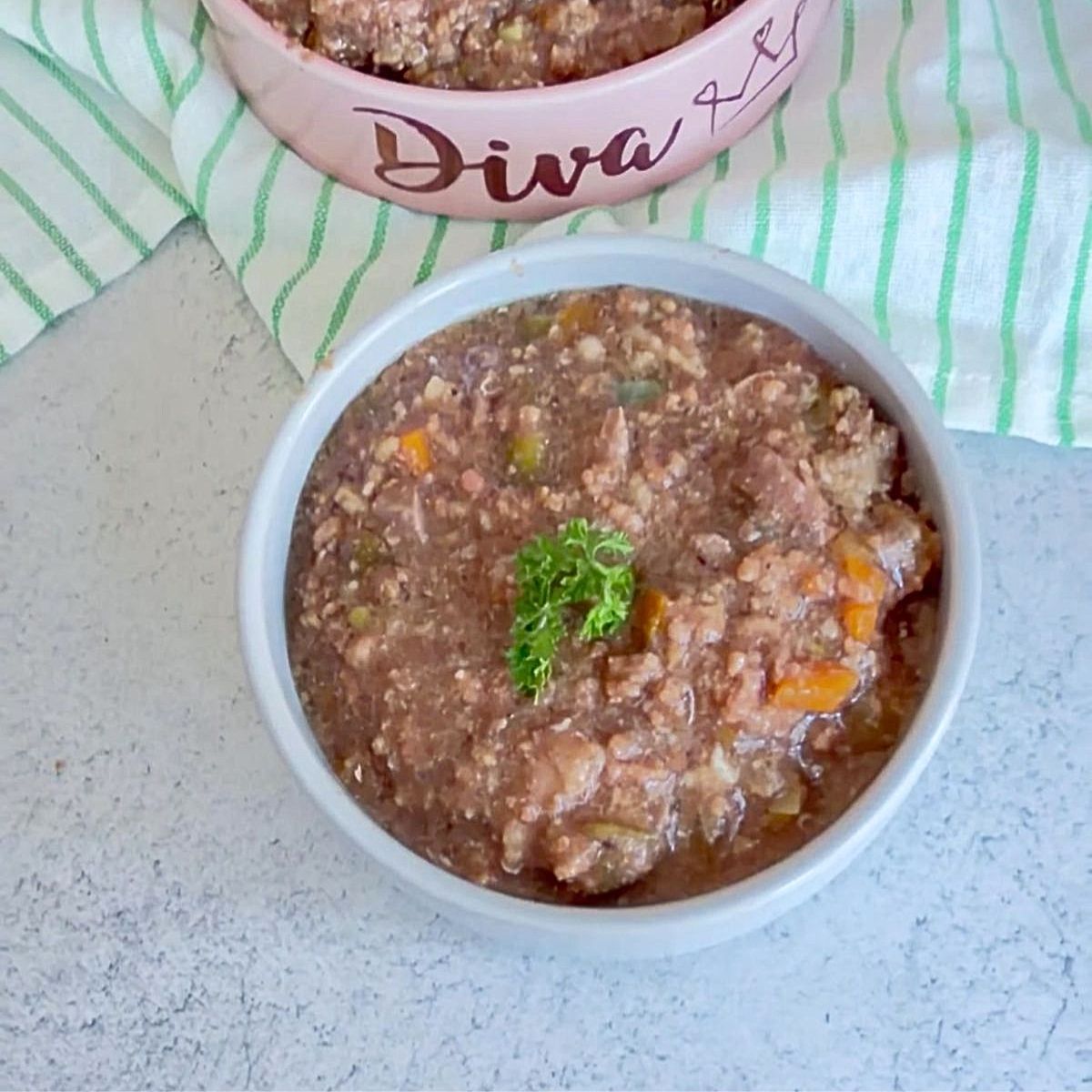
Slow Cooker Beef Dog Food with Vegetables
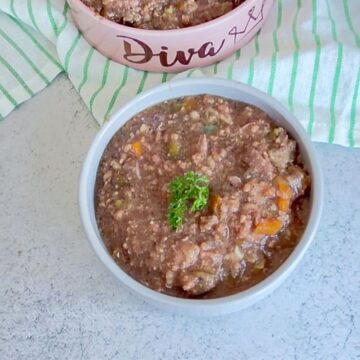
This slow cooker beef dog food is an easy way to prepare a batch of homemade food with plenty of meaty goodness and a mixture of colorful vegetables. Ground beef, beef heart, liver and kidney provide a variety of animal proteins and nutrients, while pumpkin, carrots, zucchini and green beans add fiber and texture.
Everything cooks together slowly until the beef is tender and the vegetables are soft. Sardines, ground flaxseed and the appropriate supplements are stirred in after cooking, making this a convenient recipe to prepare in batches and portion for the refrigerator or freezer.
If you enjoy making homemade meals for your dog but don’t want to spend ages standing over the stove, the slow cooker does most of the work for you.
This post may contain affiliate links. Please read my disclosure policy for more information.
Why You’ll Love Making This Slow Cooker Dog Food
One of the best things about making dog food in a slow cooker is how little hands-on cooking is required. Add the main ingredients, turn it on and leave everything to cook gently.
This recipe also uses several different parts of the beef rather than relying entirely on ground meat. Beef heart acts as an additional muscle meat, while small amounts of liver and kidney provide nutrients that aren’t found in the same concentrations in regular ground beef.
Ingredients
This is what we used for our beef slow cooker recipe. You could make your own tweaks to it if you wish.
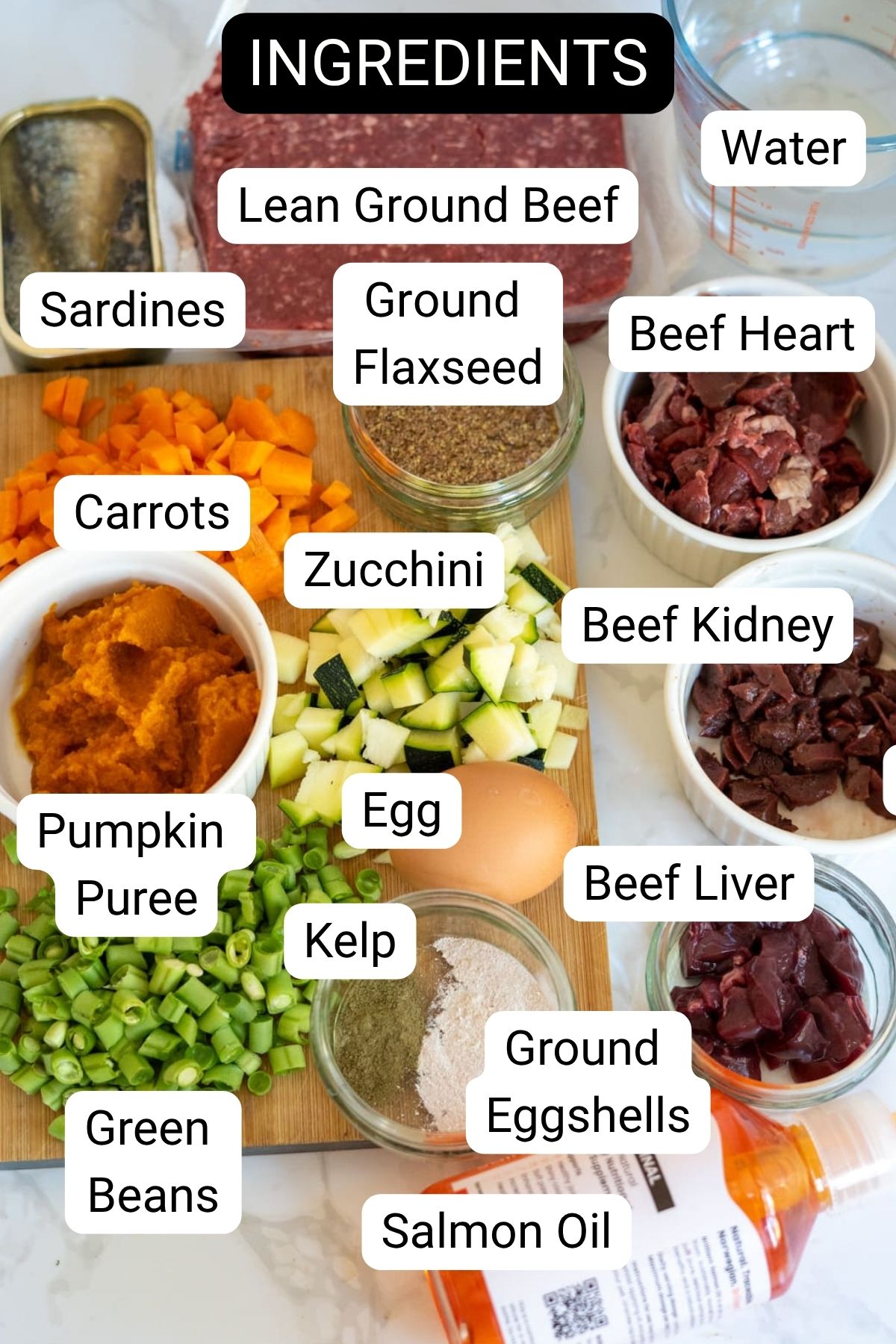
Ground Beef – Use lean ground beef, preferably around 90% lean. Beef provides high-quality protein as well as iron, zinc and B vitamins. Very fatty ground beef can result in a greasy finished meal and considerably increases the calorie content, so lean beef works better here.
Beef Heart – Although we commonly call heart an organ meat, nutritionally it is treated more like muscle meat. It provides protein as well as iron, zinc, selenium and B vitamins.
Beef Liver – A little liver goes a long way. Beef liver is particularly rich in vitamin A and copper and also supplies iron and several B vitamins. More isn’t necessarily better with liver, which is why it makes up only a small proportion of this recipe.
Beef Kidney – Kidney gives us a second secreting organ alongside liver. It provides protein, selenium, iron and B vitamins and helps broaden the nutrient profile of the meat portion.
Sardines – Sardines are one of my favorite additions to homemade dog food. They’re a natural source of EPA and DHA omega-3 fatty acids and also provide protein, vitamin B12, selenium and vitamin D. Choose sardines packed in water without added salt, sauces or seasonings.
Pumpkin Puree – Plain pumpkin puree adds soluble and insoluble fiber and gives the finished beef mixture a lovely soft consistency. Use 100% pumpkin rather than pumpkin pie filling, which contains ingredients dogs don’t need and may not be good for them.
Carrots – Carrots provide fiber and carotenoids and become beautifully soft during slow cooking.
Zucchini – Zucchini is a mild, relatively low-calorie vegetable that adds moisture and fiber without overwhelming the beef.
Green Beans – Green beans provide additional fiber along with several vitamins and minerals.
Egg – Egg contributes highly digestible protein along with choline, selenium and other micronutrients.
Ground Flaxseed – Ground flaxseed provides fiber and alpha-linolenic acid (ALA), a plant-based omega-3 fatty acid.
Eggshell Powder – Boneless meat is naturally high in phosphorus and very low in calcium. A calcium source is therefore important when formulating a meat-based homemade diet. Finely ground eggshell powder provides calcium without adding significant additional phosphorus. Making your own is easy too!
How To Make Slow Cooker Beef Dog Food
Cooking with a slow cooker is just as easy as a one pot on the stove!
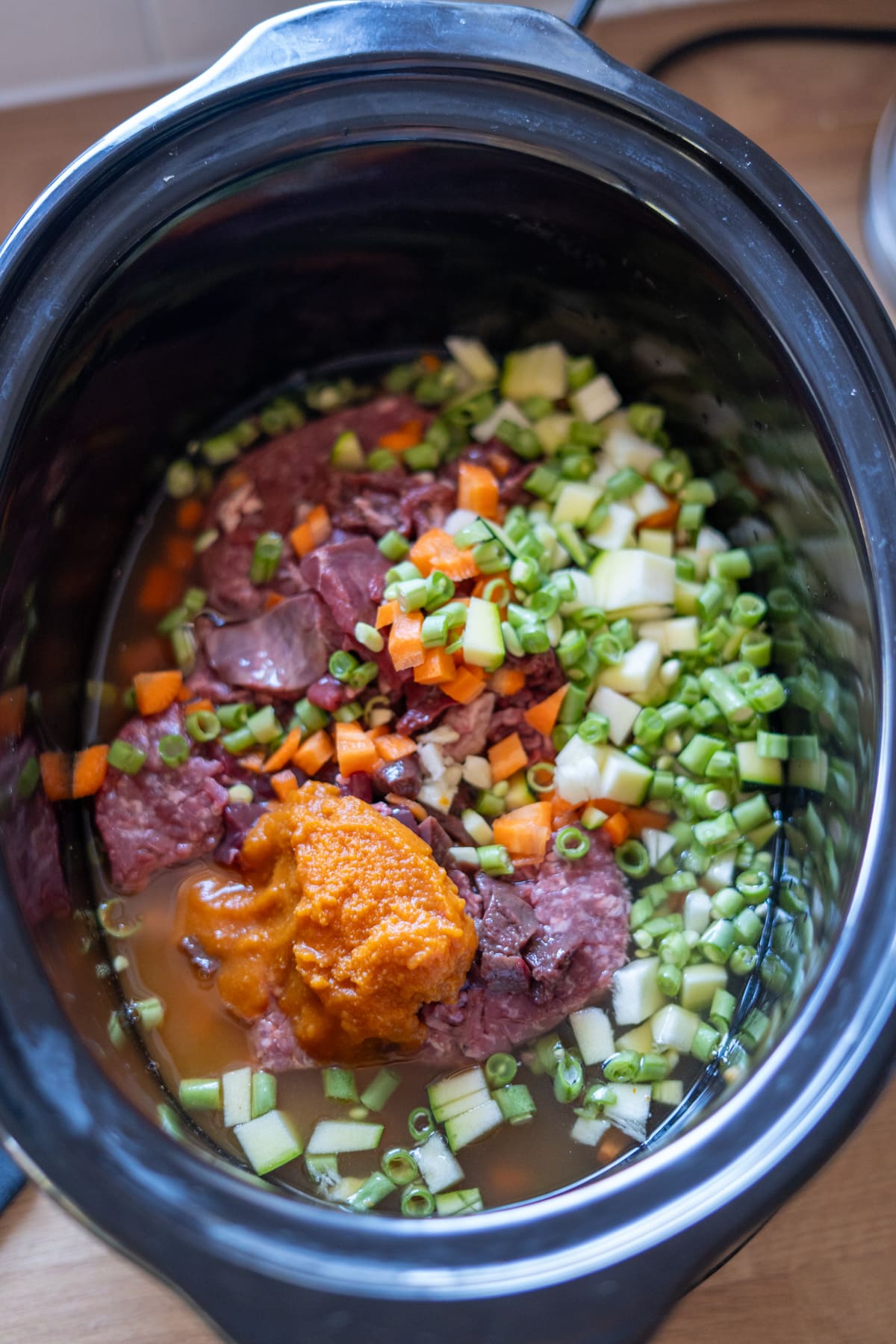
Add beef, organs and vegetable to the slow cooker and top with the water. Cook on high or low.
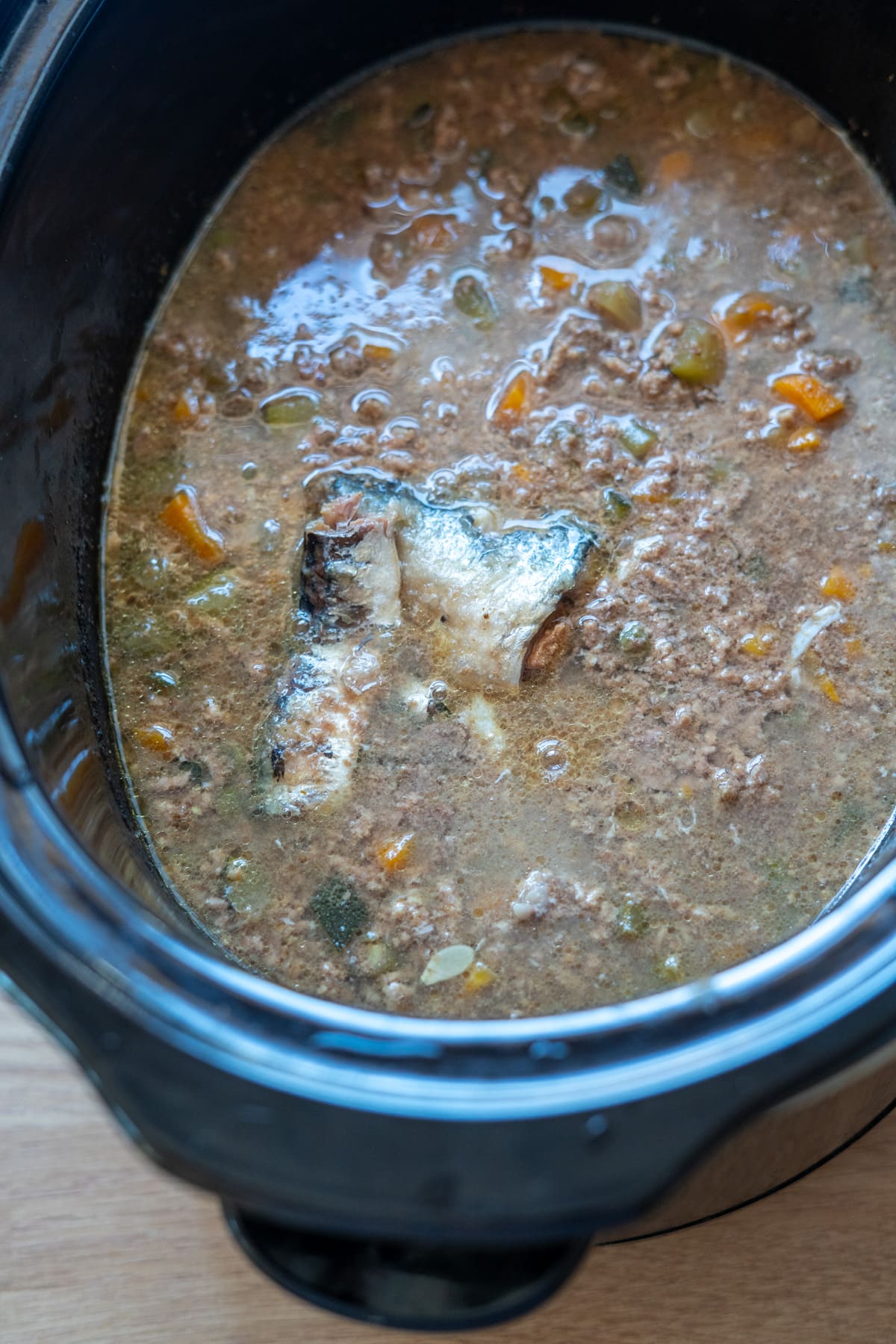
Once cooked, add sardines and other supplements.
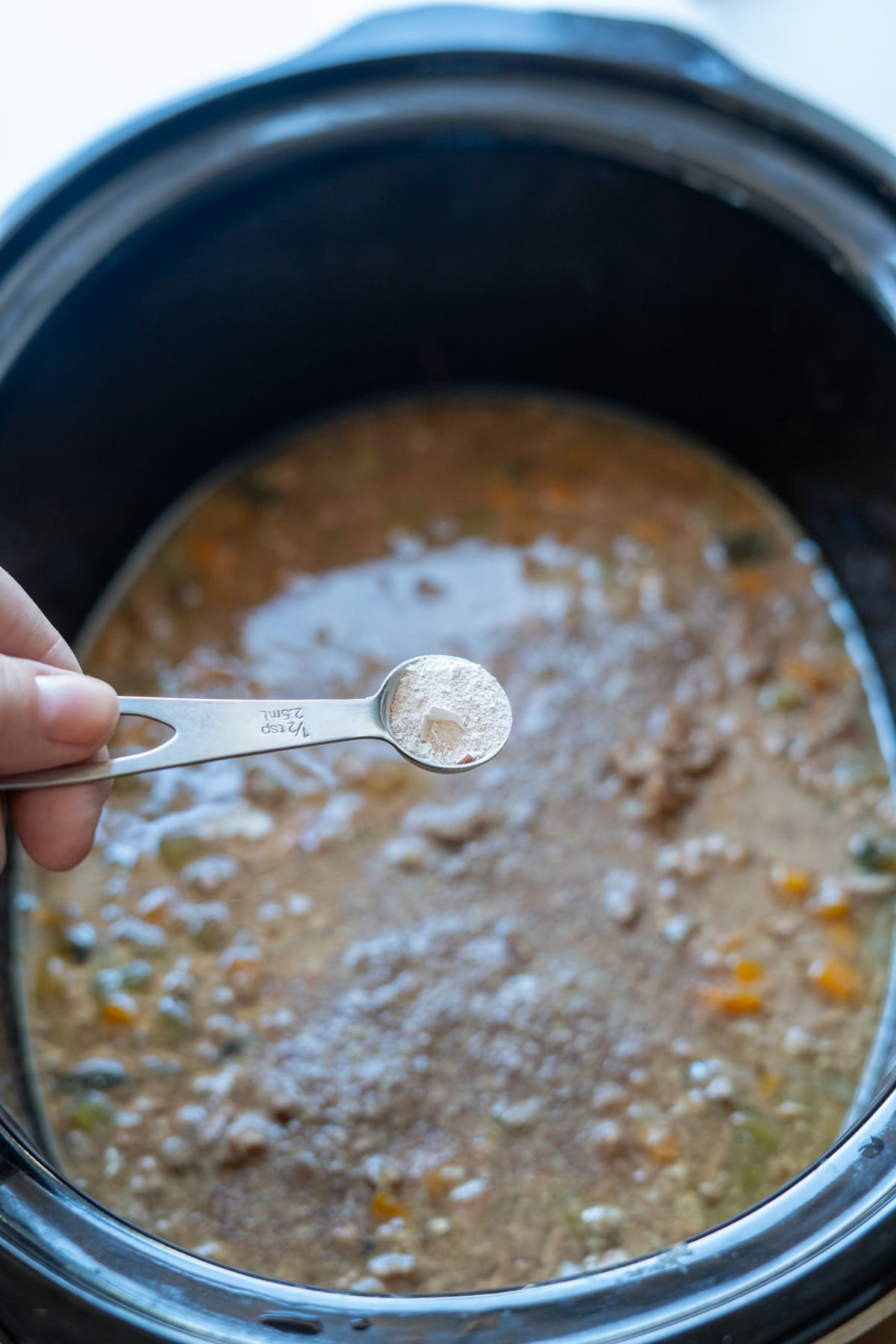
Eggshell powder adds calcium. Stir through before serving.
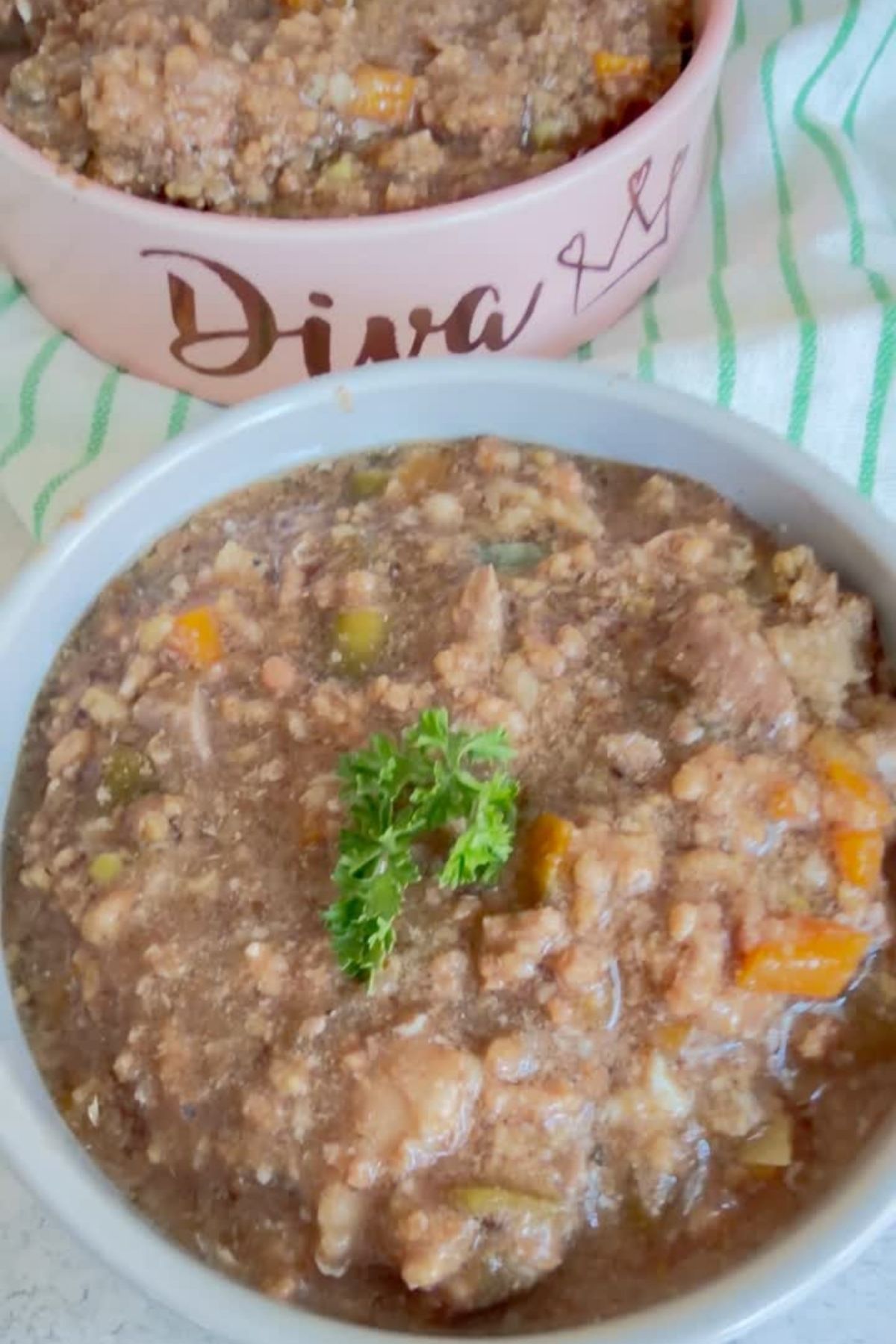
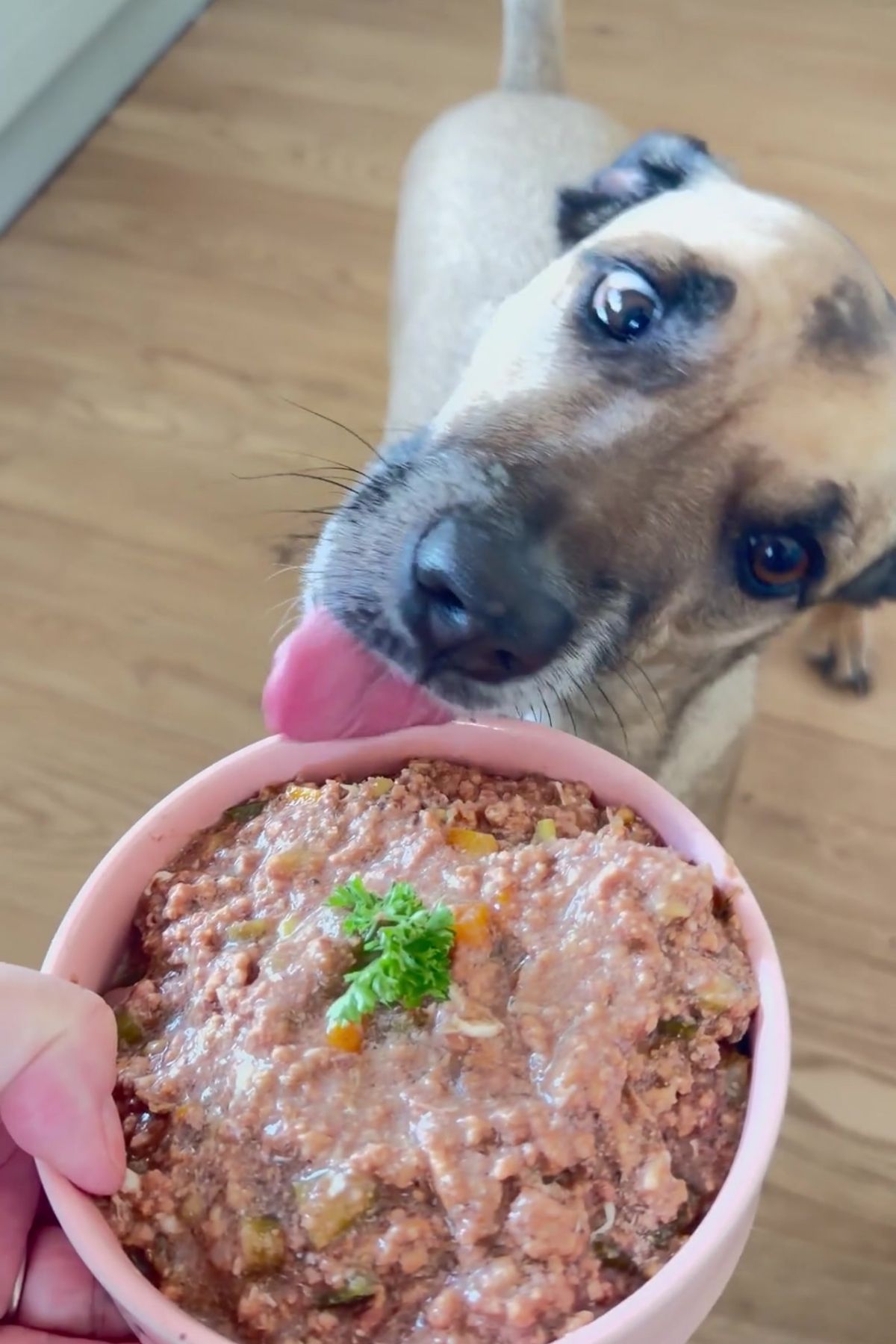
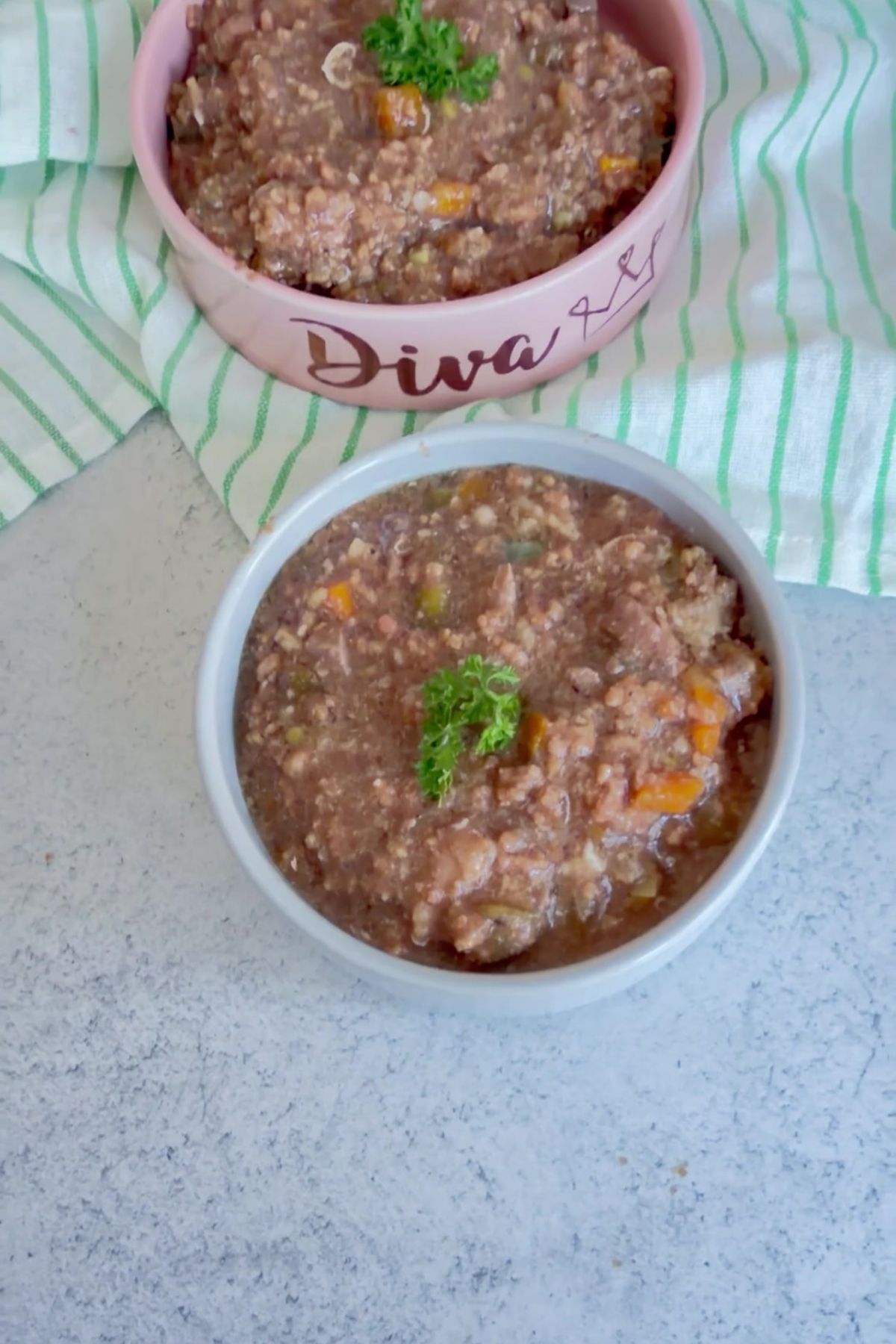
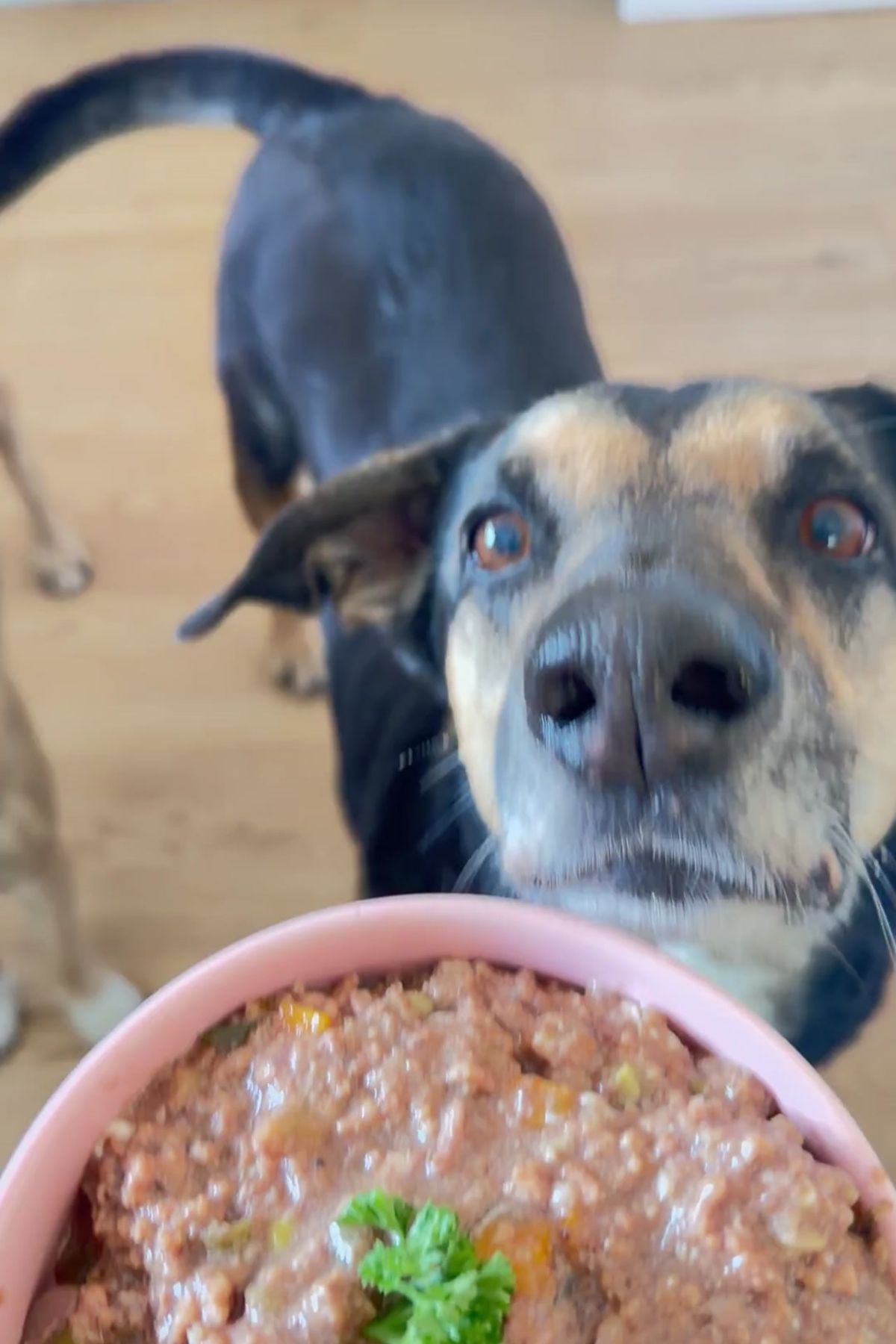
Serve to wagging tails.
Why Add Some Ingredients After Cooking?
You’ll notice that the sardines, flaxseed and supplements aren’t cooked for several hours with the beef. There’s no real advantage to slow cooking them.
Adding the sardines after cooking also means their delicate fats aren’t exposed to several hours of heat. Eggshell and kelp simply need to be thoroughly distributed throughout the finished food.
Recipe Tips
- Use lean beef. Ground beef with a high fat percentage can make the finished food very rich and dramatically increase its calorie content.
- Cut the organ meats fairly small. This helps them cook evenly and distributes them throughout the finished food.
- Don’t add seasoned stock cubes. Many contain large amounts of sodium as well as onion or garlic.
- Measure supplements carefully. More calcium, iodine or vitamins doesn’t necessarily make a recipe healthier.
- Mix thoroughly. This is particularly important after adding eggshell powder and other supplements. You don’t want one portion containing significantly more than another.
- Weigh the finished batch. Once cooked and cooled, weigh the entire recipe before portioning it. This makes calculating individual servings much easier and more accurate.
- Introduce homemade food gradually. If your dog isn’t accustomed to fresh food or organ meat, transition slowly rather than changing their entire diet overnight.
Do I Need to Brown the Beef First?
No. That’s one of the advantages of this recipe. The ground beef can go straight into the slow cooker and will cook along with the organ meat and vegetables.
If your beef releases a considerable amount of fat during cooking, you can remove some of the excess before mixing everything together. Avoid draining away all the cooking liquid, however, as it contains juices from the meat and vegetables.
Why Does This Recipe Need Calcium?
This is one of the most important considerations when making homemade dog food. Beef and other boneless meats contain plenty of phosphorus but very little calcium. Simply combining meat with vegetables doesn’t correct that imbalance.
Finely ground eggshell powder provides a concentrated calcium source. For this recipe, 1½ teaspoons is an approximate amount based on finely ground eggshell powder, but the actual calcium concentration of homemade and commercial powders can differ.
If using a commercial eggshell calcium supplement, check its label for the amount of elemental calcium it supplies.
A Note About Kelp
Kelp can provide iodine, but different kelp products can contain very different concentrations of iodine. Although we have specified a measurement, you will need to use your product’s nutritional analysis to determine how much iodine the kelp actually contributes. Too much iodine isn’t desirable, so this is one supplement where measuring accurately matters.
Can I Substitute the Vegetables?
Yes. Some easy substitutions include:
| Recipe ingredient | Possible substitute |
|---|---|
| Carrot | Butternut squash |
| Zucchini | Broccoli |
| Green beans | Peas |
| Pumpkin | Sweet potato or butternut squash |
Try to keep substitutions reasonably similar in quantity rather than adding large amounts of extra vegetables.
Can I Use Beef Broth Instead of Water?
Yes, provided it is suitable for dogs. Use an unsalted or very low-sodium broth without onion, garlic or other unsuitable seasonings.
Water is perfectly fine, though. The beef, organs and vegetables create plenty of flavor as they slowly cook.
How to Store Slow Cooker Beef Dog Food
Allow the food to cool completely before transferring it to airtight containers.
Keep it in the refrigerator for up to 3 days.
For longer storage, divide the mixture into individual portions and freeze them. Frozen portions are particularly convenient because you can defrost only what you need.
For best quality, use frozen homemade dog food within approximately 2–3 months.
Thaw portions overnight in the refrigerator rather than leaving them at room temperature.
Suggested Daily Serving Guide
Yield: Approximately 1.6kg (3.5 lb) prepared dog food
Calories: 1,455 kcal per batch / approximately 91 kcal per 100g
Serving size varies according to your dog’s calorie requirements.
| Dog Weight | Est. Daily Calories* | Approx. Food per Day |
|---|---|---|
| 5 lb (2.3 kg) | 205 kcal | 225g (8 oz) |
| 10 lb (4.5 kg) | 350 kcal | 385g (13.6 oz) |
| 20 lb (9 kg) | 585 kcal | 645g (22.7 oz) |
| 30 lb (13.6 kg) | 795 kcal | 875g (30.9 oz) |
| 40 lb (18 kg) | 985 kcal | 1.08kg (38 oz) |
| 50 lb (22.7 kg) | 1,165 kcal | 1.28kg (45 oz) |
| 60 lb (27 kg) | 1,335 kcal | 1.47kg (52 oz) |
*These are starting estimates for a typical healthy adult dog based on approximately 1.6 × RER. Actual calorie requirements vary with age, activity, body condition, neuter status and individual metabolism.
More Homemade Dog Food Recipes
If your dog enjoys this slow cooker beef dog food, try rotating it with other homemade recipes using different animal proteins. Chicken, turkey, lamb and fish can all provide different flavors and nutrient profiles.
A slow cooker is particularly handy for batch cooking because the meat and vegetables cook together with very little preparation. Portion the finished food once cool, and you’ll have several meals ready for the refrigerator or freezer.
Chicken and Salmon Slow Cooker Dog Food
FAQs
Many healthy dogs can eat beef as part of their regular diet, provided they tolerate it and the overall diet supplies all of their nutritional requirements. Feeding beef every day doesn’t by itself make a diet complete and balanced.
If you’re making this particular recipe, I wouldn’t simply omit the liver and kidney. They’re included because they provide nutrients that regular ground beef doesn’t supply in the same concentrations.
If your dog doesn’t tolerate a particular organ, the recipe should be reformulated rather than just removing it.
You can make beef dog food without sardines, but they have a nutritional purpose here rather than simply being added for flavor. Removing them changes the recipe’s omega-3 and vitamin D contribution, so an appropriate replacement should be considered.
Yes. Plain cooked butternut squash is one of the easiest substitutes. Sweet potato can also be used, although it will make the finished recipe somewhat higher in carbohydrate and calories.
If you’ve used lean beef, you generally shouldn’t need to. If a substantial layer of rendered fat collects on top, you can skim off some of the excess. Avoid draining away all of the cooking juices.
Slow Cooker Beef Dog Food
Need Metric Measurements?
Use the button options below to toggle between US cups and Metric grams.
Ingredients
- 21 oz lean ground beef
- 4.2 oz beef heart, chopped
- 1.6 oz beef liver, chopped
- 1.2 oz beef kidney, chopped
- 3.5 oz sardines in water, drained
- 1 large egg
- 2.6 oz carrots, finely diced
- 2.6 oz zucchini, finely diced
- 2.1 oz green beans, chopped
- 3.5 oz pumpkin puree
- 1 tablespoon ground flaxseed
- 1 1/2 teaspoons finely ground eggshell powder
- 1/4 teaspoon kelp powder measured according to its iodine concentration*
- 2 cups water or dog-safe unsalted beef broth
Instructions
- Add the ground beef, beef heart, liver, kidney, carrots, zucchini, green beans and pumpkin to the slow cooker.
- Pour in 1½ to 2 cups of water and stir everything together, breaking the ground beef into smaller pieces.
- Cover and cook on LOW for 5–6 hours or HIGH for 3–4 hours. The meat should be completely cooked and the vegetables tender.
- Check the mixture occasionally toward the end of cooking. If it appears too dry, add more water.
- During the final 20–30 minutes, beat the egg and stir it thoroughly into the beef mixture. Replace the lid and continue cooking until the egg is completely cooked.
- Turn off the slow cooker and stir the mixture well. Break up any remaining pieces of beef and lightly mash some of the vegetables if you prefer a softer consistency.
- Allow the food to cool until it is warm rather than piping hot.
- Mash the drained sardines and stir them through the beef mixture along with the ground flaxseed.
- Once the food has cooled sufficiently, add the eggshell powder and measured kelp. Stir extremely well so that the supplements are evenly distributed throughout the entire batch.
- Allow to cool completely before portioning and serving.
Video
Notes
Calories: 1,455 kcal per batch / approximately 91 kcal per 100g Serving size varies according to your dog’s calorie requirements.
Serving Guide
| Dog Weight | Est. Daily Calories* | Approx. Food per Day |
|---|---|---|
| 5 lb (2.3 kg) | 205 kcal | 225g (8 oz) |
| 10 lb (4.5 kg) | 350 kcal | 385g (13.6 oz) |
| 20 lb (9 kg) | 585 kcal | 645g (22.7 oz) |
| 30 lb (13.6 kg) | 795 kcal | 875g (30.9 oz) |
| 40 lb (18 kg) | 985 kcal | 1.08kg (38 oz) |
| 50 lb (22.7 kg) | 1,165 kcal | 1.28kg (45 oz) |
| 60 lb (27 kg) | 1,335 kcal | 1.47kg (52 oz) |
Nutrition
The information shown is an estimate provided by an online nutrition calculator.
can you give substitutes for beef hearts? There are no butchers near me and I cannot find them.
If you cannot find any type of heart, you can substitute it with other rich muscle meats such as lean ground beef or chuck.