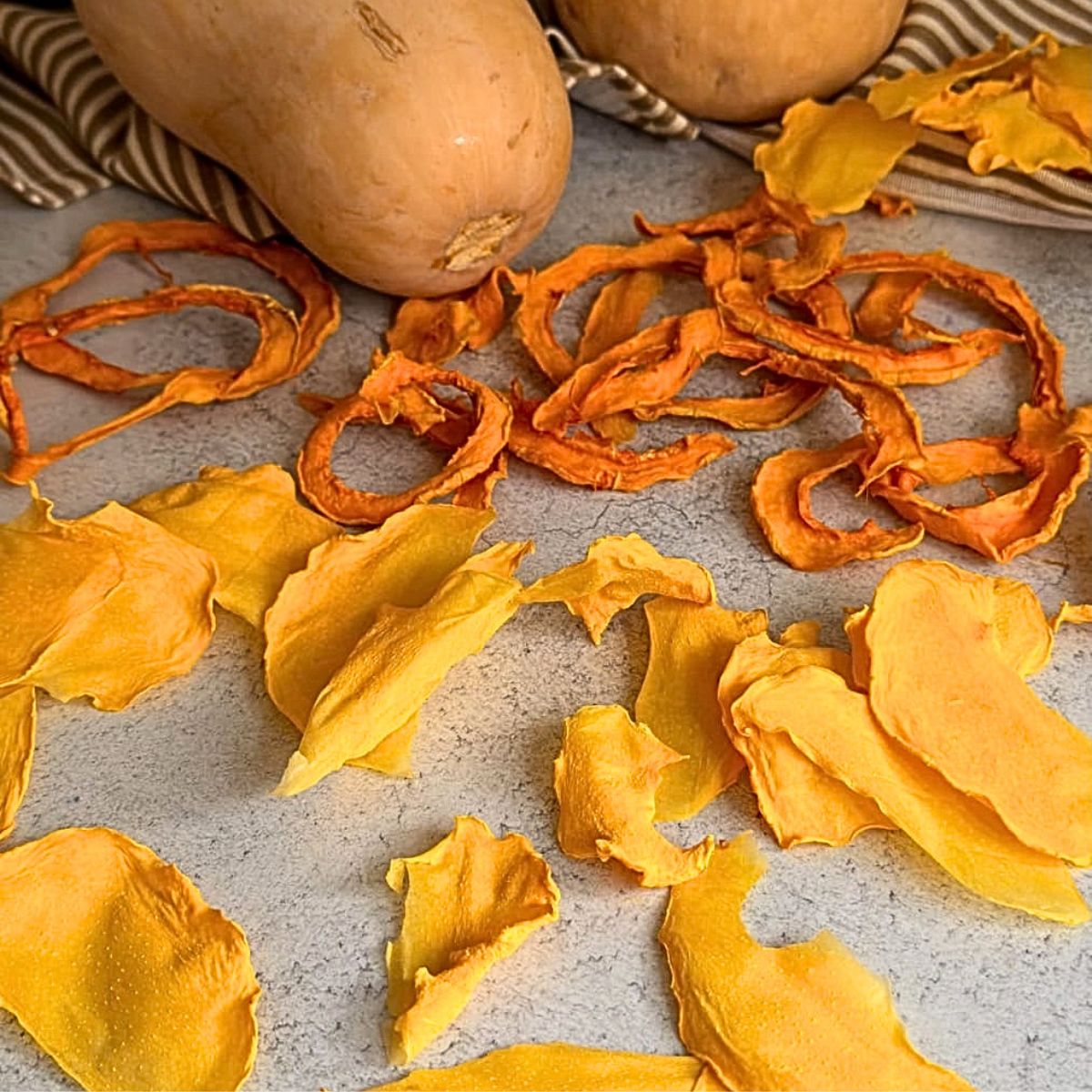
Butternut Squash Chips For Dogs
If you’re looking for a simple, healthy homemade dog treat, these butternut squash chips for dogs are a lovely way to turn one vegetable into a tasty snack. They’re naturally sweet, easy to prepare, and can be made in either the oven or a food dehydrator.
There’s no flour, eggs, or complicated mixing involved. Just slice fresh butternut squash, dry it slowly, and you’ve got a batch of homemade dog treats with no added salt, oil, or preservatives.
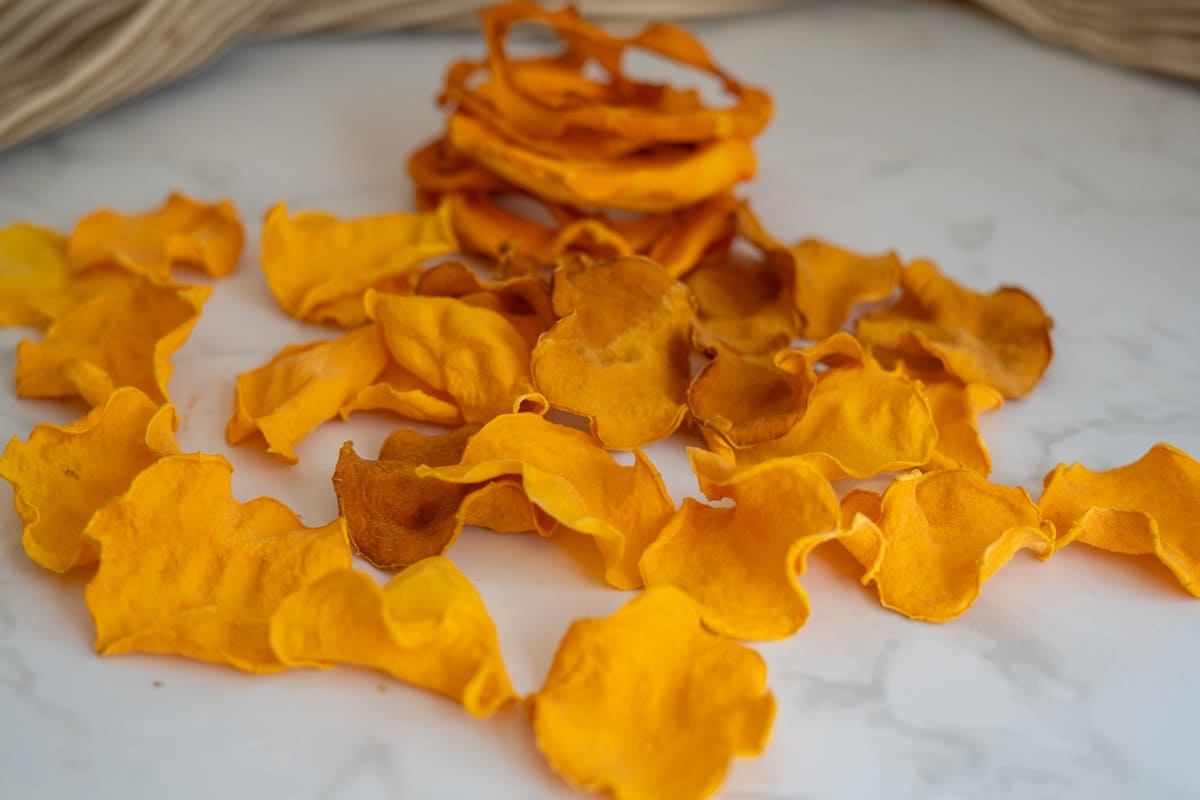
Depending on how thickly you slice the squash and how long you dry it, the finished chips can be slightly chewy or crisp. They’re a great alternative to traditional baked dog biscuits, especially if your dog enjoys vegetable treats.
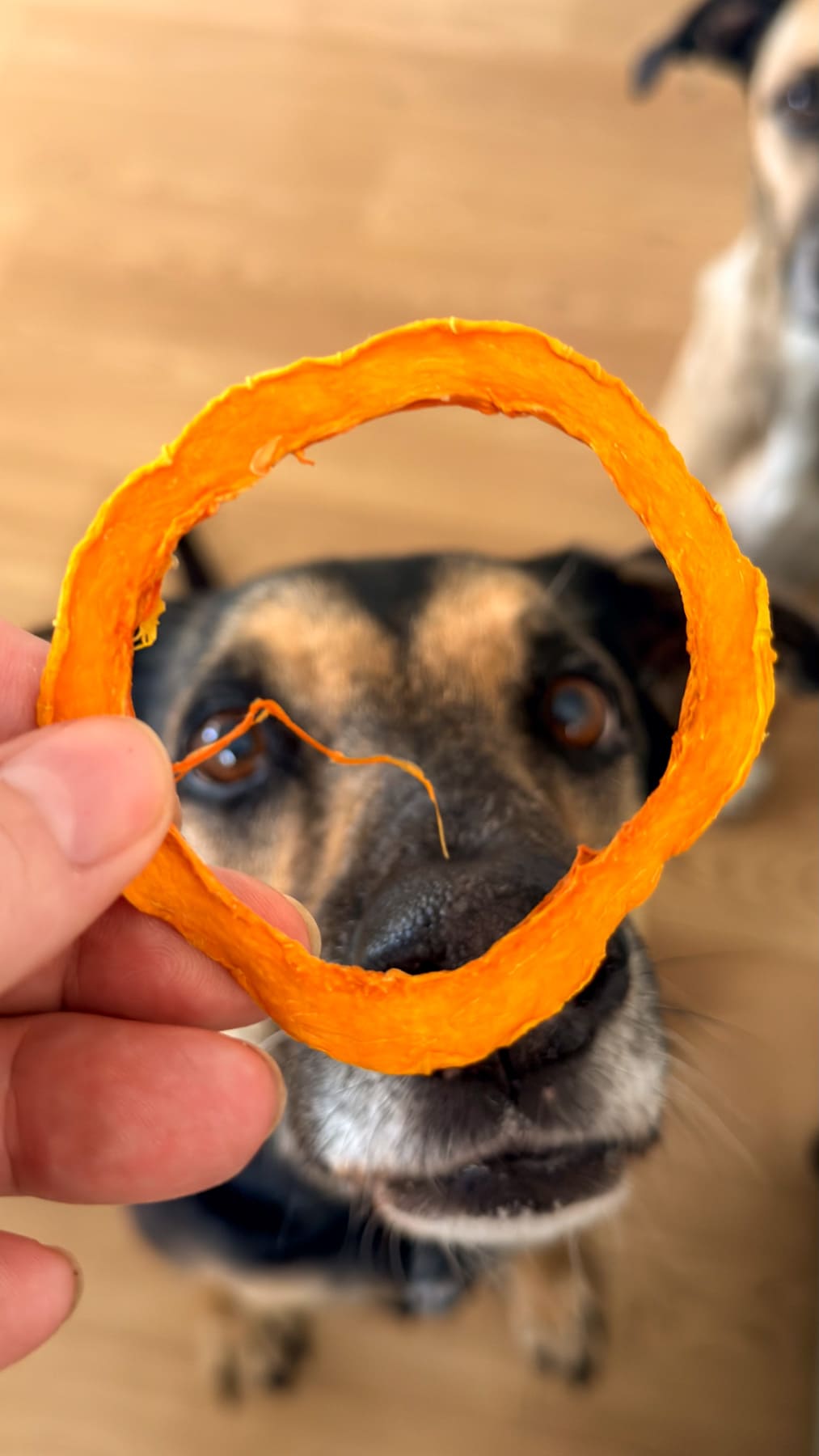
Much to my surprise, all four of our dogs loved these chips. Teddy is a given as he eats almost everything but Pixie happily munched these and she’s not the biggest fan of vegetables. I wonder whether it’s the thin crispy texture which they enjoyed or the plain flavor?
This post may contain affiliate links. Please read my disclosure policy for more information.
Why Your Dog Will Love These Butternut Squash Chips
- Naturally sweet: Butternut squash has a mild sweetness that some dogs find particularly appealing.
- Just one ingredient: No unnecessary extras, seasonings, or additives.
- Different textures: Make softer, chewy treats or dry them longer for a firmer chip.
- Easy to make: Both the oven and dehydrator do most of the work.
- A nutritious vegetable snack: Butternut squash provides fibre, beta-carotene, and other useful nutrients.
Is Butternut Squash Good for Dogs?
Yes! Butternut squash is safe for most dogs when prepared properly and served in moderation. Like pumpkin, butternut squash belongs to the winter squash family and contains several nutrients that can contribute to a dog’s overall diet.
Some of its nutritional benefits include:
- Beta-carotene: Butternut squash gets its beautiful orange colour from carotenoids, including beta-carotene, which dogs can convert into vitamin A. Vitamin A supports normal vision, skin health, and immune function.
- Dietary fibre: Fibre supports normal digestive function and healthy bowel movements. However, too much squash can cause gas or loose stools, especially in dogs that aren’t used to eating vegetables.
- Potassium: An essential mineral that helps support normal muscle and nerve function.
- Vitamin C: Butternut squash contains vitamin C, an antioxidant, although dogs can also produce their own vitamin C.
- Naturally low in fat: Plain butternut squash is low in fat, making it a useful ingredient for homemade treats when you want to avoid added oils.
One thing to remember is that dehydrating squash removes water, concentrating the calories and carbohydrates into a much smaller portion. Even though these are vegetable treats, portion control still matters.
Ingredients
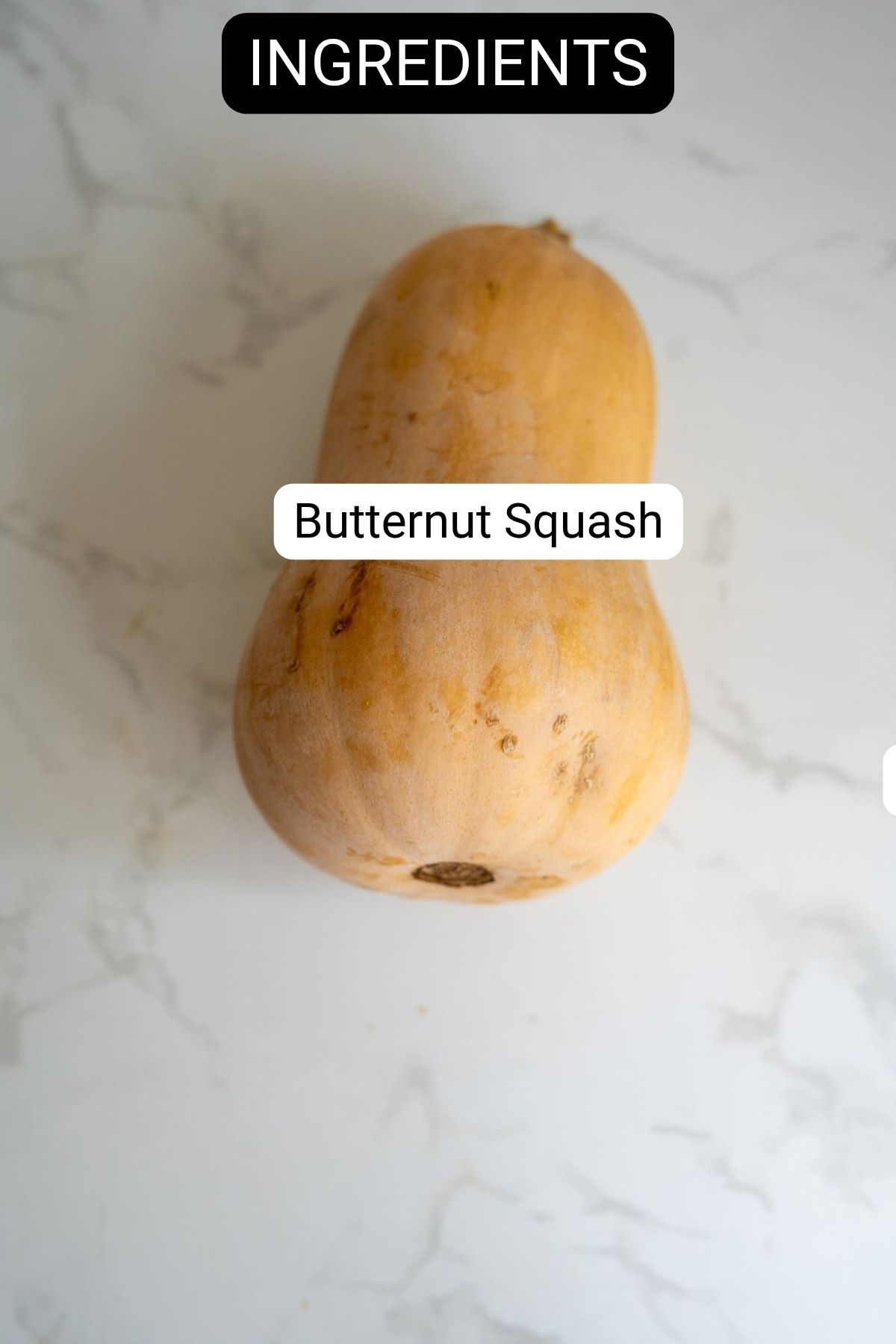
Just one ingredient is all you need. A lovely butternut squash!
How to Make Butternut Squash Chips for Dogs
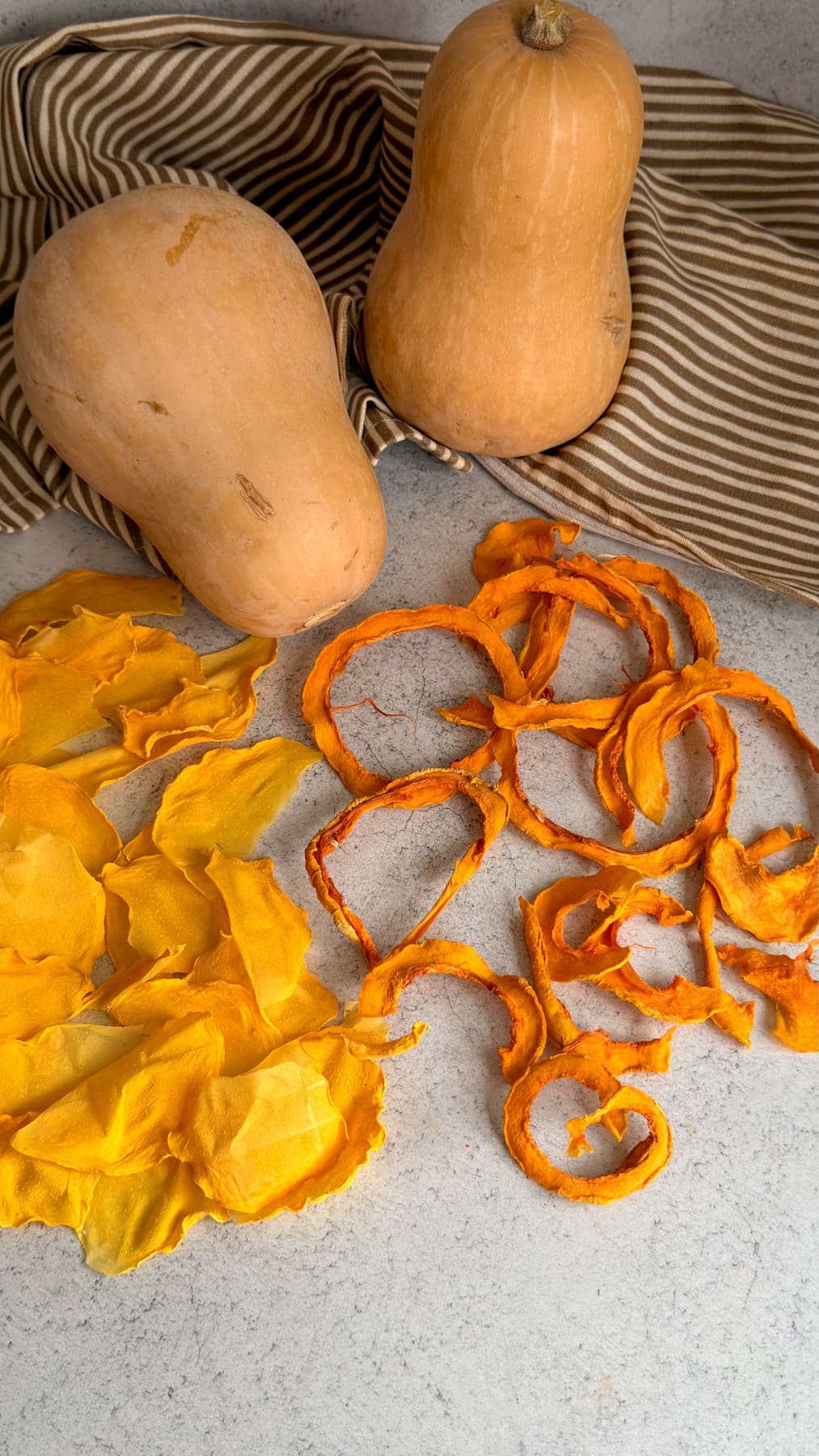
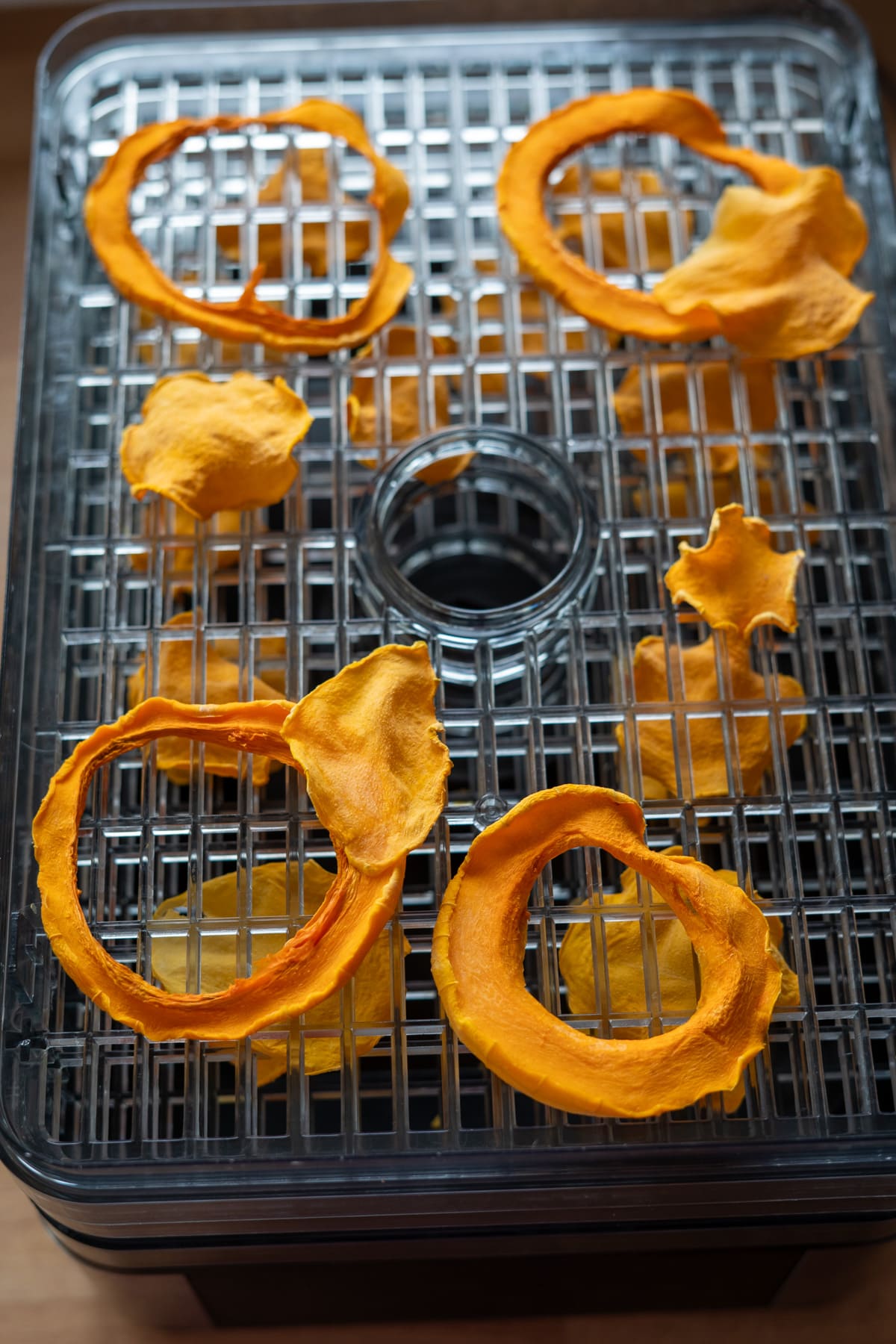
We made these in a dehydrator and the oven. For very thin slices, we used a mandoline but you can slice them with a sharp knife too. As butternut squash has a seeded section, this makes pretty looking rings when the seeds are removed and sliced. It makes no difference to the dogs though!
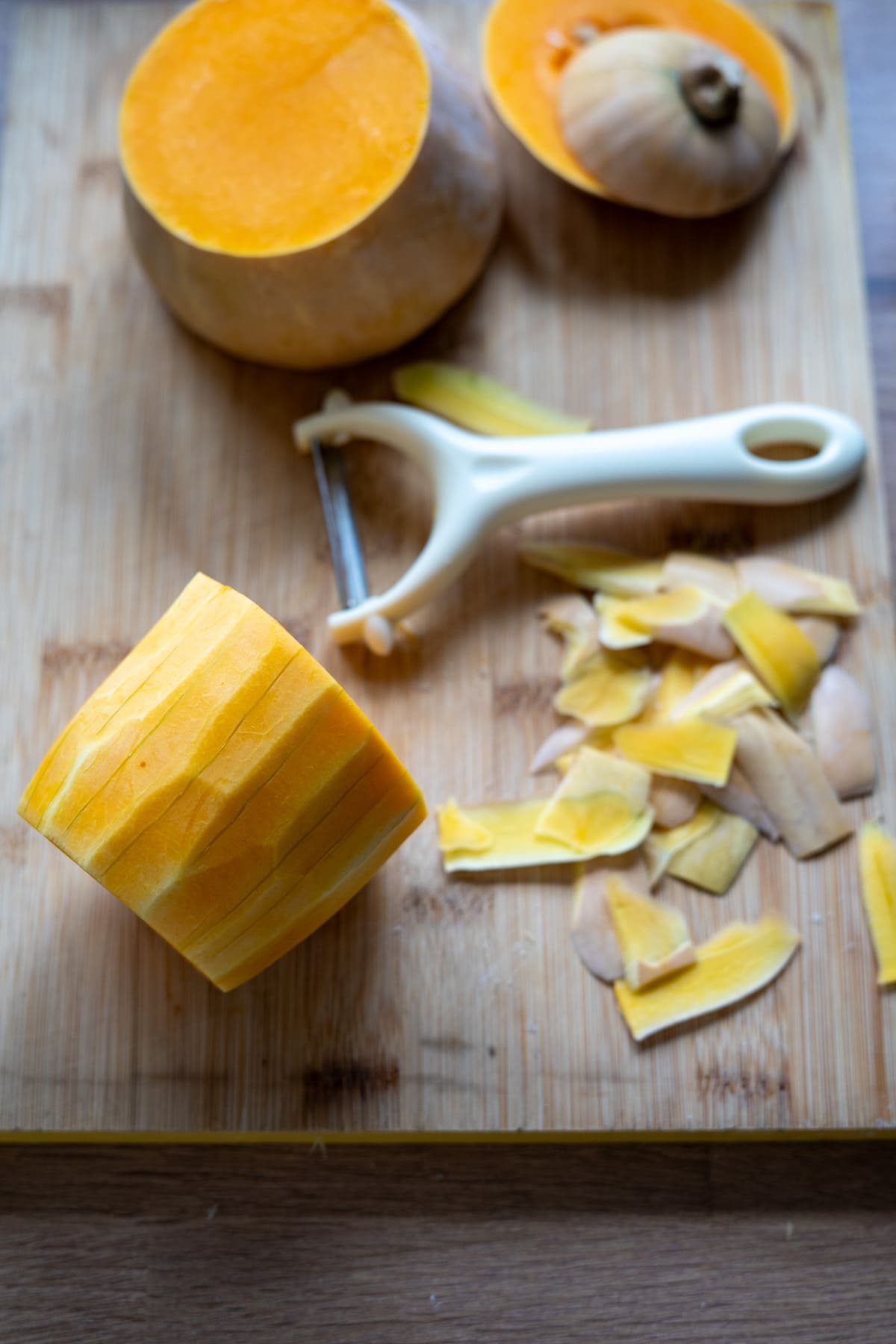
Peel butternut squash and remove seeds.
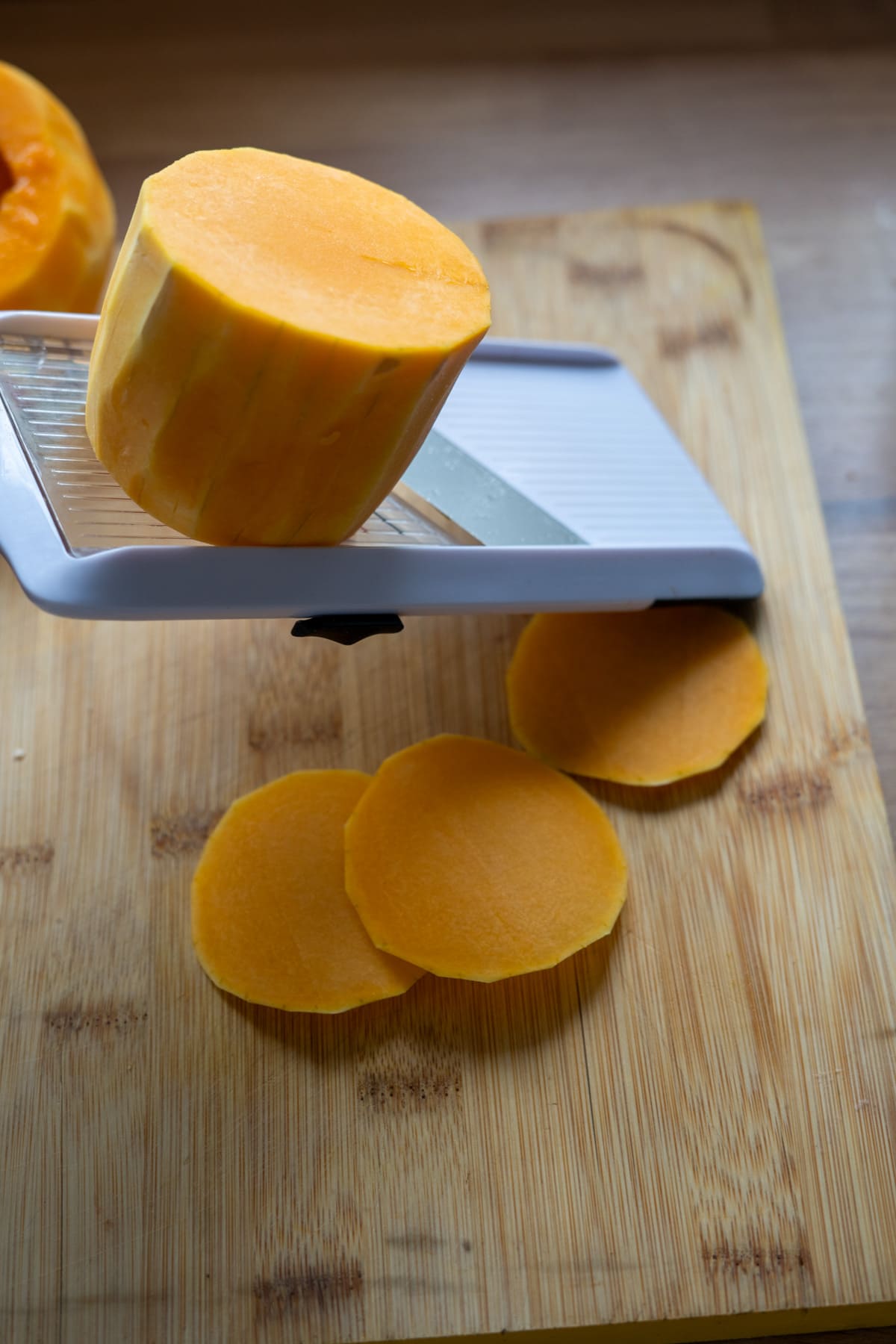
Thinly slice.
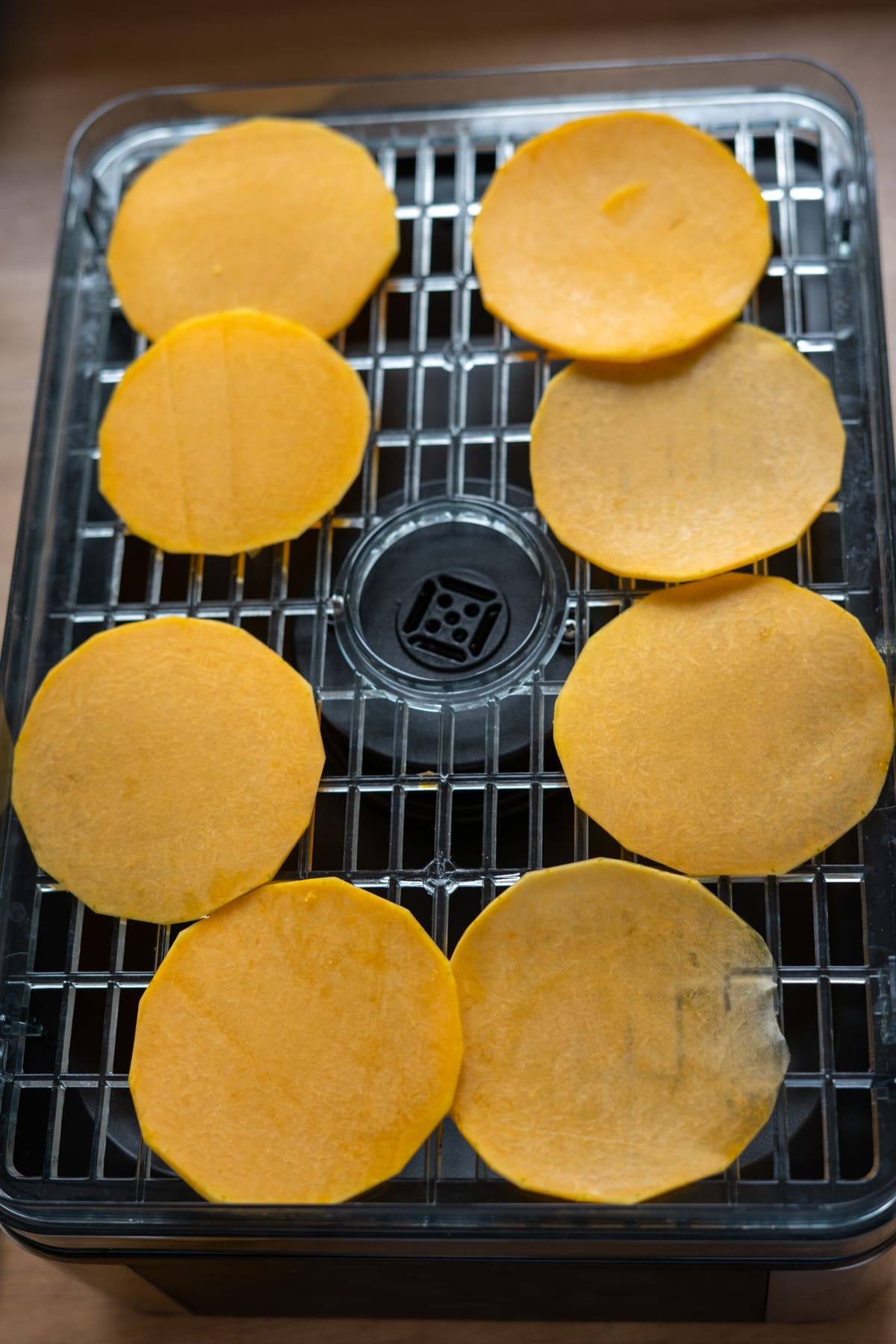
Place on a dehydrator and cook.
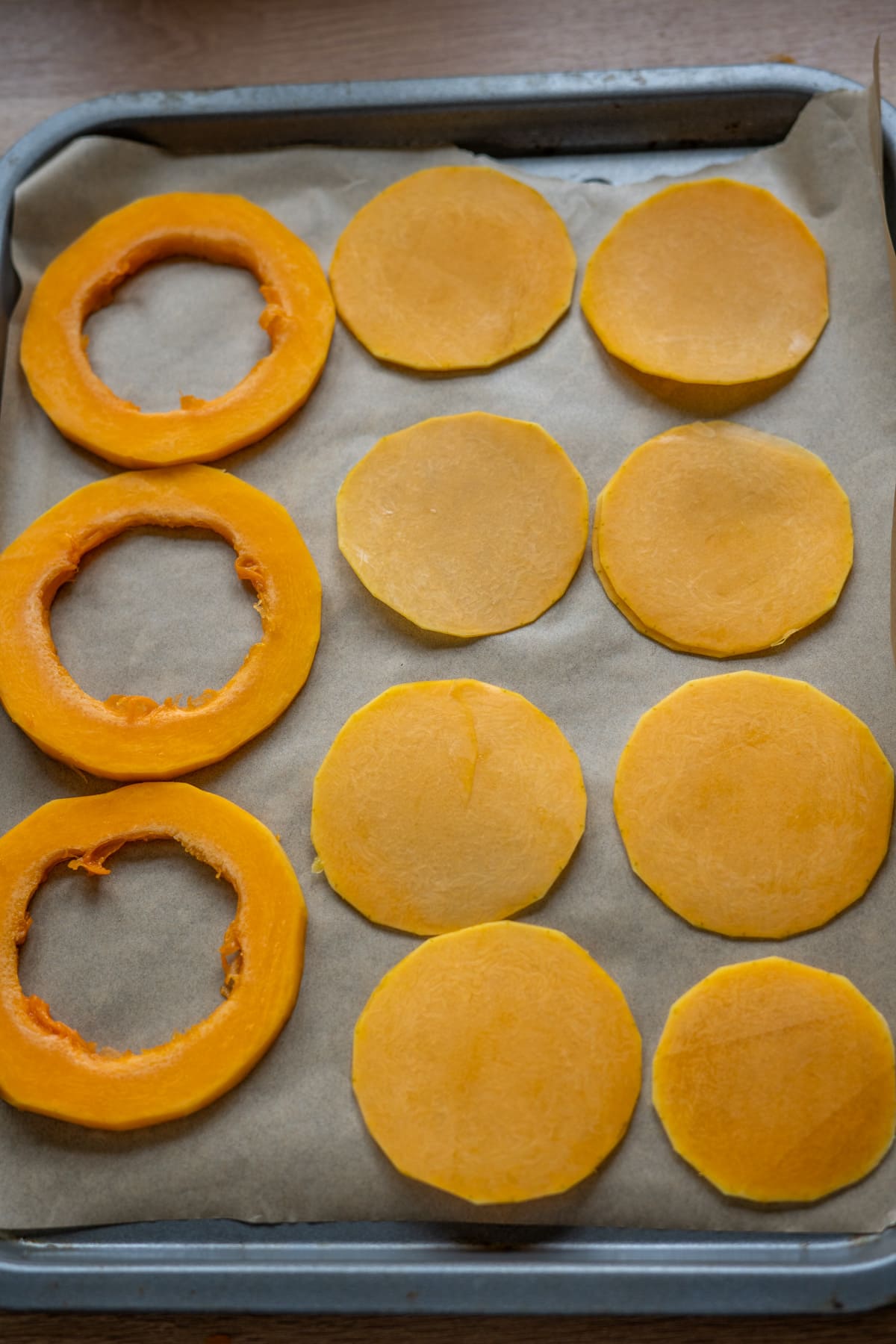
Or place on a baking tray and bake.
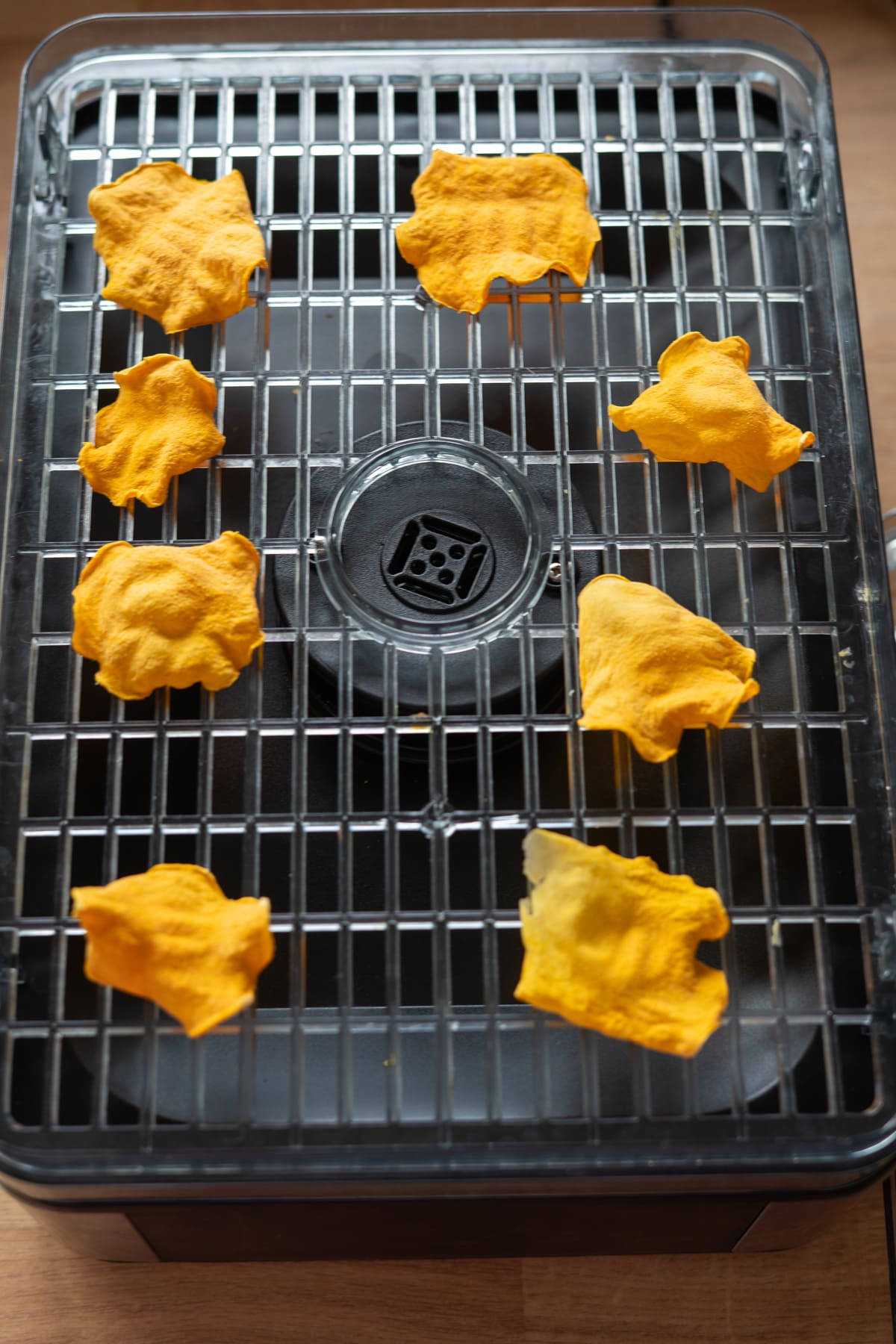
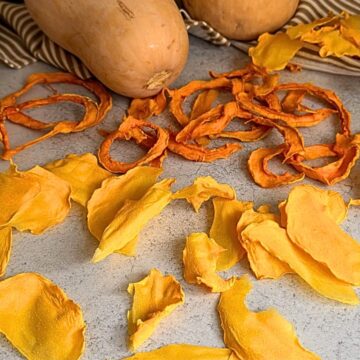
Crispy dehydrated chips.
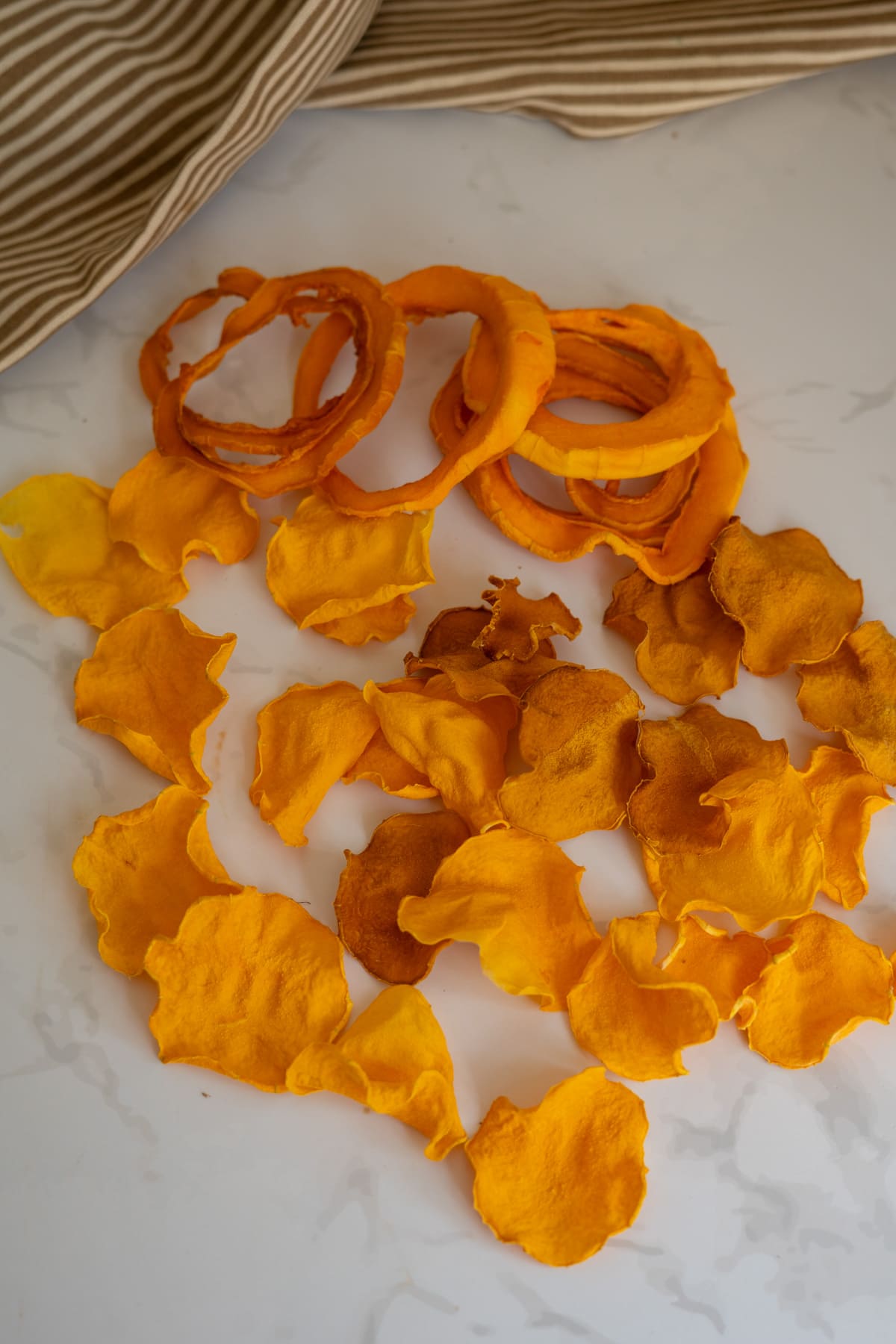
Crispy, colorful treats.
Dehydrator vs Oven: Which Is Better?
Both methods produce delicious homemade butternut squash dog treats, but there are a few differences.
| Dehydrator | Oven | |
|---|---|---|
| Temperature | 57°C / 135°F | 90–100°C / 195–210°F |
| Approximate time | 8–12 hours | 2½–4 hours |
| Texture | More even drying | May be slightly more roasted |
| Best for | Regular treat making | Occasional batches |
| Equipment | Food dehydrator | Baking tray and oven |
I prefer the dehydrator for recipes like this because it offers more consistent low-temperature drying, particularly when making larger batches. However, the oven is a perfectly good alternative if you don’t have a dehydrator.
Tips for Making the Best Butternut Squash Dog Chips
- Slice evenly. This is probably the most important part of the recipe. Uneven slices will dry at different speeds, leaving some pieces too hard while others remain damp.
- Don’t overcrowd the trays. Air needs to circulate around each slice to remove moisture effectively.
- Avoid adding oil. These chips don’t need it. Leaving out the oil also helps keep the treats low in fat.
- Check for moisture. The drying time is a guide rather than a guarantee. Chips that still contain moisture won’t store as well.
- Let the chips cool before testing. Warm chips can feel more flexible than they will once fully cooled.
- Adjust the size for your dog. Large, hard chips may be difficult for small dogs or dogs with dental problems. Break them into appropriately sized pieces and supervise chewing.
- Start with a small portion. If your dog hasn’t eaten butternut squash before, introduce it gradually to see how their digestive system responds.
How to Store Homemade Butternut Squash Chips
Because these treats contain no preservatives, proper drying and storage are important.
Refrigerator
Store completely cooled chips in an airtight container in the refrigerator.
For homemade chips, I’d recommend making small batches and using them within 3–5 days, particularly if you’re unsure whether all the moisture has been removed.
Freezer
For longer storage, place the cooled chips in a freezer-safe container or bag and freeze for up to 2–3 months as a practical quality guideline.
Thaw small portions in the refrigerator. The chips may soften after thawing, so you can dry them again if necessary before serving.
Can you store them at room temperature?
Commercial dehydrated treats are produced under controlled conditions, but homemade chips can retain moisture even when they look dry.
Without measuring water activity, it’s difficult to guarantee safe room-temperature storage. Refrigerating or freezing is the more cautious option.
Discard any treats that develop mould, an unusual smell, or unexpected moisture.
Pawsome Dehydrating Tip
Let treats cool before storing: Make sure dehydrated treats are completely cool and dry before putting them into a container. Any remaining warmth or moisture can create condensation and shorten their storage life.
How Many Butternut Squash Chips Can Dogs Eat?
Butternut squash chips should be given as an occasional treat, not a replacement for a complete and balanced diet. As a general guideline, treats should account for no more than 10% of your dog’s daily calorie intake.
The exact number of chips depends on their size, thickness, and how much water has been removed.
| Dog size | Suggested starting portion |
|---|---|
| Small dogs (under 10 kg / 22 lb) | ½–1 small chip |
| Medium dogs (10–25 kg / 22–55 lb) | 1–2 small chips |
| Large dogs (25–40 kg / 55–88 lb) | 2–3 small chips |
| Extra-large dogs (over 40 kg / 88 lb) | 3–4 small chips |
These are conservative starting suggestions, not calculated daily allowances. A large chip can contain considerably more squash than a small one. Always consider your dog’s overall calorie needs, digestive tolerance, and any veterinary dietary restrictions.
More Homemade Vegetable Dog Treats
If your dog enjoys these butternut squash chips, why not try some other homemade vegetable treats?
FAQs
Yes, I recommend peeling it for dog treats. Although butternut squash skin is not considered toxic, it can be tough and fibrous, particularly after dehydration.
Removing the skin gives the chips a more consistent texture.
For this recipe, remove the seeds and stringy centre. Whole seeds can be difficult for dogs to digest and may present a choking risk, especially for smaller dogs.
Puppies can generally eat small amounts of plain, properly prepared butternut squash once they’re established on solid food. However, firm dehydrated chips can be difficult for puppies to chew.
Softer, cooked butternut squash is usually a better option for younger puppies.
This usually means the slices are too thick or still contain moisture.
Return the chips to the dehydrator or low-temperature oven and continue drying, checking regularly.
Even fully dried squash can remain slightly leathery because of its natural sugars and fibre.
Butternut Squash Chips For Dogs
Need Metric Measurements?
Use the button options below to toggle between US cups and Metric grams.
Ingredients
- 1 butternut squash
Instructions
Butternut Squash Preparation
- Peel the butternut squash, remove the seeds, and slice the flesh approximately 3 mm (⅛ inch) thick.
Dehydrator Instructions
- Arrange the slices in a single layer on dehydrator trays.
- Set the dehydrator to 57°C (135°F).
- Dehydrate for 8–12 hours, or until thoroughly dry, checking periodically.
- Cool completely before serving or storing.
Oven instructions
- Preheat the oven to 100°C (210°F), or 90°C (195°F) fan.
- Place the slices on parchment-lined baking trays in a single layer.
- Bake for 2½–4 hours, turning halfway through and checking regularly.
- Continue drying if necessary, then cool completely before serving.
Notes
-
Slice the squash evenly for consistent drying.
-
Cooking times vary with the thickness of the chips and your equipment.
-
Don’t add salt, oil, or seasoning.
-
Refrigerate in an airtight container and use within 3–5 days, or freeze for longer storage.
-
Serve in moderation as part of your dog’s treat allowance.
-
Always supervise your dog when feeding firm or crunchy treats.
Nutrition
The information shown is an estimate provided by an online nutrition calculator.