Can Cats Eat Turkey? Benefits, Risks and How to Feed It Safely
Can cats eat turkey? Yes! Cats can safely enjoy plain, fully cooked turkey as an occasional treat or a tasty addition to their regular food. Turkey is rich in animal protein and contains several important nutrients that support your cat’s health.
Whether you’re preparing a turkey dinner or wondering if your cat can share a little Thanksgiving or Christmas turkey, the good news is that a small amount of properly prepared turkey is generally safe.
However, not all turkey is suitable for cats. Seasonings, cooked bones, fatty skin and processed turkey products can cause problems. Even the way you cook turkey makes a difference.
Here’s everything you need to know about feeding turkey to cats, including which parts are safe, how much to offer and what to avoid.
This post may contain affiliate links. Please read my disclosure policy for more information.
Is Turkey Safe for Cats?
Yes, turkey is safe for most healthy cats when it is thoroughly cooked, unseasoned and served without bones or skin.
Cats are obligate carnivores, meaning they rely on nutrients found in animal-based foods to meet their nutritional needs. Turkey is a source of high-quality animal protein, making it a suitable ingredient in many commercial cat foods.
Both white and dark turkey meat can be fed to cats, although skinless turkey breast is generally the leaner option.
The important thing is to keep it simple. Your cat doesn’t need butter, gravy, herbs or seasoning to enjoy turkey. A few small pieces of plain cooked meat are perfectly appealing on their own.
Is Turkey Good for Cats?
Turkey provides several nutrients that can contribute to a cat’s diet. Although it shouldn’t replace a complete and balanced cat food, it can be a useful source of protein when offered occasionally.
1. High-quality animal protein
Turkey contains protein that provides essential amino acids needed for maintaining muscles, repairing tissues and supporting normal body functions.
Cats have relatively high protein requirements compared with many other animals, so animal-based protein is an important part of their diet.
2. Contains taurine
Turkey naturally contains taurine, an essential amino acid-like nutrient that cats need for healthy heart function, vision and reproduction.
Unlike some other animals, cats cannot produce enough taurine themselves and must obtain it through their diet. However, the amount of taurine in turkey varies depending on the cut, cooking method and preparation. Feeding turkey alone does not guarantee that your cat receives enough taurine.
3. Provides B vitamins
Turkey contains several B vitamins, including niacin (vitamin B3), vitamin B6 and vitamin B12. These nutrients help support energy metabolism, nervous system function and the production of healthy blood cells.
4. Contains important minerals
Turkey provides minerals including phosphorus, selenium and zinc. These play different roles in the body, from supporting normal immune function to helping maintain healthy cells and tissues.
5. A lean protein option
Skinless turkey breast is relatively low in fat, making it a useful choice when you want to offer a small, protein-rich treat without adding too much fat.
Dark turkey meat generally contains more fat than breast meat, although it can still be suitable when cooked plainly and served without skin.
Can Cats Eat Cooked Turkey?
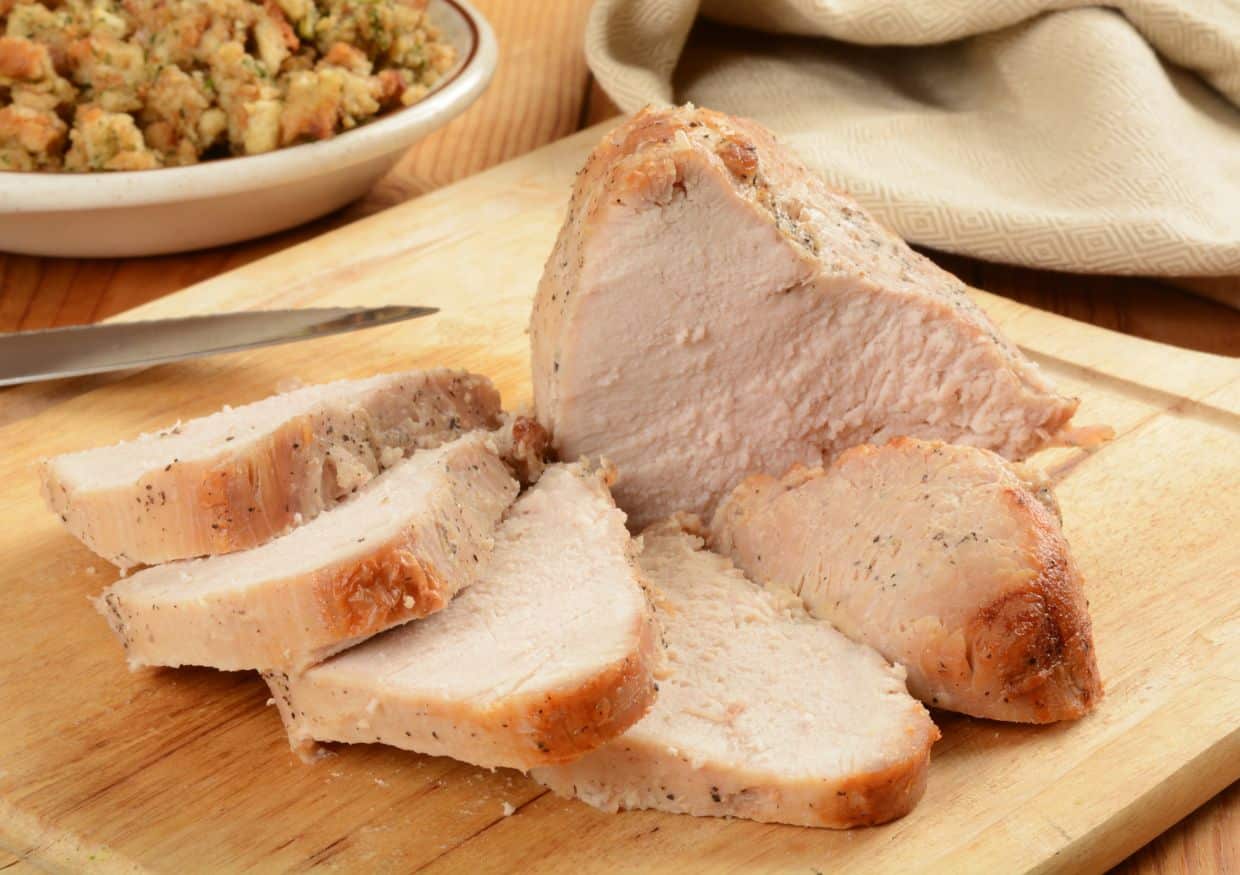
Yes! Plain, fully cooked turkey is the safest way to offer turkey to your cat. You can boil, bake, roast or steam turkey, provided it is cooked without ingredients that could be harmful to cats.
For food safety, turkey should reach an internal temperature of 165°F (74°C), measured with a food thermometer.
Once cooked, allow the meat to cool and remove all bones, skin, cartilage and visible excess fat before serving. Cut the turkey into small, bite-sized pieces or shred it into manageable strands.
Simple preparation tip: Cook a small piece of turkey breast separately from the family meal, without oil, butter, salt or seasoning. Once cooled, shred it and offer a little to your cat.
Can Cats Eat Raw Turkey?
Raw turkey is not recommended for cats. Although cats are carnivores, this doesn’t mean raw meat is automatically safe for them.
Raw poultry can contain harmful bacteria, including Salmonella and Campylobacter, which may cause illness in cats and people.
Cats can also carry and shed harmful bacteria without showing obvious signs of illness, creating a potential risk for other animals and people in the household.
Raw turkey may also contain parasites or other pathogens, depending on its source and handling. Cooking turkey thoroughly significantly reduces these risks.
If you’re considering feeding your cat a raw diet, speak to your veterinarian about the nutritional and food safety implications first.
Can Cats Eat Turkey Skin?
It’s best to remove turkey skin before feeding the meat to your cat. Turkey skin contains more fat than lean turkey meat, particularly when it has been roasted with butter or oil.
A small accidental bite of plain skin is unlikely to harm most healthy cats, but larger amounts of fatty food can cause digestive upset, including vomiting and diarrhea.
High-fat meals may also be a concern for cats with certain medical conditions, including a history of pancreatitis. Seasoned turkey skin presents additional risks because it may contain garlic, onion, salt or other ingredients that aren’t suitable for cats.
For a safer treat, stick to skinless turkey meat.
Can Cats Eat Turkey Bones?
No. Turkey bones should never be offered to cats. Cooked turkey bones can splinter into sharp fragments that may cause choking, mouth injuries or damage to the digestive tract.
Bones can also become lodged in the throat or intestines, potentially causing a serious obstruction.
Raw bones are not risk-free either. They can cause broken teeth, choking, gastrointestinal injuries and exposure to harmful bacteria. Always check cooked turkey carefully for small bones before offering it to your cat.
Important: If your cat swallows a turkey bone, contact your veterinarian promptly. Don’t attempt to make your cat vomit unless your veterinarian specifically instructs you to do so.
Can Cats Eat Turkey Breast?
Yes, turkey breast is one of the best cuts to offer cats. It’s a lean source of animal protein and is easy to prepare without additional ingredients.
Plain boiled, steamed or baked turkey breast can be shredded into small pieces and served as an occasional treat. Turkey breast can also be mixed into your cat’s regular food to add a little variety.
Avoid confusing freshly cooked turkey breast with packaged turkey breast slices, which may contain added salt, preservatives or seasonings.
Can Cats Eat Turkey Thighs or Legs?
Cats can eat the cooked meat from turkey thighs and legs, provided all bones, skin and excess fat have been removed.
Dark turkey meat contains more fat than skinless breast meat, but it also provides protein and other nutrients. It’s important to check this meat particularly carefully for small bones, tendons and cartilage.
Offer only a small amount, especially if your cat isn’t used to eating turkey.
Can Cats Eat Ground Turkey?
Yes, plain ground turkey (turkey mince) can be a convenient way to serve turkey to cats. Choose unseasoned ground turkey without added onion, garlic or other ingredients.
Cook it thoroughly in a pan without added oil, breaking it into small pieces as it cooks. Drain off excess fat and allow it to cool before serving. Ground turkey can be offered as a small treat or used as an ingredient in homemade cat treats.
However, ground turkey alone isn’t a complete and balanced meal for cats. It lacks the correct proportions of several essential nutrients, including calcium.
Can Cats Eat Turkey Liver?
Cats can eat small amounts of fully cooked turkey liver, but it should be fed sparingly. Turkey liver contains protein, iron, vitamin B12 and vitamin A.
Vitamin A is essential for cats, but liver is particularly rich in it. Feeding too much liver regularly can lead to excessive vitamin A intake and potentially serious health problems.
If you offer turkey liver, keep the portions very small and occasional. Cats already eating a complete and balanced diet generally don’t need extra liver.
Can Cats Eat Turkey Hearts?
Yes, fully cooked turkey hearts can be offered as an occasional treat. Turkey hearts are muscular organs that provide animal protein and naturally contain taurine.
Remove any tough or unsuitable pieces, cook thoroughly without seasoning and chop the heart into small pieces.
Despite their taurine content, turkey hearts should not be relied upon as a cat’s sole source of this essential nutrient. As with other treats, moderation is important.
Can Cats Eat Deli Turkey?
Deli turkey, turkey lunch meat and packaged turkey slices are best avoided.
Although these products may look like ordinary cooked turkey, they often contain ingredients that make them less suitable for cats.
These may include:
- High levels of sodium
- Added preservatives
- Garlic or onion powder
- Flavorings and seasonings
- Added sugar or other ingredients
A tiny accidental piece of plain deli turkey isn’t necessarily an emergency, but it’s not a good choice for a regular cat treat. If your cat has eaten deli turkey containing onion or garlic, contact your veterinarian for advice, even if your cat seems well.
Freshly cooked, unseasoned turkey is a much better option.
Can Cats Eat Smoked Turkey?
Smoked turkey isn’t recommended for cats. Most smoked turkey products are cured or seasoned with salt, and some contain garlic, onion or other flavorings.
Smoked turkey can also be relatively high in fat, depending on the cut. Rather than sharing smoked turkey from your plate, offer a little plain cooked turkey instead.
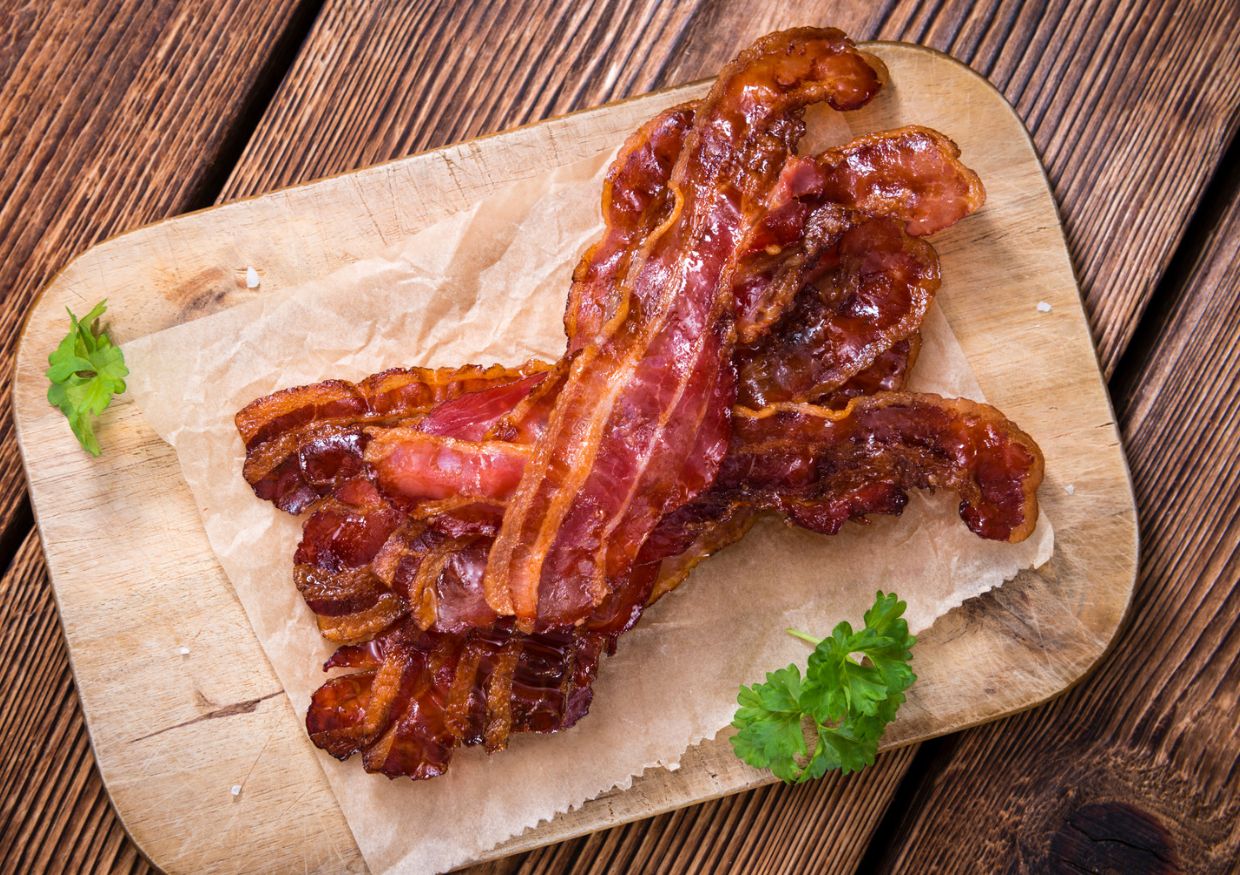
Can Cats Eat Turkey Bacon or Turkey Sausage?
Turkey bacon and turkey sausage are processed meats and generally aren’t suitable for cats. They often contain high levels of sodium, added fat, preservatives and seasonings.
Some turkey sausages may contain onion or garlic, both of which are toxic to cats. Although these products are made from turkey, they don’t offer the same benefits as plain, freshly cooked meat.
Can Cats Eat Thanksgiving or Christmas Turkey?
Your cat may be very interested in the turkey on your Thanksgiving or Christmas table, but be careful about sharing leftovers.
A little plain, fully cooked turkey meat can be suitable if it hasn’t been seasoned or cooked with ingredients that are unsafe for cats. However, holiday turkey often contains butter, salt, stuffing, gravy, herbs and other seasonings.
Onion and garlic are particularly concerning because they can damage a cat’s red blood cells and cause anemia. This includes onion and garlic powders, which may be found in stuffing mixes, seasoning blends and gravy.
Avoid giving your cat:
- Turkey cooked with onion or garlic
- Turkey covered in gravy
- Stuffing or seasoned turkey meat
- Turkey skin and fatty trimmings
- Cooked turkey bones
- Turkey cooked with heavily salted butter or sauces
Holiday feeding tip: If you want your cat to join the celebration, set aside a small portion of plain turkey before adding seasonings, stuffing or gravy.
How Much Turkey Can Cats Eat?
Turkey should be offered as an occasional treat rather than a main meal, unless it’s part of a properly formulated, complete and balanced diet.
As a general guideline, treats and extras should make up no more than 10% of your cat’s daily calorie intake. For some cats, especially those with medical conditions or weight concerns, less may be appropriate.
Cooked skinless turkey breast contains approximately 135 calories per 100 grams, although this varies with preparation.
For a typical healthy adult cat, a few grams of cooked turkey may be plenty for a treat.
| Amount of cooked turkey breast | Approximate calories |
|---|---|
| 5 g | 7 calories |
| 10 g | 14 calories |
| 15 g | 20 calories |
| 20 g | 27 calories |
These are approximate figures, not recommended daily serving amounts.
A cat’s appropriate treat allowance depends on its weight, age, activity level, health and regular diet. Remember that turkey counts toward your cat’s total daily treat allowance alongside any other snacks.
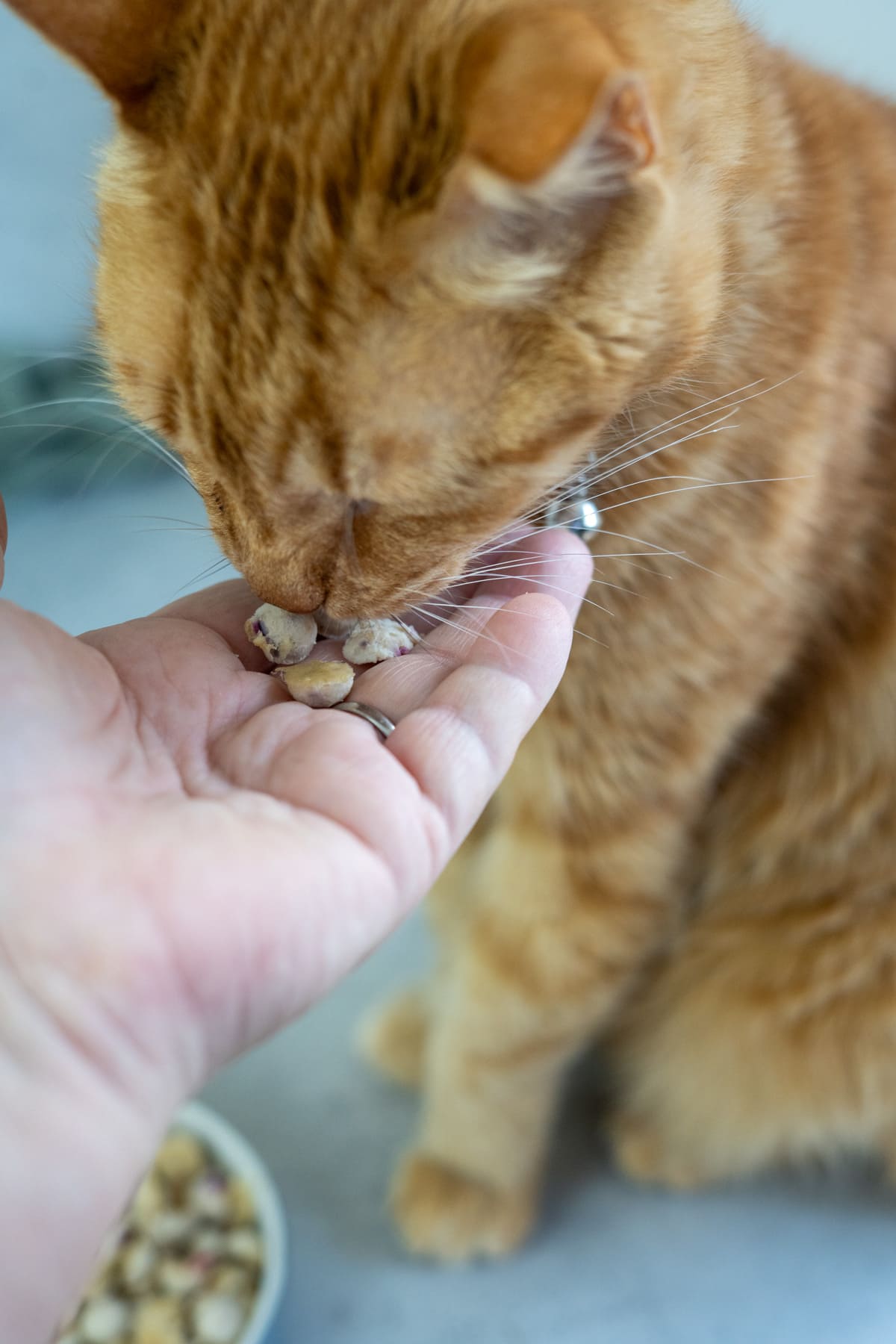
If your cat is trying turkey for the first time, start with just one or two small pieces and watch for digestive upset.
Can Kittens Eat Turkey?
Kittens can eat small amounts of plain, fully cooked turkey once they are established on solid food.
However, growing kittens have specific nutritional requirements, and their main diet should be a complete and balanced kitten food.
Turkey should only be offered as an occasional extra. Make sure the meat is finely shredded, boneless and easy to chew.
Avoid giving turkey to very young kittens that haven’t started eating solid food.
Can Cats Be Allergic to Turkey?
Yes, although turkey is safe for many cats, some may develop an adverse reaction to turkey protein.
Food allergies in cats can cause symptoms such as:
- Persistent itching or excessive grooming
- Skin irritation or inflammation
- Recurrent ear or skin problems
- Vomiting
- Diarrhea
These symptoms can have many other causes, so they don’t automatically mean your cat is allergic to turkey. If you suspect a food allergy, speak with your veterinarian about an appropriate elimination diet.
Don’t repeatedly change proteins or attempt to diagnose an allergy based on symptoms alone.
Can Cats Eat Turkey Every Day?
A small amount of plain turkey may be acceptable for some healthy cats, but it shouldn’t replace their regular complete and balanced food.
Turkey meat alone doesn’t provide all the vitamins, minerals and other nutrients cats require in the correct amounts. For example, a meat-only diet can be deficient in calcium and may have an unsuitable calcium-to-phosphorus ratio.
Over time, feeding an unbalanced homemade diet can lead to nutritional deficiencies and health problems.
If you want turkey to be the main protein in your cat’s daily meals, choose a commercial cat food labeled complete and balanced for your cat’s life stage, or work with a board-certified veterinary nutritionist to formulate a suitable homemade diet.
How to Prepare Turkey for Cats
Preparing turkey for your cat is straightforward, and you don’t need any special ingredients.
- Choose plain turkey. Skinless turkey breast or lean ground turkey are convenient options.
- Cook thoroughly. Boil, steam or bake the turkey without salt, butter, oil, garlic, onion or seasoning. Cook to 165°F (74°C).
- Remove bones and skin. Check the meat carefully and discard any bones, skin and excess fat.
- Allow to cool. Never serve turkey while it’s hot.
- Cut into small pieces. Shred or finely chop the turkey into manageable portions.
- Serve a little at a time. Offer a small amount as a treat or mix it into your cat’s usual food.
Can You Freeze Cooked Turkey for Cats?
Yes! Plain cooked turkey freezes well and can be portioned into small servings. Allow the turkey to cool promptly, then store it in an airtight container in the refrigerator for up to 3–4 days.
For longer storage, freeze individual portions in freezer-safe containers or bags. For best quality, aim to use them within 2–3 months. Thaw frozen turkey in the refrigerator and serve it cold or gently warmed to a safe temperature.
Avoid leaving cooked turkey at room temperature for extended periods, and discard any uneaten turkey that has been sitting out for more than two hours.
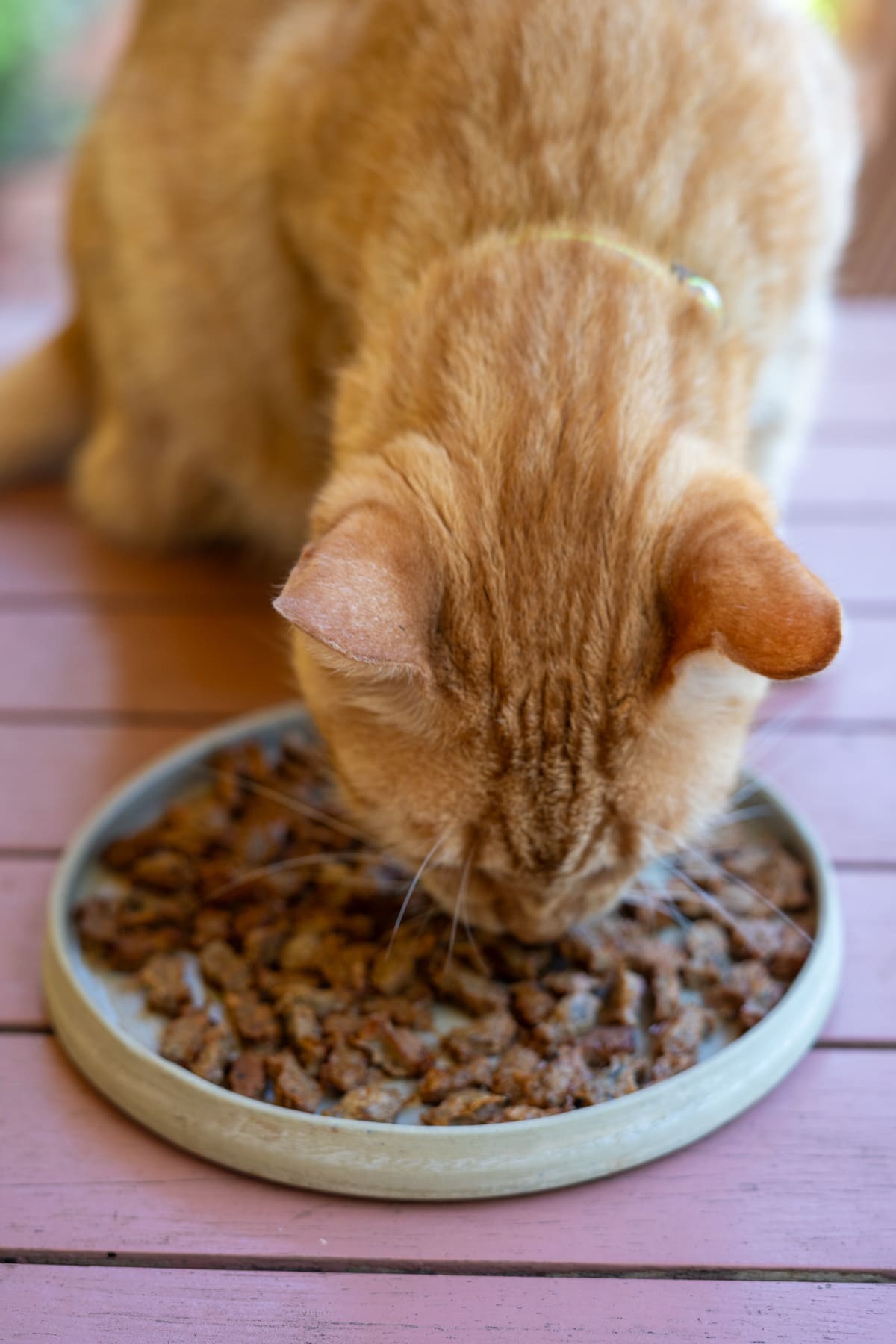
Homemade Turkey Cat Treat Recipes
If your cat enjoys turkey, try these homemade cat treat recipes.
FREQUENTLY ASKED QUESTIONS