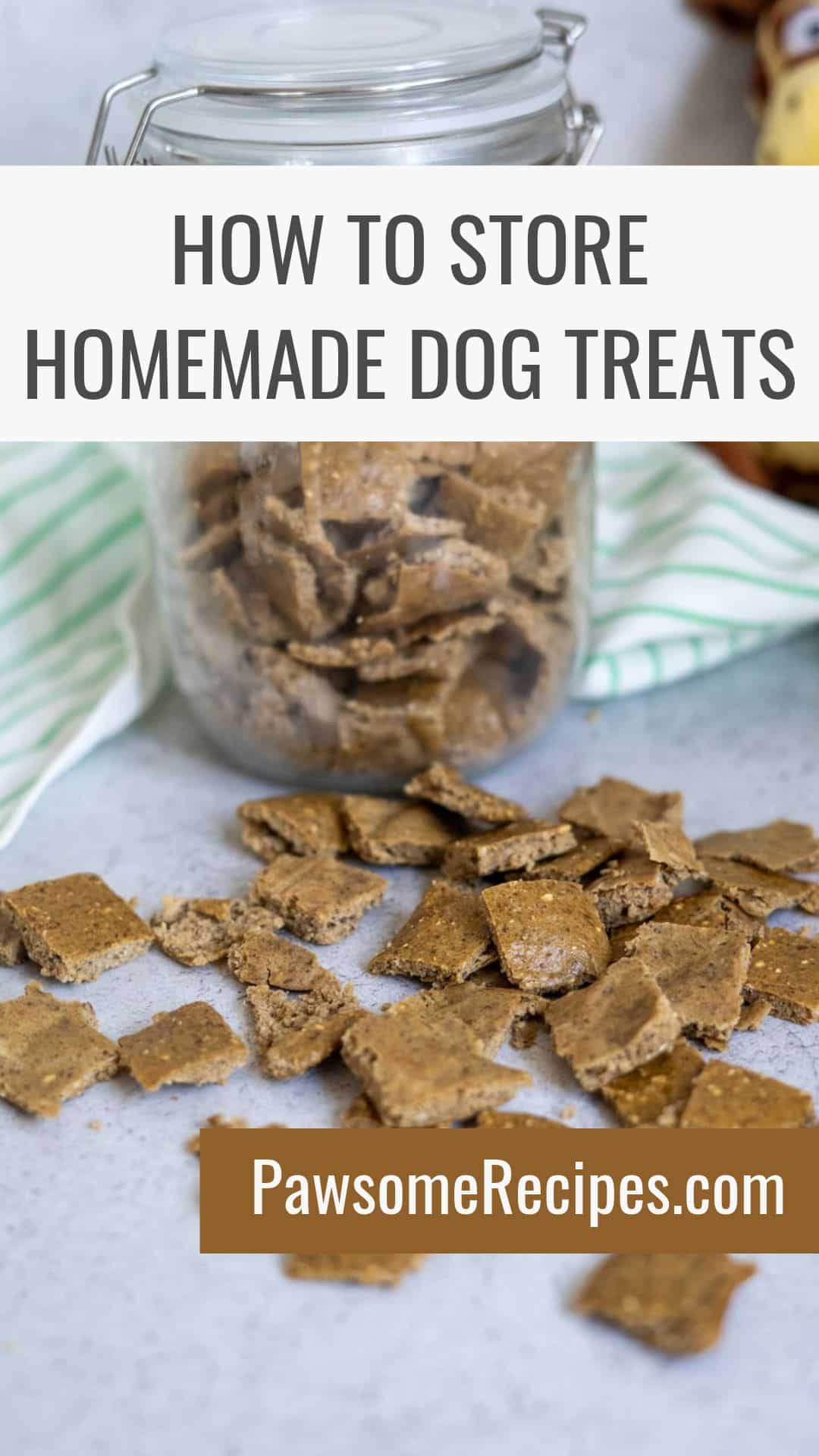
How to Store Homemade Dog Treats and Prevent Mold
Knowing how to store homemade dog treats can make all the difference between a batch of biscuits that stays fresh and one that develops mold after just a few days.
There’s nothing more disappointing than spending time making delicious homemade dog treats, only to open the container a few days later and discover those dreaded fuzzy spots!
Unlike many commercially produced treats, homemade dog biscuits usually don’t contain added preservatives. And while that’s one reason we enjoy making them ourselves, it also means we need to pay a little more attention to how they’re cooled, stored and handled.
The good news? With a few simple changes, you can help your homemade dog treats stay fresh for longer and avoid wasting perfectly good ingredients.

This post may contain affiliate links. Please read my disclosure policy for more information.
Why do homemade dog treats get moldy?
The biggest reason homemade dog treats develop mo ld is moisture.
Mold is a type of fungus that grows when conditions are suitable. It needs available moisture and nutrients, and it often grows more quickly in warm, humid environments.
Even if your homemade biscuits feel dry on the outside, they may still contain moisture in the centre. Once they’re placed in an airtight container, that moisture can create an environment where mould develops.
Here are some common reasons this happens.
1. The treats weren’t completely dry
A biscuit might look perfectly baked on the outside but still be soft or slightly damp inside.
This is particularly common with homemade dog treats containing ingredients such as:
- Pumpkin puree
- Mashed sweet potato
- Banana
- Applesauce
- Fresh carrots or zucchini
- Meat or fish
These ingredients contribute moisture to the dough, and some recipes naturally produce softer biscuits.
If you’re making crunchy dog biscuits, rolling the dough thinner and baking until thoroughly dry can help. However, soft biscuits should be refrigerated rather than baked for longer simply to extend their shelf life.
2. The treats were stored before cooling
We’ve probably all been tempted to pop freshly baked treats straight into a container once they’re cool enough to handle.
Unfortunately, warm biscuits can release moisture into the container. This may appear as condensation on the lid or sides.
That trapped moisture encourages mould growth.
The solution: Let your homemade dog biscuits cool completely on a wire rack before storing them. If you’re unsure whether they’re ready, leave them to cool a little longer.
3. The storage container was damp
Even a small amount of moisture inside a storage container can cause problems.
Always wash and thoroughly dry containers between batches. This also removes old crumbs and oils that may have been left behind.
The FDA recommends keeping pet food storage containers clean and dry. FDA
4. The treats were stored somewhere warm or humid
Warm kitchens, sunny windowsills and cupboards near ovens aren’t ideal places for homemade dog treats.
Humidity can also be a problem, particularly during summer or in damp climates.
Even properly dried treats can absorb moisture from their surroundings.
Store suitable dry biscuits in a cool, dry cupboard away from direct sunlight. For treats containing more moisture, refrigeration or freezing is the safer option.
5. The treats contain fresh ingredients
Homemade dog treats made with meat, fish, cheese, eggs, vegetables or fruit may spoil more quickly than thoroughly dried, low-moisture biscuits.
For example, a soft pumpkin and peanut butter biscuit will generally need more careful storage than a thoroughly dried crunchy biscuit.
That doesn’t mean you should avoid using fresh ingredients. It simply means adjusting your storage method to suit the recipe.
How long do homemade dog treats last?
This is one of the most common questions about homemade dog treats, and the answer depends on the ingredients, how much moisture remains after cooking, and how they’re stored.
There isn’t one reliable shelf life that applies to every homemade recipe.
The following table provides a conservative starting point for home kitchens, rather than laboratory-tested expiry dates.
| Type of homemade dog treat | Recommended storage approach |
|---|---|
| Crunchy baked biscuits | Refrigerate or freeze unless the recipe has a validated room-temperature shelf life |
| Soft baked treats | Refrigerate for up to 3–4 days |
| Meat or fish treats | Refrigerate for up to 3–4 days after safe cooking, or freeze |
| Homemade dehydrated meat treats | Refrigerate or freeze unless drying and shelf stability have been validated |
| Frozen dog treats | Keep frozen and serve directly from the freezer |
The 3–4-day refrigerated period is a conservative guideline adapted from general cooked-food storage recommendations. It is not a tested shelf life for every dog treat recipe.
7 ways to prevent mold on homemade dog treats
- Roll crunchy biscuits evenly – If you’re making crispy biscuits, aim for an even thickness so they bake and dry consistently. Thick biscuits can retain moisture in the middle.
- Cool completely before storing – Transfer baked treats to a wire rack and allow them to cool thoroughly. Never pack warm treats into a sealed container.
- Use clean, dry containers – Airtight containers help protect properly dried biscuits from humidity. However, sealing moist treats at room temperature can make spoilage worse.
- Freeze extra batches – Portion treats into small freezer bags or containers. Label them with the recipe name and date so you can take out just what you need.
- Don’t rely on extra baking alone – A longer bake may make crunchy biscuits drier, but it doesn’t automatically make a recipe shelf-stable. Proper cooking, drying and storage all matter.
- Make smaller batches – If your dog only enjoys a couple of treats each day, consider making half a recipe. Smaller batches mean fewer leftovers to store.
- Refrigerate moist treats promptly – Soft treats and recipes made with perishable ingredients should be cooled promptly and refrigerated at 40°F (4°C) or below. Don’t leave them sitting out for hours.
Should homemade dog treats be refrigerated?
For many homemade dog treats, yes.
Refrigeration is especially useful for soft treats and recipes made with ingredients such as pumpkin, banana, cheese, meat or fish.
A good rule is to treat soft homemade dog biscuits more like human baked snacks than commercially packaged dog biscuits.
Once the treats have cooled, transfer them to a clean, covered container and refrigerate promptly.
Remember that refrigeration slows microbial growth but doesn’t stop it completely. Even refrigerated food can develop mould.
Can you freeze homemade dog treats?
Absolutely! Freezing is one of my favourite ways to make homemade dog treat preparation more convenient.
Instead of worrying about getting through a whole batch before it spoils, you can freeze most of the treats and keep a small portion ready to serve.
To freeze homemade dog biscuits:
- Allow the treats to cool completely.
- Arrange them in a single layer on a tray if you want to prevent sticking.
- Freeze until firm, then transfer to freezer-safe bags or containers.
- Label with the recipe name and date.
- Remove a few treats at a time and thaw in the refrigerator when needed.
For best quality, I would generally aim to use frozen baked treats within 2–3 months, although this is a practical quality target rather than a universal food safety deadline.
Proper freezing at 0°F (-18°C) prevents microbial growth during frozen storage, although it doesn’t necessarily kill harmful microorganisms already present.

Do dehydrated dog treats last longer?
Dehydrating removes moisture from food, which can help reduce the conditions that allow mould and bacteria to grow.
However, dehydrated doesn’t automatically mean shelf-stable.
The important factor is something called water activity, which describes how much water is available for microorganisms to use.
A treat may feel dry on the outside while still containing enough available moisture for mould to develop. This is particularly important with thicker pieces of dehydrated meat or organ treats.
Commercial food producers can measure water activity to establish suitable storage conditions. At home, appearance and texture alone cannot reliably confirm shelf stability. FDA+1
For homemade dehydrated meat, fish or organ treats, I recommend refrigeration or freezing unless you’ve used a validated preservation process.
It’s also important to cook meat safely. Dehydration alone isn’t a substitute for an appropriate pathogen-killing heat treatment.
Can you save homemade dog treats that have gone moldy?
Unfortunately, no. If you discover mold on your homemade dog treats, the safest option is to discard the entire affected batch.
Don’t scrape off the mold, cut away the affected area or try to rescue the biscuits by baking them again. Mold can spread beneath the surface of food, even when only a small patch is visible. Some molds can also produce harmful substances called mycotoxins.
The USDA explains that mold can develop root-like structures that penetrate food and may not be visible.
What if only one biscuit has mold? If the biscuits have been stored together in the same container, discard the whole batch. Other treats may already be contaminated even if they look fine.
Wash and thoroughly dry the container before using it again.
What happens if my dog eats a mouldy treat?
If your dog accidentally eats a mouldy biscuit, contact your veterinarian promptly, even if your dog seems fine.
Certain mould toxins can cause serious illness in dogs. Symptoms may include vomiting, drooling, tremors, difficulty walking or seizures.
If your dog develops neurological symptoms or appears seriously unwell, seek emergency veterinary care.
If possible, keep the packaging or information about the ingredients and tell your veterinarian when the treat was eaten.
Don’t attempt to make your dog vomit unless your veterinarian specifically instructs you to do so.
Does adding natural preservatives stop homemade dog treats going mouldy?
You might have seen suggestions to add ingredients such as apple cider vinegar, lemon juice, vitamin E or rosemary extract to homemade dog biscuits to make them last longer.
Unfortunately, these aren’t reliable solutions for preventing mould in home-baked treats.
Vitamin E and rosemary extracts are sometimes used as antioxidants to help slow the oxidation of fats. That’s different from preventing microbial spoilage.
Likewise, adding a splash of apple cider vinegar doesn’t establish a safe acidity level throughout a finished biscuit.
For homemade dog treats, the most dependable approach is to control moisture, use clean equipment and choose appropriate refrigeration or freezing.
Common homemade dog treat storage mistakes
Even experienced home bakers can make these mistakes occasionally.
| Mistake | What to do instead |
|---|---|
| Putting warm biscuits in a jar | Cool completely before packing |
| Keeping soft biscuits in the cupboard | Refrigerate promptly |
| Mixing old and new batches | Keep batches separate and dated |
| Assuming crunchy means shelf-stable | Use validated storage guidance or refrigerate |
| Leaving treats in direct sunlight | Store in a cool, dry location |
| Keeping dehydrated meat at room temperature | Refrigerate or freeze unless shelf stability is established |
| Saving biscuits after finding mould | Discard the affected batch |
FREQUENTLY ASKED QUESTIONS