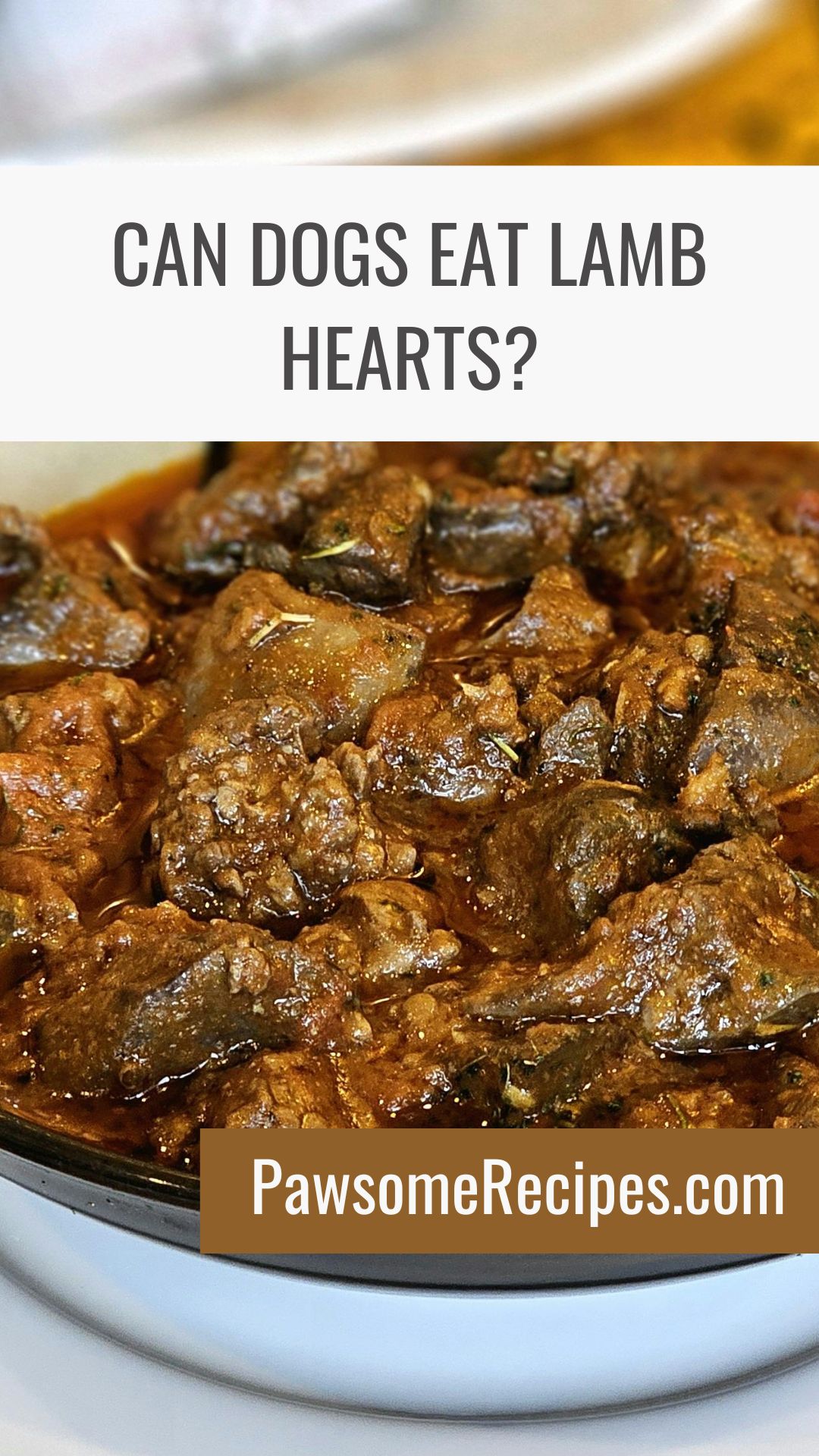
Can Dogs Eat Lamb Hearts?
Can dogs eat lamb hearts? Yes, dogs can eat lamb hearts, and they can be a tasty addition to a dog’s diet when prepared and served appropriately. Lamb heart is rich in protein and provides several useful nutrients, including iron, zinc and B vitamins.
Despite being an organ, lamb heart is generally treated as muscle meat rather than secreting organ meat when formulating a dog’s diet. This distinction is particularly important if you prepare homemade dog food, since heart shouldn’t simply replace organs such as liver or kidney.
Lamb hearts can be cooked, dehydrated into treats or incorporated into homemade dog food. As with most rich meats, though, portion size matters.
This post may contain affiliate links. Please read my disclosure policy for more information.
Are Lamb Hearts Good for Dogs?
Lamb heart can be a good food for dogs. Heart is a hard-working muscle and provides high-quality animal protein along with naturally occurring vitamins and minerals.
It can be particularly useful for adding variety to a dog’s diet if you rotate between proteins such as beef, chicken, turkey, fish and lamb.
Some of the nutrients found in lamb heart include:
| Nutrient | Why Dogs Need It |
|---|---|
| Protein | Supports muscles, tissue repair and normal body functions |
| Iron | Helps with red blood cell formation and oxygen transport |
| Zinc | Supports skin, coat and immune function |
| Vitamin B12 | Important for healthy blood cells and nervous system function |
| Other B vitamins | Help the body release and use energy from food |
| Selenium | Supports normal antioxidant and immune functions |
| Taurine | An amino acid involved in several body functions, including heart health |
| Coenzyme Q10 | Naturally concentrated in hard-working tissues such as the heart |
The exact nutrient content varies according to the animal and the cut, so lamb heart shouldn’t be viewed as a nutritional supplement in itself. It’s simply a nutrient-rich meat that can form part of a varied diet.
Is Lamb Heart an Organ Meat or Muscle Meat?
This is where lamb heart can cause a little confusion.
Anatomically, the heart is an organ. Nutritionally, however, heart is generally treated as muscle meat when formulating homemade or raw diets for dogs.
That’s because the heart is predominantly muscular tissue.
This means lamb heart shouldn’t be counted as the liver or other secreting organ portion of a homemade diet. If you’re preparing a diet that includes liver and another secreting organ such as kidney or spleen, those ingredients still need to be included separately.
For example, replacing kidney with extra lamb heart wouldn’t provide the same nutritional profile.
Can Dogs Eat Cooked Lamb Heart?
Yes. Cooking lamb heart is an easy way to prepare it for dogs.
You can:
- Boil or poach it
- Bake it
- Air fry it
- Cook it in a slow cooker
- Dice and lightly sauté it in a dry pan
- Dehydrate cooked or raw slices to make treats
Whichever method you choose, keep it plain.
Dogs don’t need salt, sauces or seasoning added to their lamb heart. Avoid cooking it with onions, garlic or other ingredients that aren’t safe for dogs.
If you’re cooking a whole lamb heart, trim away any particularly large deposits of external fat before cooking if necessary.
Once cooked, let the heart cool before chopping it into pieces appropriate for your dog’s size.
How to Boil Lamb Heart for Dogs
Boiling or gently simmering is one of the simplest methods.
- Trim away excess external fat and any tough connective tissue if desired.
- Cut the lamb heart into chunks.
- Place it in a saucepan and cover with water.
- Bring the water to a boil, then reduce to a gentle simmer.
- Cook until the meat is cooked through.
- Allow it to cool before chopping into bite-sized pieces.
You can save the plain cooking liquid and add a small amount to your dog’s regular meal rather than pouring it away.
Can Dogs Eat Raw Lamb Hearts?
Dogs can eat raw lamb heart, and it is commonly included in raw feeding plans. However, feeding raw meat carries a greater risk of exposure to potentially harmful bacteria and parasites, both for dogs and for the people handling their food.
If you choose to feed raw lamb heart, source it carefully and follow good food hygiene practices. Keep raw meat refrigerated, prevent cross-contamination and wash hands, knives, chopping boards and food bowls thoroughly after use.
Cooking is the simpler option if you’re uncomfortable with the food-safety considerations associated with raw feeding.
Can Dogs Eat Lamb Heart Fat?
A little naturally occurring fat isn’t necessarily a problem for a healthy dog, but lamb can be relatively rich.
When preparing a whole heart, you may notice a layer or patches of fat around the outside. Large pieces of this can be trimmed away before cooking.
This is especially worth considering if you’re using lamb heart as a training treat, since small pieces can quickly add up over the course of a day.
Dogs that need a low-fat diet or have a medical reason for restricting dietary fat should only be given lamb heart with veterinary guidance.
How Much Lamb Heart Can a Dog Eat?
There isn’t one serving amount that suits every dog. How much lamb heart you can feed depends on your dog’s:
- Size and body weight
- Age
- Activity level
- Overall diet
- Calorie requirements
- Health
- Reason for eating the heart
If you’re giving lamb heart as a treat or occasional topper, keep it within your dog’s normal treat allowance. Treats and extras should generally make up no more than around 10% of daily calories so they don’t displace a balanced main diet.
Start with a small amount if your dog hasn’t eaten lamb heart before.
For example, a few tiny pieces may be plenty for a small dog, while a large dog can usually handle a larger portion. There’s no benefit in giving a huge serving simply because heart is nutrient-rich.
If lamb heart is being used as an ingredient in homemade dog food rather than as a treat, the amount should be calculated as part of the complete recipe formulation rather than using a general serving guide.
Can Dogs Eat Lamb Heart Every Day?
Lamb heart can be included regularly as part of an appropriately formulated diet, but feeding a large portion of heart every day alongside an otherwise complete diet can throw the overall diet out of balance.
Variety can also be useful when feeding fresh foods. Depending on your dog’s needs, you might rotate lamb heart with other meats and protein sources.
If you’re feeding lamb heart as a treat, there’s usually no need to serve it every day.
Can Puppies Eat Lamb Heart?
Healthy puppies can eat cooked lamb heart in small amounts once they’re established on solid food.
The important issue with puppies isn’t whether lamb heart itself is safe; it’s maintaining the correct nutritional balance during growth.
Puppies have specific requirements for calories, protein, calcium, phosphorus and other nutrients. Lamb heart should therefore be treated as a small extra unless it’s included within a properly formulated puppy diet.
Cut cooked heart into very small pieces appropriate for your puppy’s size.
Can Dogs Eat Lamb Heart as a Treat?
Absolutely. In fact, one of the easiest ways to use lamb heart is to turn it into homemade dog treats.
Because the meat has a strong aroma and flavour, small pieces can work particularly well as high-value rewards.
Try:
Cooked lamb heart bites: Cook the heart until done, cool it and dice it into tiny training-sized pieces.
Dehydrated lamb heart treats: Thinly slice the heart and dehydrate until thoroughly dried.
Baked lamb heart treats: Blend cooked lamb heart with dog-friendly ingredients such as egg, pumpkin or oat flour to make a treat dough.
Remember that dehydrating meat removes water and concentrates it into a much smaller piece. A handful of dried heart represents considerably more fresh meat than it appears to, so keep portions small.
How to Dehydrate Lamb Heart for Dogs
Lamb heart makes excellent single-ingredient dehydrated dog treats.
Trim excess fat from the heart and slice it thinly and as evenly as possible. Slightly freezing the heart beforehand can make thin slicing easier.
Arrange the slices in a single layer on dehydrator trays without overlapping them.
Dehydrate according to your dehydrator’s meat-safety guidance until the pieces are thoroughly dried. Thicker pieces will take longer than thin slices.
Because homemade dehydrated meat doesn’t contain commercial preservatives, store it carefully. Refrigerating or freezing homemade meat treats is a sensible choice, particularly if there’s any residual moisture.
Is Lamb Heart Good for Training Treats?
Lamb heart can make a great training treat because its meaty smell makes it appealing to many dogs.
The trick is to cut it small.
Dogs don’t need a large cube of meat every time they sit or come when called. Tiny pieces provide the same reward while keeping the overall quantity under control.
Dehydrated lamb heart can also be broken or cut into small pieces for training.
Is Lamb Heart Good for Dogs With Food Allergies?
Lamb is sometimes used in diets for dogs with sensitivities to more commonly fed proteins, but lamb isn’t automatically hypoallergenic.
A dog can potentially react to any dietary protein it has been exposed to.
If your dog has a diagnosed or suspected food allergy and is following an elimination diet, don’t introduce lamb heart without checking whether lamb is appropriate for that particular diet.
Are There Any Risks to Feeding Lamb Heart to Dogs?
Lamb heart is generally safe for dogs, but there are a few things to keep in mind.
Too much at once: A large helping of an unfamiliar, rich meat may cause digestive upset, including loose stools.
Fat content: Trim obvious excess fat, particularly when making treats.
Unbalanced homemade diets: Lamb heart provides many useful nutrients, but it doesn’t make a homemade diet complete and balanced by itself.
Raw meat safety: Raw lamb carries food-safety risks and requires careful handling.
Seasonings: Don’t give dogs lamb heart cooked with onion, garlic, excessive salt or rich sauces.
Treat calories: Dehydrated lamb heart is concentrated and easy to overfeed.
Introduce lamb heart gradually and see how your dog responds.
Lamb Heart vs Lamb Liver for Dogs
Lamb heart and lamb liver are both useful ingredients, but they aren’t interchangeable.
| Lamb Heart | Lamb Liver |
| Generally treated as muscle meat | Treated as a secreting organ |
| Rich in protein | Extremely nutrient-dense |
| Provides iron and B vitamins | Particularly rich in vitamin A and several micronutrients |
| Can form a larger part of a formulated meat portion | Usually fed in relatively small amounts |
| Useful for treats and training | Best portioned carefully |
This distinction is especially important when creating homemade dog food. Adding heart doesn’t remove the need for liver or other ingredients required to balance the recipe.
Lamb Heart vs Beef Heart for Dogs
Both lamb and beef heart can be good choices for dogs.
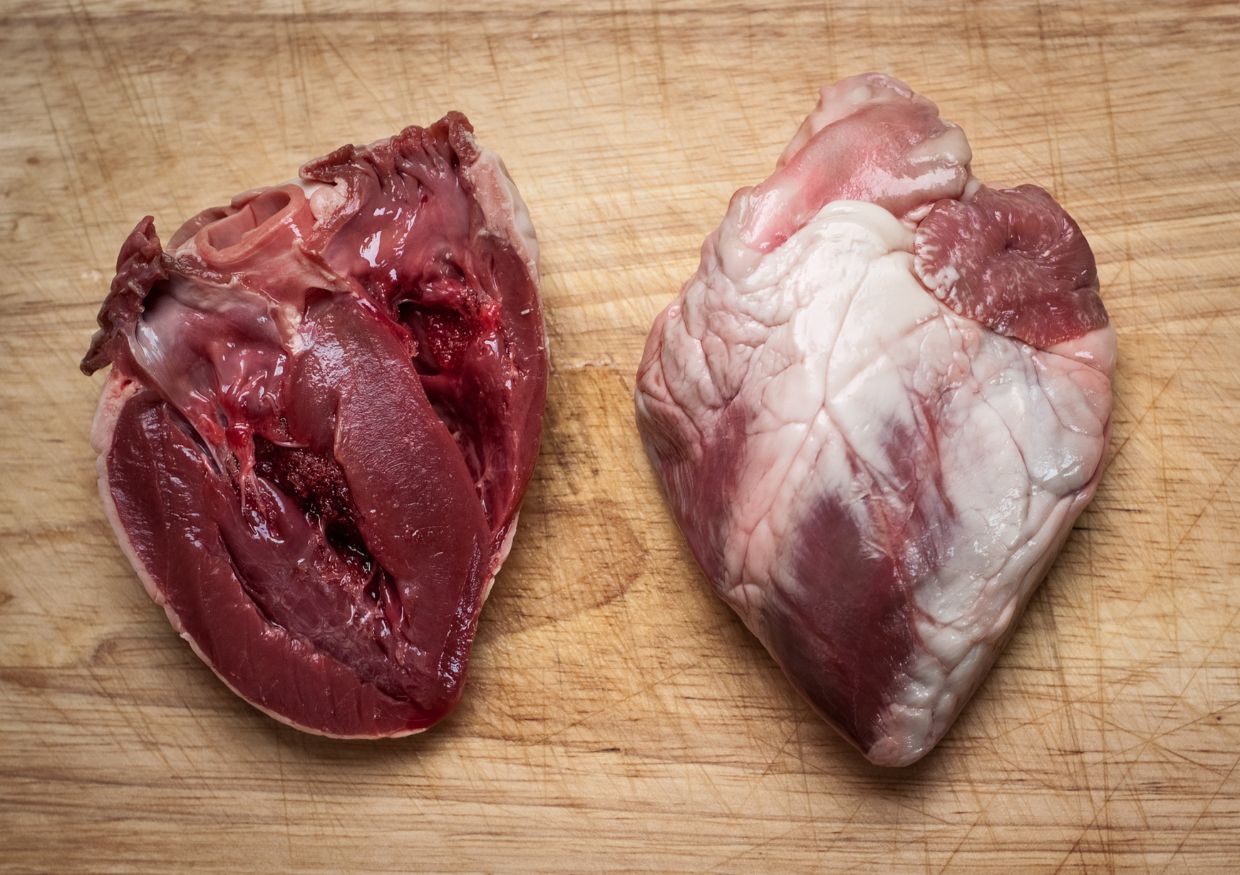
Beef hearts are larger and often easier to find, which can make them economical for preparing batches of homemade treats. Lamb hearts are much smaller and convenient if you don’t want to prepare a huge quantity at once.
Nutritionally, both provide protein, iron, B vitamins and other micronutrients.
Which one you choose may simply come down to availability, price and which protein your dog enjoys.
How to Store Lamb Heart for Dogs
Fresh raw lamb heart should be kept refrigerated and used according to the storage instructions on the packaging.
Once cooked, transfer it to an airtight container and refrigerate promptly. Use within around 3–4 days, or freeze portions for longer storage.
Freezing small portions is particularly handy. Chop the cooked heart first, divide it into small containers or freezer bags and thaw only what you need.
Homemade dehydrated lamb heart should be thoroughly dried before storage. For greater food safety and a longer shelf life, store homemade meat treats in the refrigerator or freezer rather than assuming they’re shelf-stable.
FAQs
A whole lamb heart is far too much for many dogs to receive as a single treat. It’s better to portion it according to your dog’s size and overall diet. One heart can be cut into multiple servings or turned into a batch of treats.
Yes. Lamb heart and liver can be included in the same meal or recipe, but they perform different nutritional roles. Heart is generally counted with muscle meat, while liver is a secreting organ and should be fed in a more controlled amount.
Yes. Heart and kidney can both be included in homemade dog food. Kidney is a secreting organ, whereas heart is treated as muscle meat when formulating the recipe.
The outside of a lamb heart may contain connective tissue and fat rather than what we’d normally think of as “skin.” Small amounts aren’t generally a problem for healthy dogs, although you can trim tough connective tissue and large deposits of fat before cooking.
Lamb heart can be frozen for storage and thawed before feeding or cooking. Don’t assume freezing makes raw meat completely free from bacteria or parasites.
Yes. Dehydrated lamb heart makes a flavorful single-ingredient dog treat. Cut it into appropriately sized pieces and feed it in moderation because dried meat is more concentrated than fresh meat.
Small amounts can be offered regularly if they fit within your dog’s overall diet. If lamb heart is being used as a major ingredient in homemade dog food, the complete recipe should be formulated to meet your dog’s nutritional requirements.
This article is intended for general information and isn’t a substitute for veterinary advice. If your dog has a medical condition or requires a therapeutic diet, speak to your veterinarian before making significant changes to their food.