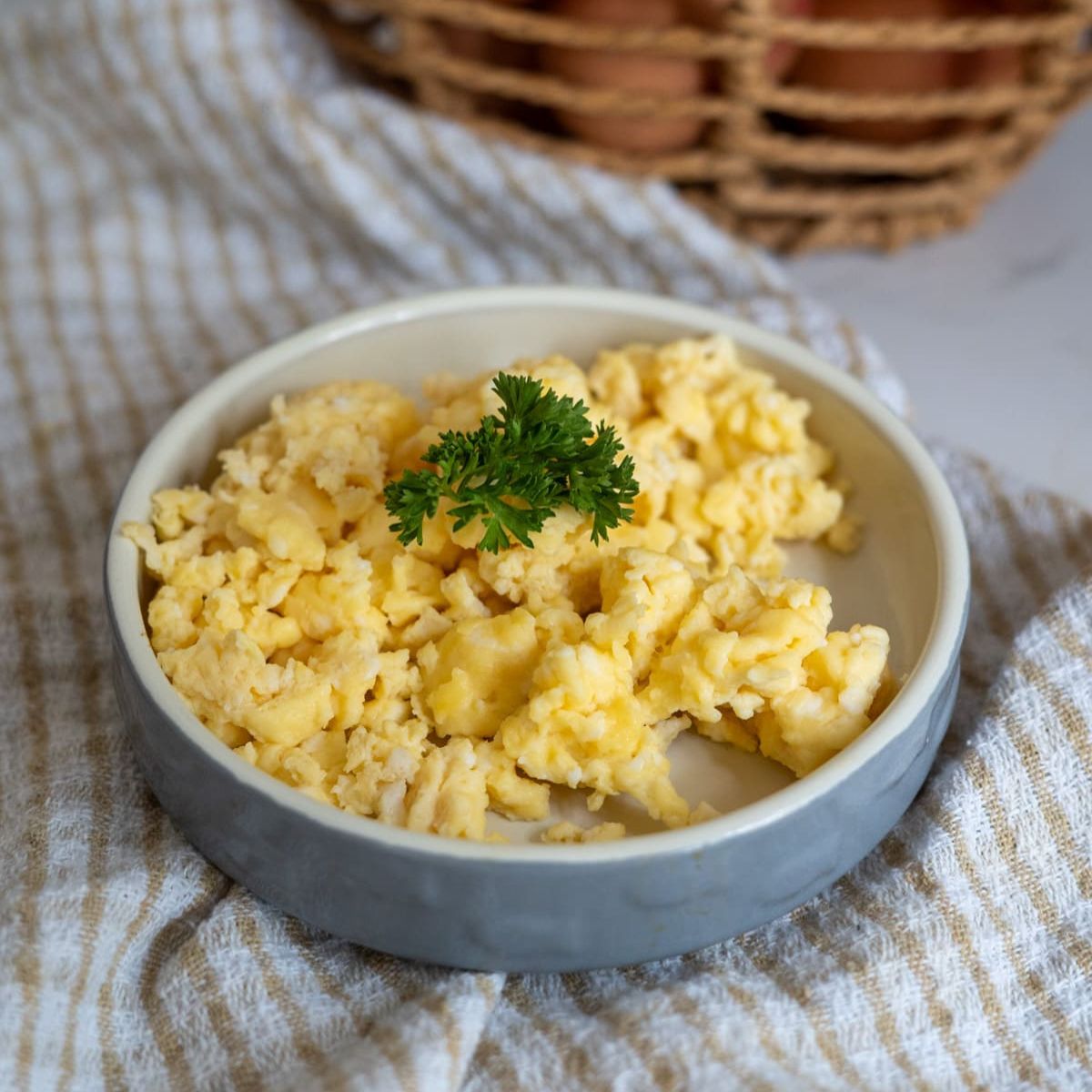
Scrambled Eggs for Dogs (An Easy, Protein-Packed Dog Breakfast)
Looking for a quick, healthy breakfast for your dog? These scrambled eggs for dogs are one of the easiest homemade meals you can make. Ready in less than 10 minutes, this simple recipe uses just a handful of ingredients and creates a warm, protein-rich breakfast that most dogs absolutely love.
Scrambled eggs are soft, easy to digest, and packed with nutrients that support healthy muscles, skin, and coats. They’re also incredibly versatile. Serve them on their own, use them as a meal topper, or add dog-friendly ingredients such as cottage cheese, pumpkin, vegetables, or cooked salmon.
This post may contain affiliate links. Please read my disclosure policy for more information.
Why Your Dog Will Love These Scrambled Eggs
Scrambled eggs for dogs is an easy recipe for you to make and a recipe they will enjooy.
- Soft and easy to chew
- Ready in minutes
- Rich in protein
- Perfect for picky eaters
- Great for puppies and senior dogs
- Easy to customize with other dog-friendly ingredients
Ingredients
All you need is two eggs and a splash of water to keep them fluffy and to stop them sticking to the pan.
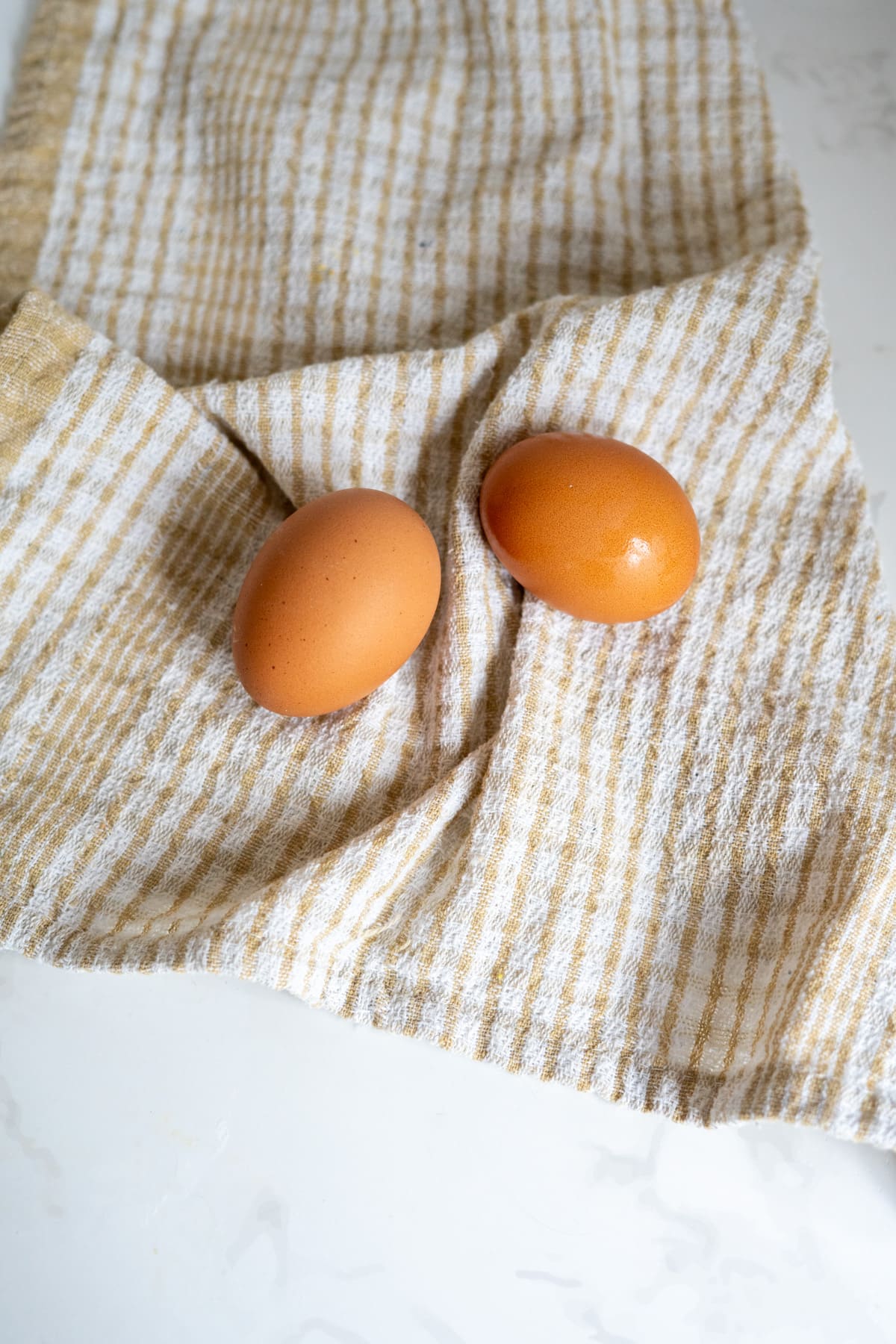
Eggs – Eggs are an excellent source of complete protein and contain essential amino acids that support muscle maintenance and tissue repair. They’re also rich in vitamins A, D, B12, and riboflavin.
How To Make Scrambled Eggs For Dogs

Beat the two eggs in a bowl.
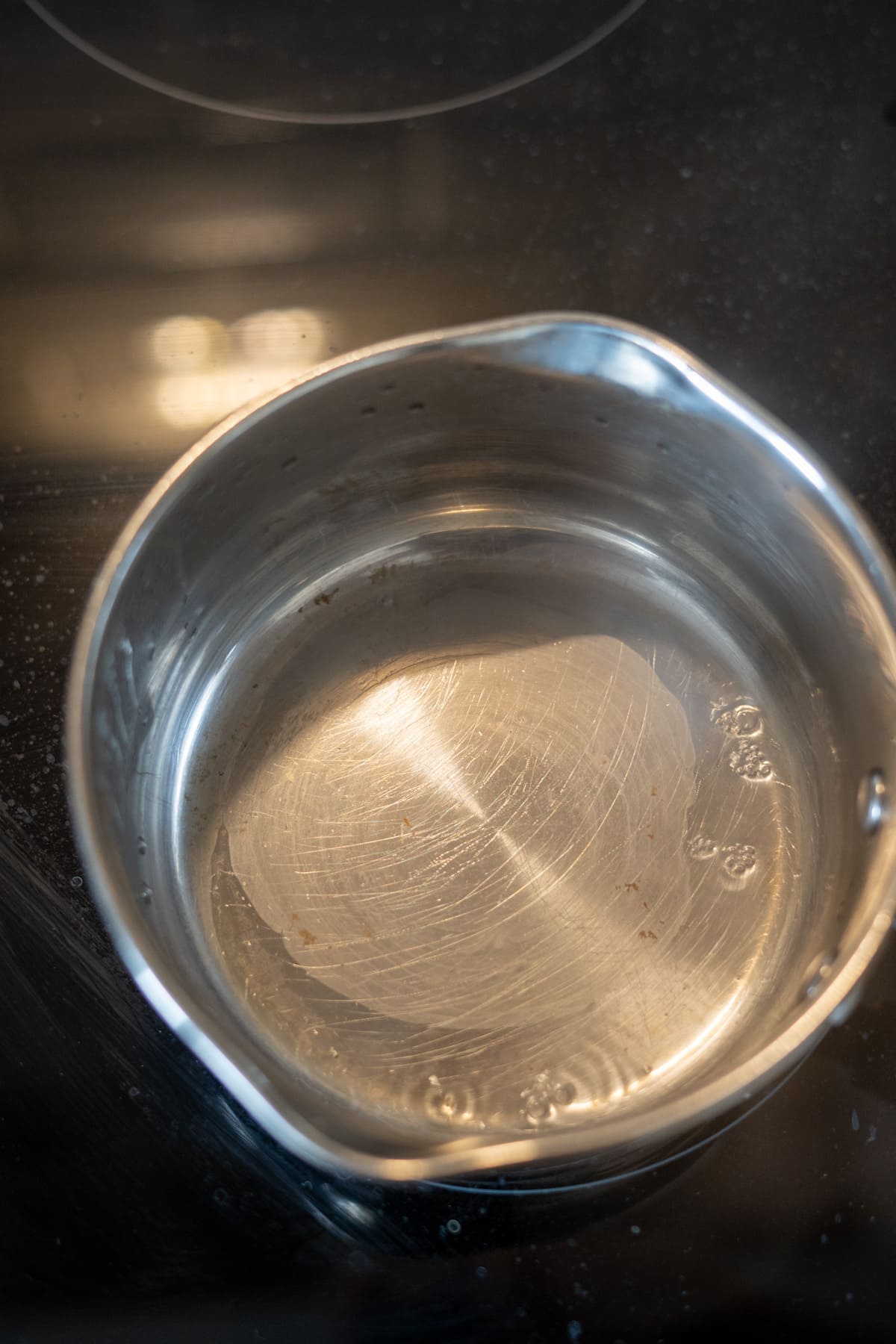
Put a pan on medium heat and add a splash of water.
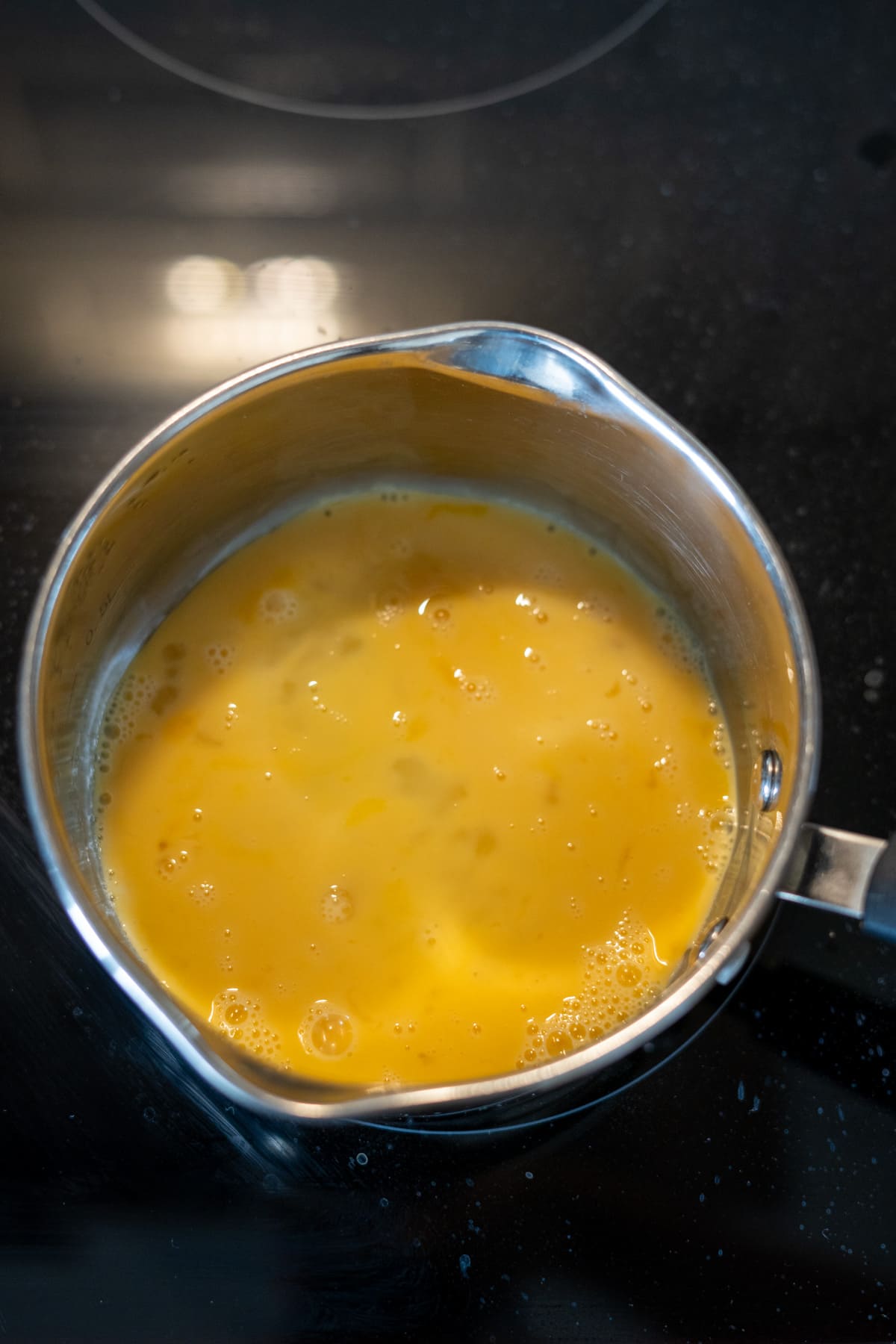
Pour in the eggs and stir until cooked.
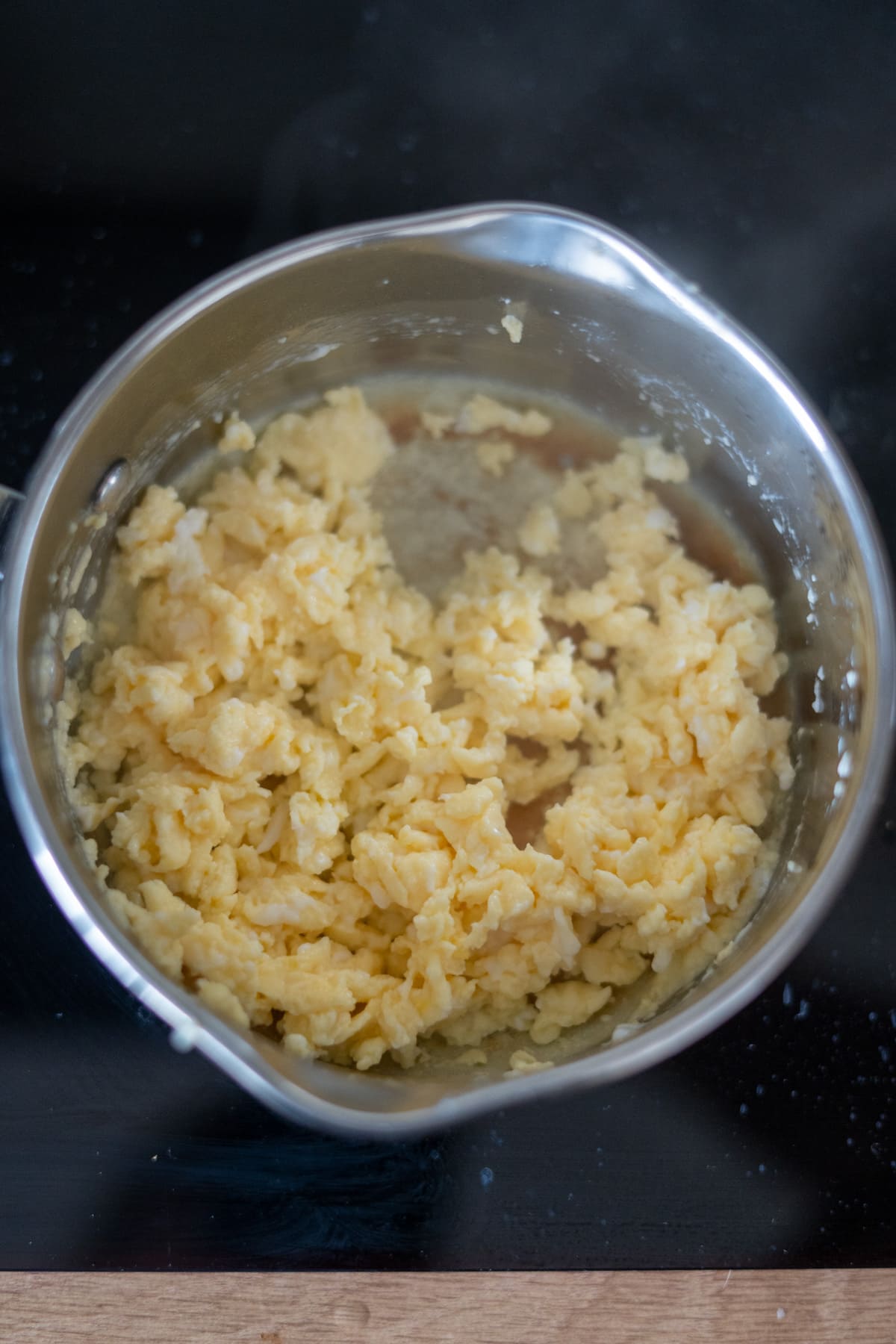
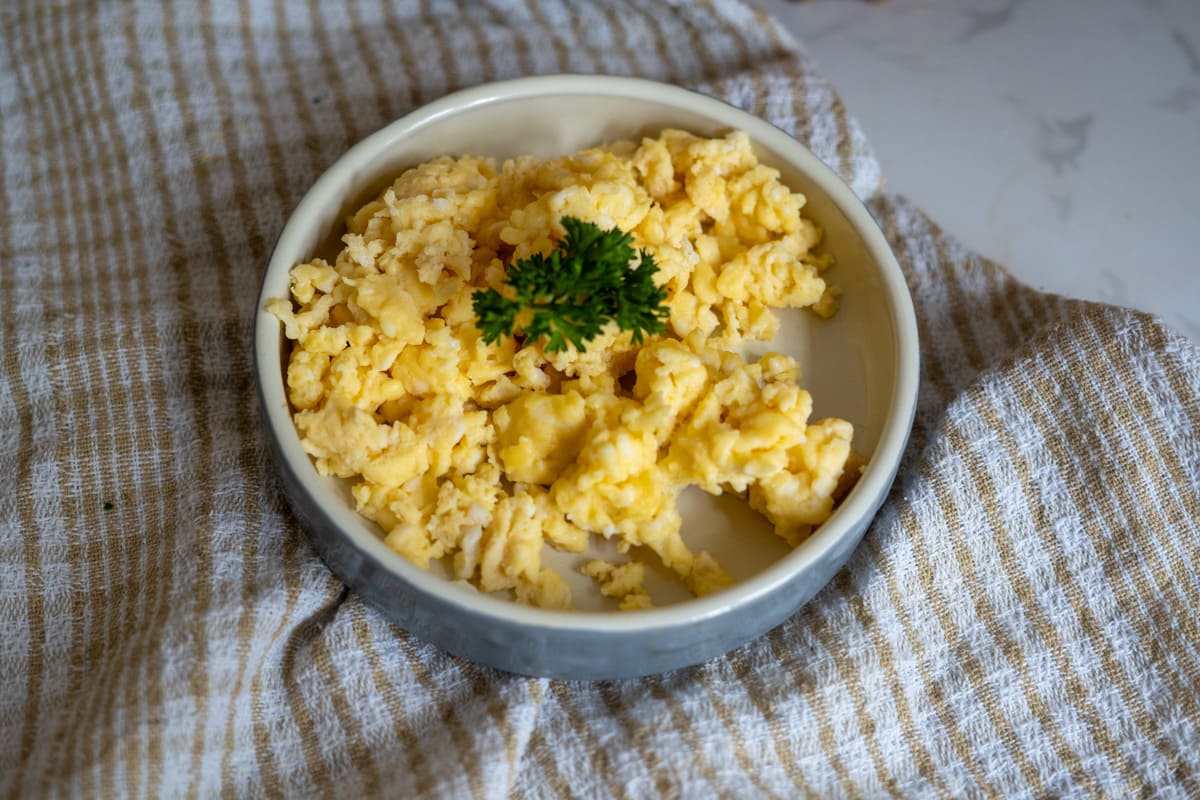
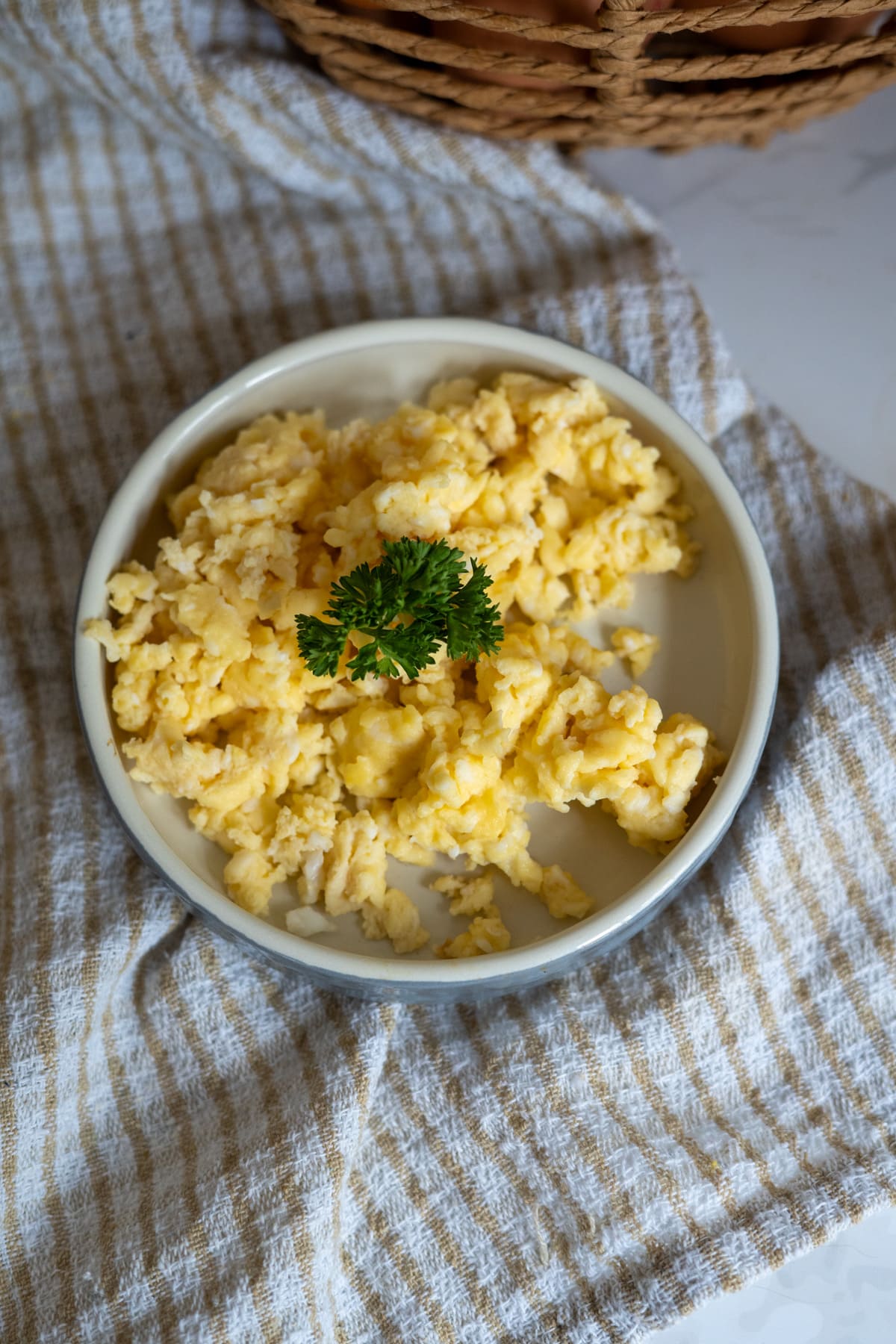
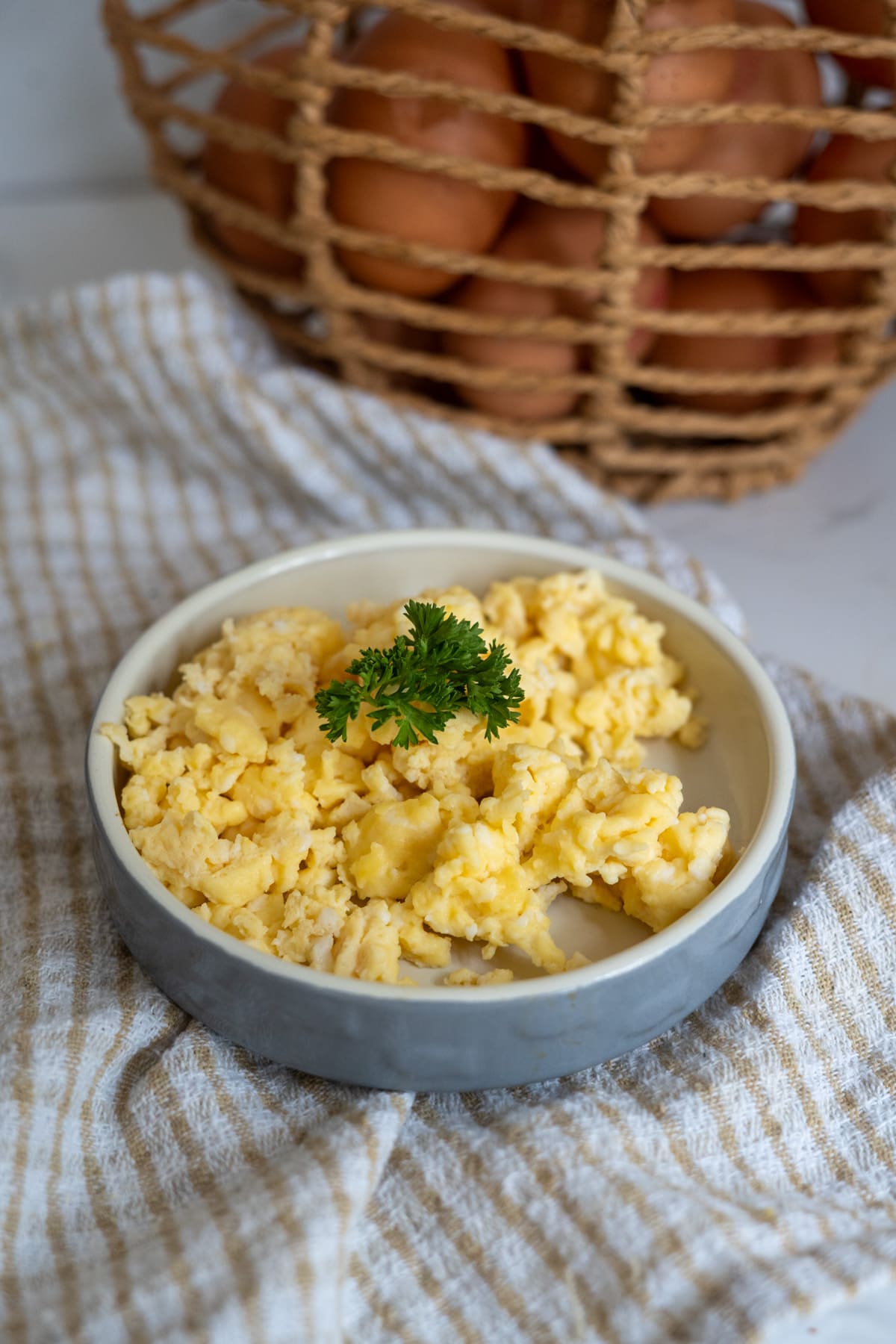
Firm, unseasoned and perfect for dogs.
Recipe Tips
- Cook eggs without butter or oil whenever possible.
- Avoid adding salt, pepper, garlic, or onion.
- Use a non-stick pan to prevent sticking.
- Break the eggs into smaller pieces for toy breeds.
- Introduce eggs gradually if your dog hasn’t eaten them before.
Do Not Add
The biggest caution is to avoid cooking scrambled eggs the way you would cook them for yourself. Be careful with dairy. Many people automatically add milk, cream, or cheese to scrambled eggs. However, many dogs have some degree of lactose intolerance, which can lead to gas, bloating, diarrhea and stomach upset.
Do not add:
- Salt
- Pepper
- Butter
- Margarine
- Cooking spray
- Onion
- Chives
- Hot sauce
- Seasoning blends
Scrambled Eggs For Dogs Variations
You can make healthy additions to your dog’s scrambled eggs with these suggestions.
| Variation | Ingredients |
|---|
| Pumpkin Scramble | Add 1 tablespoon pumpkin purée |
| Cottage Cheese Scramble | Stir in 1 tablespoon cottage cheese |
| Salmon Breakfast Bowl | Add 2 tablespoons flaked cooked salmon |
| Green Veggie Scramble | Add finely chopped spinach or zucchini |
| Turkey Breakfast Scramble | Add 2 tablespoons cooked ground turkey |
Storage Instructions
Refrigerator: Store leftovers in an airtight container for up to 3 days.
Freezer: Freeze portions in silicone molds or airtight containers for up to 2 months.
Thaw overnight in the refrigerator before serving.
Serving Guide
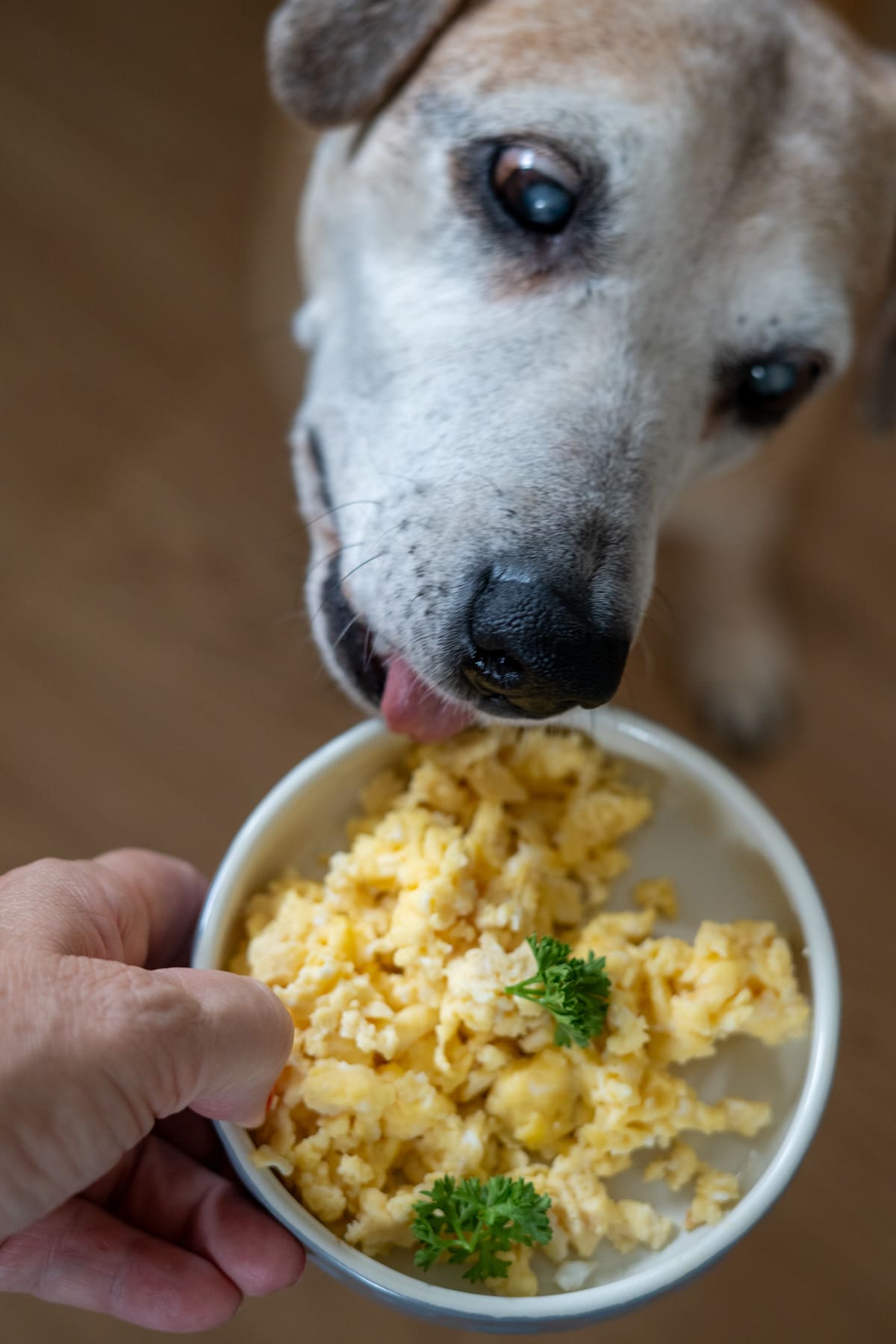
Serve scrambled eggs as a treat, occasional breakfast, or meal topper rather than as a complete daily diet.
| Dog Size | Serving |
|---|---|
| Under 10 lbs | ¼ egg |
| 10–20 lbs | ½ egg |
| 20–50 lbs | 1 egg |
| 50–90 lbs | 1–2 eggs |
| Over 90 lbs | Up to 2 eggs |
If your dog enjoys eggs, try our cottage cheese egg bites for another protein-rich breakfast idea
More Homemade Dog Breakfast Ideas
If your dog enjoys this recipe, try:
- Salmon breakfast bowls
- Turkey and cottage cheese breakfast bowls
- Air fryer salmon frittatas
- Cottage cheese egg bites dog recipes
- Pumpkin and egg breakfast bites
FAQs
Eggs are best served in moderation. Most dogs can enjoy scrambled eggs a few times a week as part of a balanced diet.
Yes. Plain scrambled eggs can be a healthy treat for puppies once they’re fully weaned.
It’s best to avoid milk because many dogs are lactose intolerant.
Small amounts of cheese may be tolerated by some dogs, but plain eggs are the healthier choice.
Yes. Their soft texture makes them an excellent option for older dogs or dogs with dental issues.
Cautions
- Dogs with a history of pancreatitis or those requiring a low-fat diet may need to avoid egg yolks or limit their intake. The fat content in the yolk may not be suitable for every dog. If your dog has previously experienced pancreatitis, it’s best to check with your veterinarian before regularly feeding eggs.
- Avoid feeding undercooked or runny eggs. Fully cooked eggs reduce the risk of exposure to harmful bacteria such as Salmonella.
- Don’t overfeed eggs – Eggs are nutrient-dense, but they’re also relatively high in calories. One large egg contains around 70 calories, which can add up quickly for small dogs.
Scrambled Eggs for Dogs
Need Metric Measurements?
Use the button options below to toggle between US cups and Metric grams.
Ingredients
- 2 large eggs
- 2 tablespoons water
Instructions
- Crack the eggs into a bowl and whisk them together until fully combined.
- Heat a non stick pan on a medium heat and add the water.
- Pour the eggs into the pan and cook slowly, stirring gently, until the eggs are fully cooked and no liquid remains.
- Allow the eggs to cool for a few minutes before serving them to your dog.
Video
Notes
Nutrition
The information shown is an estimate provided by an online nutrition calculator.