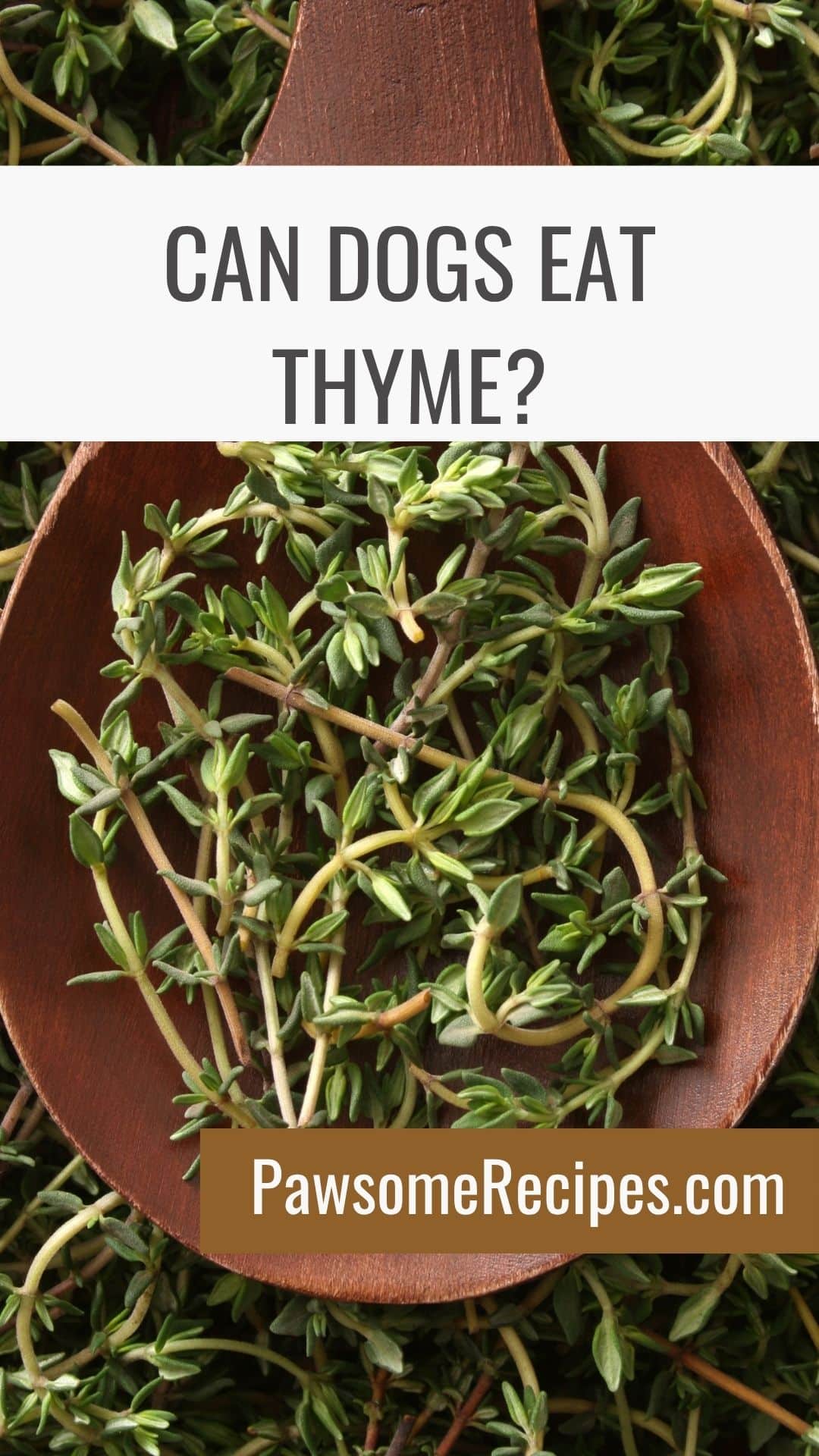
Can Dogs Eat Thyme? Is This Herb Safe for Dogs?
If you grow herbs in the garden or regularly use them when cooking, you may be wondering whether dogs can eat thyme. The good news is that common thyme is safe for dogs and can be offered in small amounts as part of their regular diet.
Fresh or dried thyme can be sprinkled over homemade dog food or added to dog treats for a little extra flavor. It also contains naturally occurring plant compounds, including thymol and flavonoids.
As with most herbs, though, a little goes a long way. Thyme doesn’t need to be a significant part of your dog’s diet to be enjoyed, and concentrated thyme products such as essential oils should not be treated in the same way as the culinary herb.
Is Thyme Safe for Dogs?
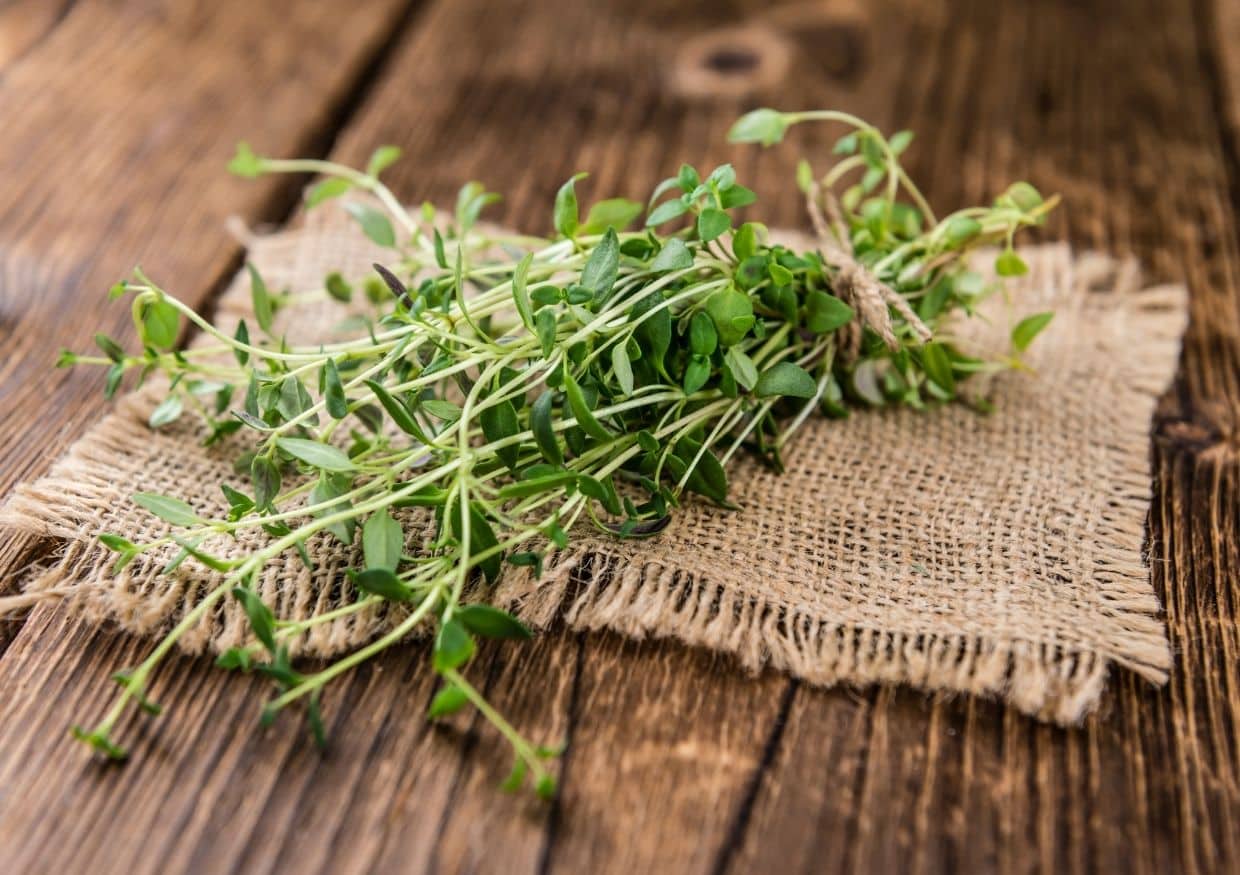
Yes. Common thyme (Thymus vulgaris) is considered non-toxic to dogs. The ASPCA lists common thyme, also known as garden thyme or German thyme, as non-toxic to dogs, cats and horses.
This means that the fresh thyme you might grow in your herb garden and the dried culinary thyme in your spice cupboard can generally be given to dogs in small quantities.
The important word here is small. Although thyme isn’t considered toxic, feeding large amounts of any herb can potentially upset a dog’s digestive system.
Can Dogs Eat Fresh Thyme?
Yes, dogs can eat fresh thyme.
Remove the small leaves from the tougher woody stems, finely chop them and sprinkle a small amount over your dog’s food. You can also use fresh thyme when preparing homemade dog food.
If you grow your own thyme, make sure it hasn’t recently been treated with pesticides, herbicides or other garden chemicals before allowing your dog to eat it.
A dog nibbling the occasional leaf from a thyme plant in the garden isn’t usually a cause for concern. However, it’s still sensible to discourage dogs from eating large amounts of any garden plant.
Can Dogs Eat Dried Thyme?
Dried thyme is also safe for dogs in small quantities. Because dried herbs have a more concentrated flavor than fresh herbs, you don’t need very much. A light sprinkle can add flavor to homemade dog food, biscuits or treats.
Choose plain dried thyme rather than seasoning blends. Mixed herb and seasoning products may contain ingredients that aren’t suitable for dogs, particularly onion powder, garlic powder or excessive salt.
How Much Thyme Can Dogs Have?
There isn’t an established nutritional serving size for thyme for dogs. Think of it as a seasoning rather than an ingredient your dog needs in a particular quantity.
For homemade meals, a small pinch of dried thyme or a little finely chopped fresh thyme is generally plenty. Larger dogs can have slightly more than small dogs, but there’s no benefit to loading their food with herbs.
When introducing thyme for the first time, start with a very small amount. This also gives you the opportunity to see how your dog’s digestive system responds.
Benefits of Thyme for Dogs
Thyme is best regarded as a dog-safe herb that can add flavor and some useful plant compounds to food rather than as a supplement or treatment.
- Antioxidants – Thyme contains flavonoids and other naturally occurring plant compounds with antioxidant properties. Antioxidants help protect cells against oxidative damage.
- Thymol – One of the best-known compounds found in thyme is thymol. Thymol has been studied for its antimicrobial properties, including antibacterial and antifungal activity. That doesn’t mean sprinkling thyme onto your dog’s dinner will treat an infection, however. The amounts used in food are small, and thyme shouldn’t be used as a replacement for veterinary treatment.
- Adds Flavor Without Salt – One of thyme’s simplest benefits is also one of its most useful. Herbs can make homemade dog food more interesting without having to reach for salt, sauces or human seasoning mixes. Its savory flavor works particularly well with meats and vegetables commonly used in homemade dog recipes.
How to Give Thyme to Your Dog
There are several easy ways to include a little thyme in your dog’s food:
- Sprinkle finely chopped fresh thyme over their dinner.
- Add a pinch of dried thyme to homemade dog food.
- Mix fresh thyme into homemade dog treats before baking.
- Add a small amount to meat-based dog stews.
- Use it to flavor plain cooked chicken, turkey, beef or fish prepared specifically for your dog.
When cooking for dogs, keep the rest of the recipe dog-friendly too. Avoid onions, garlic, excessive salt and heavily seasoned stocks or sauces.
Can Dogs Eat Thyme Leaves?
Yes. The leaves of common culinary thyme are safe for dogs and are the part normally used in cooking.
The woody stems aren’t considered a useful food for dogs. Strip the leaves from thicker stems before adding fresh thyme to homemade meals or treats.
Can Dogs Eat Lemon Thyme?
Lemon thyme (Thymus citriodorus) is a variety of thyme with a naturally citrus-like fragrance and flavor. Don’t confuse the name with adding lemon essential oil or concentrated citrus flavorings to your dog’s food.
If you’re choosing an herb specifically for a dog recipe, ordinary common thyme (Thymus vulgaris) is the simplest option because its safety for dogs is well established.
What About Spanish Thyme?
This is where the names become confusing.
Spanish thyme is not the same plant as common culinary thyme.
Spanish thyme, also called Indian borage, East Indian thyme, country borage and coleus, is commonly identified as Coleus amboinicus (also classified botanically as Plectranthus amboinicus).
Unlike common thyme, the ASPCA lists Spanish thyme as toxic to dogs. Its essential oils can cause symptoms including:
- Vomiting
- Diarrhea
- Loss of appetite
- Depression or lethargy
- In more serious cases, bloody vomiting or diarrhea
If you’re growing a plant called thyme in your garden, check exactly which plant you have before deliberately allowing your dog to eat it.
Common thyme (Thymus vulgaris) = dog-friendly.
Spanish thyme/Indian borage = avoid.
Is Thyme Essential Oil Safe for Dogs?
Thyme essential oil should not be treated like fresh or dried culinary thyme.
Essential oils are highly concentrated. A few drops can contain a much greater concentration of aromatic compounds than your dog would ever consume from a sprinkle of fresh herbs.
Don’t add thyme essential oil to your dog’s food or water or apply it directly to their skin unless you are following specific advice from a veterinarian experienced in its use.
Concentrated essential oils can cause problems for pets if swallowed or absorbed through the skin. Keep bottles somewhere your dog cannot reach them.
Can Dogs Eat Thyme and Rosemary?
Both common thyme and rosemary are generally regarded as dog-friendly culinary herbs when used appropriately.
They work particularly well in savory homemade dog foods and treats. You could, for example, add a small amount of finely chopped rosemary and thyme to a turkey, beef or lamb recipe.
Again, use herbs as seasonings rather than major ingredients.
Can Dogs Eat Thyme and Oregano?
Plain culinary herbs shouldn’t automatically be grouped together simply because they’re commonly used together in human cooking.
If you’re creating homemade dog food, it’s better to check each herb individually rather than assuming that an Italian seasoning or mixed-herb blend is dog-friendly.
This is particularly important with commercial seasoning mixes, which may also contain garlic, onion, salt or other ingredients you don’t want in your dog’s food.
Are There Any Risks of Giving Thyme to Dogs?
For most healthy dogs, a small culinary amount of common thyme is unlikely to cause problems.
Eating a large quantity, however, could potentially cause digestive upset. Watch for symptoms such as vomiting, loose stools or diarrhea if your dog has eaten considerably more than they normally would.
It’s also important to consider what the thyme was served with. A dog stealing a thyme-seasoned roast dinner, for example, may have eaten onion, garlic, fatty meat, gravy or other unsuitable ingredients. In that situation, the thyme may be the least concerning ingredient.
If your dog has eaten an unusually large amount of a plant, you aren’t certain which type of thyme they have eaten, or they’re showing signs of illness, contact your veterinarian.
Can Puppies Have Thyme?
A tiny amount of culinary thyme isn’t considered toxic to puppies, but there’s little reason to deliberately give young puppies significant quantities of herbs.
Puppies have specific nutritional requirements while they’re growing, so their main diet should be complete and appropriately formulated for their life stage.
If you use thyme in a homemade puppy diet, the overall recipe is far more important than the herb itself and should be properly formulated to meet growth requirements.
FAQs
Common culinary thyme (Thymus vulgaris) is not poisonous to dogs. The ASPCA lists it as a non-toxic plant for dogs. Spanish thyme, however, is a different plant and is considered toxic.
Plain dried thyme can be given to dogs in small amounts. Avoid thyme seasoning blends unless you’ve checked every ingredient, as they may contain onion, garlic or excessive salt.
Yes. Dogs can have small amounts of thyme that have been cooked into homemade dog food or treats, provided the other ingredients in the recipe are also safe for dogs.
Yes, provided it is common culinary thyme and hasn’t been treated with potentially harmful garden chemicals. Wash the leaves before using them in your dog’s food.
Small culinary amounts can be included in a dog’s diet, but there’s no nutritional need to give your dog thyme every day. Rotating dog-friendly herbs can provide different flavors without relying heavily on any one ingredient.
If you know the plant is common thyme (Thymus vulgaris), eating a small amount is unlikely to cause poisoning. Monitor your dog for digestive upset. If your dog has eaten a large amount, develops symptoms, or you aren’t certain which species of plant they ate, contact your veterinarian for advice.