Frozen Peach Raspberry Dog Treats
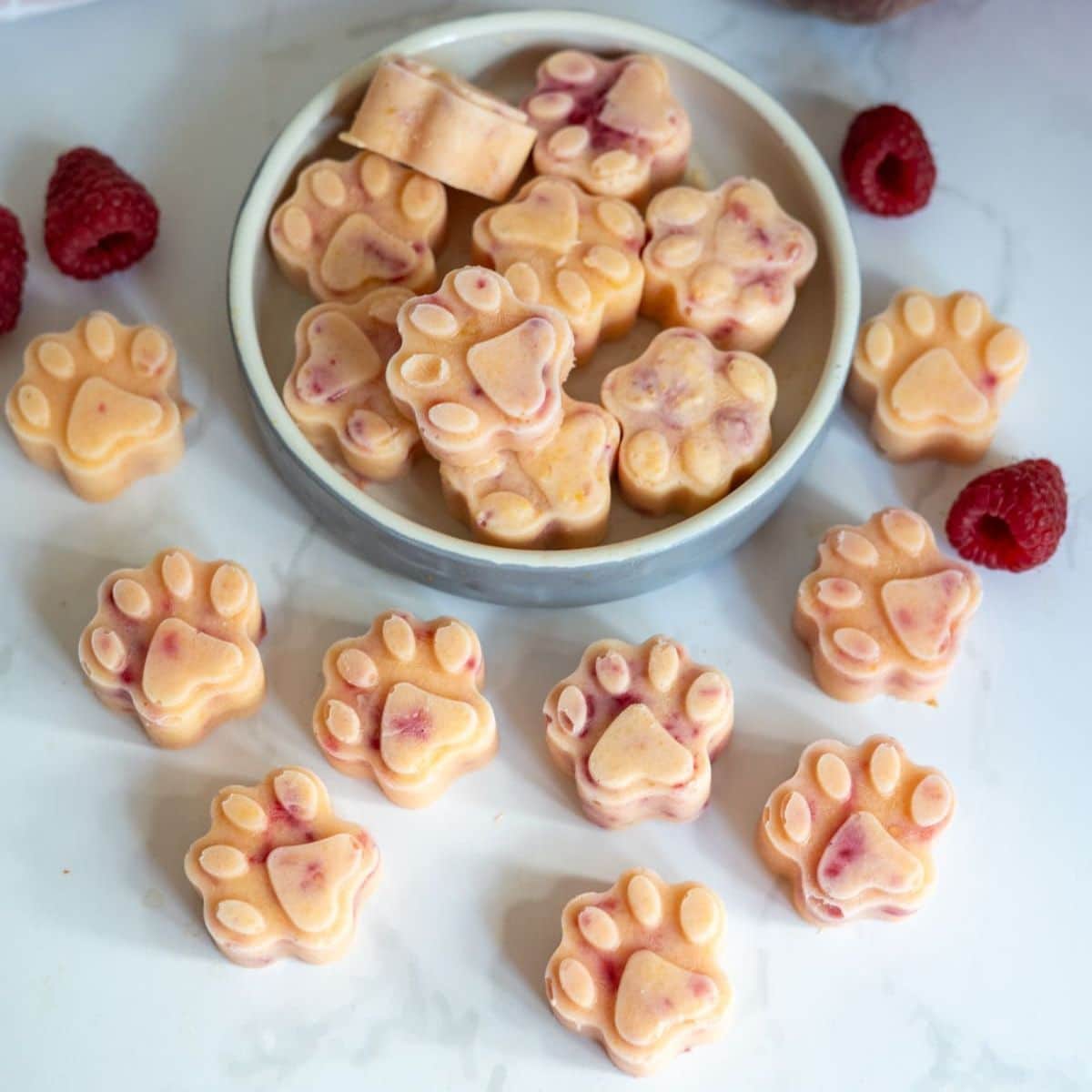
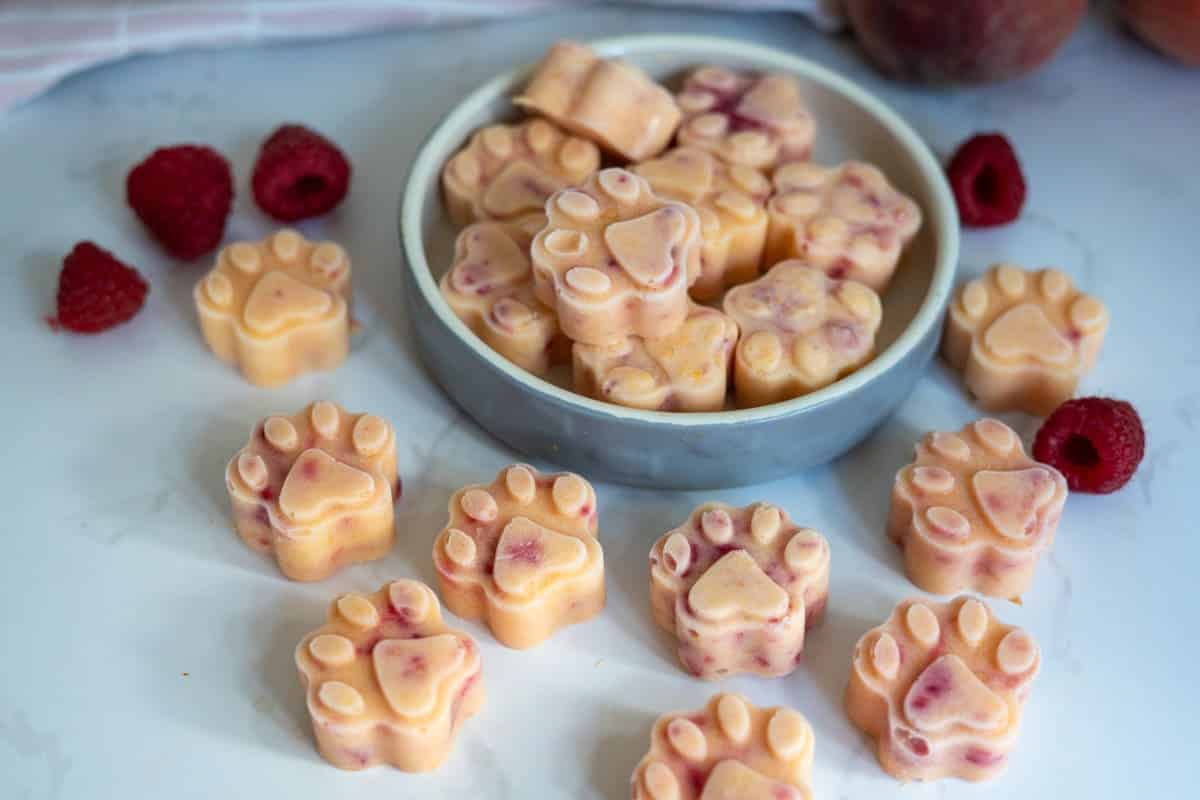
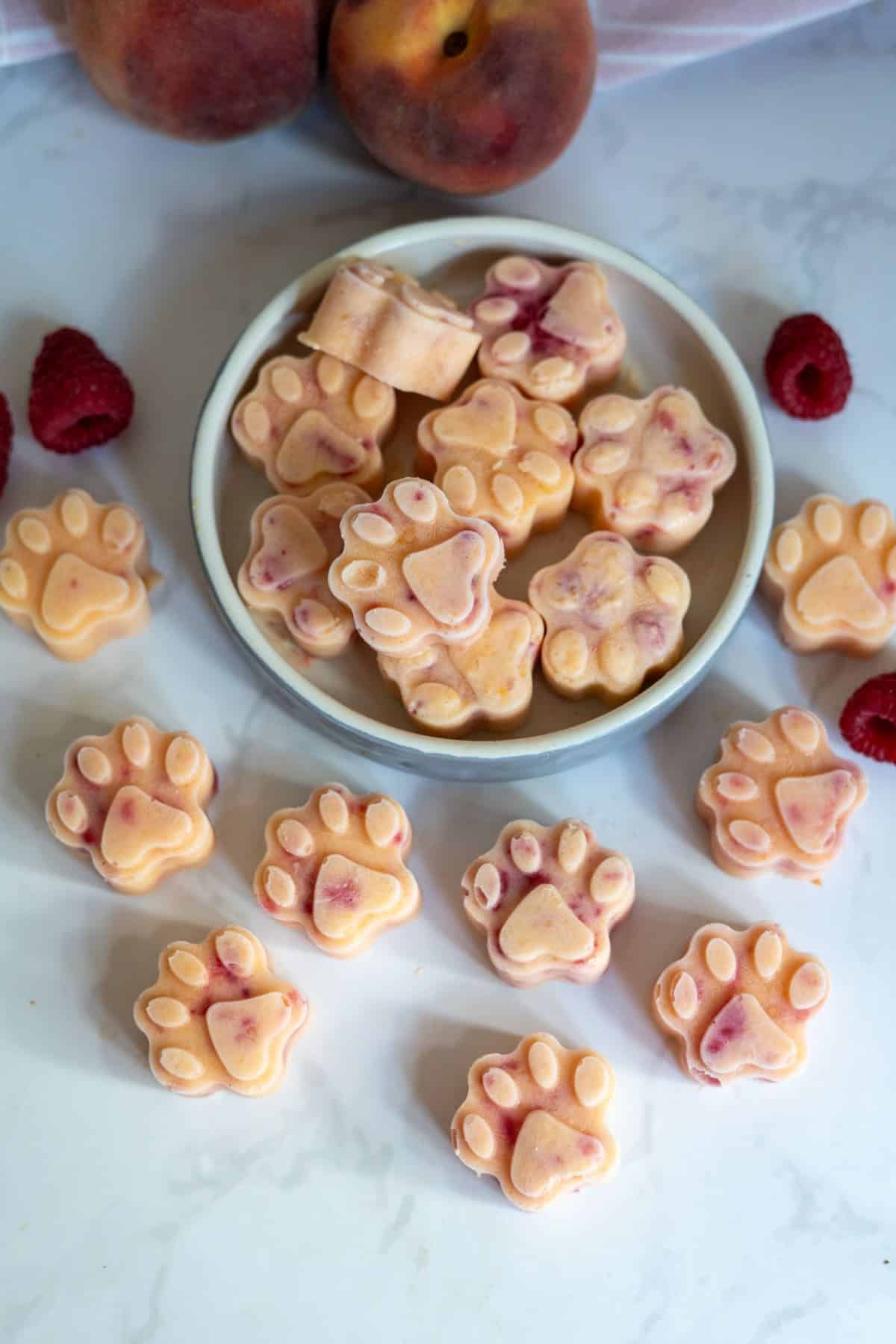
These Frozen Peach Raspberry Dog Treats are a simple, fruity snack made with just three ingredients. Fresh peach, raspberries and creamy kefir are blended together and frozen in silicone molds for an easy homemade treat that’s especially refreshing on a warm day.
The peach and kefir are blended until smooth, while the raspberries are mashed separately and stirred through the mixture. This gives the treats pretty little flecks of raspberry rather than blending everything into one uniform pink mixture.
With no added sugar, artificial flavors or complicated ingredients, these frozen dog treats are quick to prepare and handy to keep in the freezer whenever your dog deserves something cool and tasty.
This post may contain affiliate links. Please read my disclosure policy for more information.
Are Peaches and Raspberries Safe for Dogs?
Yes, dogs can eat both peaches and raspberries in moderation.
Peaches are a source of vitamins A and C, fiber and antioxidants. Always remove the pit before giving peach to a dog. For this recipe, we’ve also removed the skin to give the frozen treats a smoother texture.
Raspberries provide fiber, vitamin C and naturally occurring antioxidants. They are best offered in relatively small quantities as part of a dog’s overall diet.
Raspberries naturally contain tiny amounts of xylitol. This isn’t the same as adding the highly concentrated xylitol sweetener that is extremely toxic to dogs, and a few raspberries are generally considered safe for dogs. However, they’re still a fruit to feed in moderation.
What Does Kefir Do for Dogs?
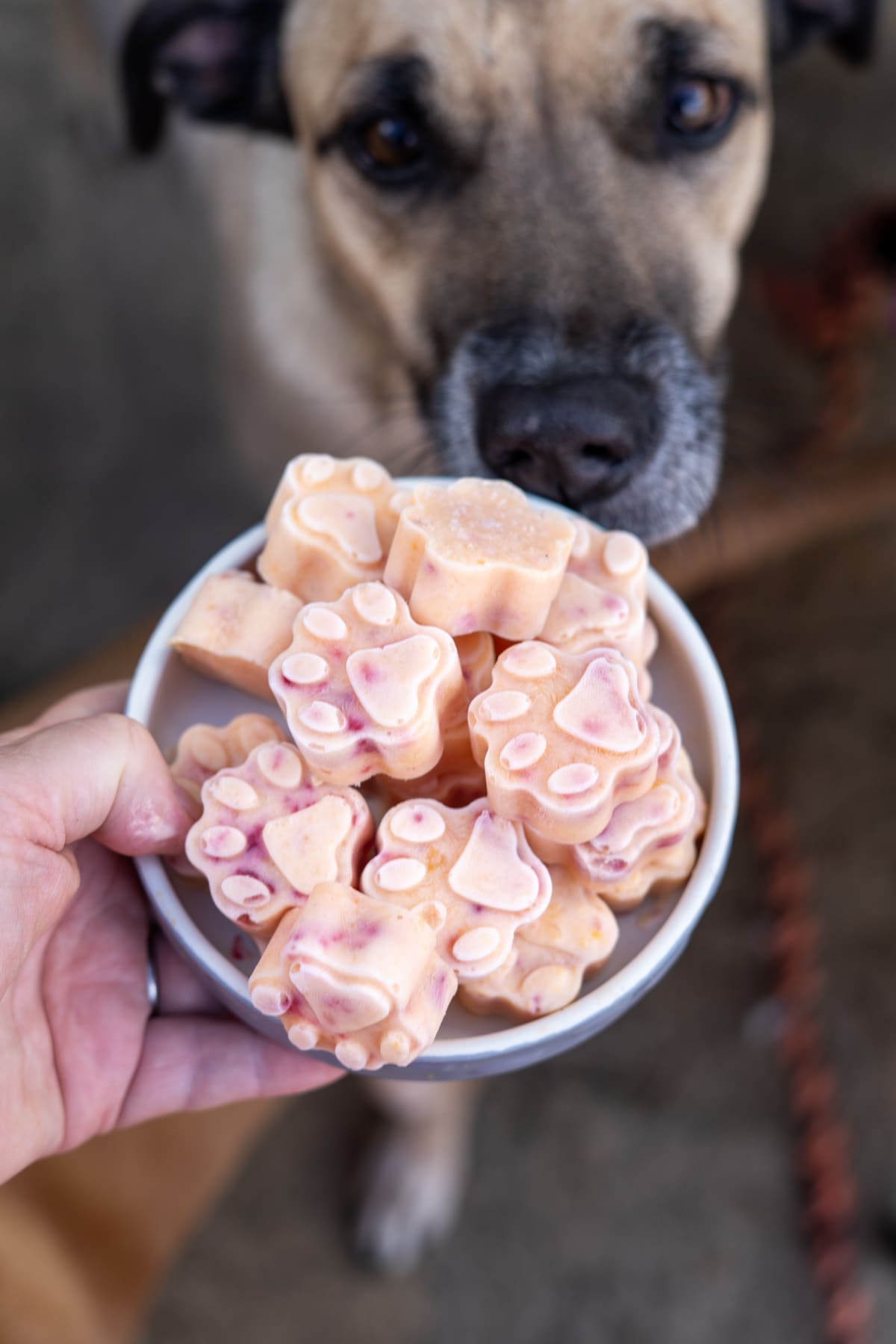
Kefir is a fermented milk drink containing live cultures. Depending on the product, it can provide probiotics along with protein, calcium and other nutrients. Fermentation also reduces some of the lactose found in milk, which can make kefir easier for some dogs to tolerate than regular dairy products.
However, not every dog tolerates dairy well. If your dog hasn’t had kefir before, start with a small amount and watch for digestive upset.
Choose plain, unsweetened kefir without added sugar, artificial sweeteners or flavorings. Always check the ingredient label and never use a product containing xylitol.
Ingredients
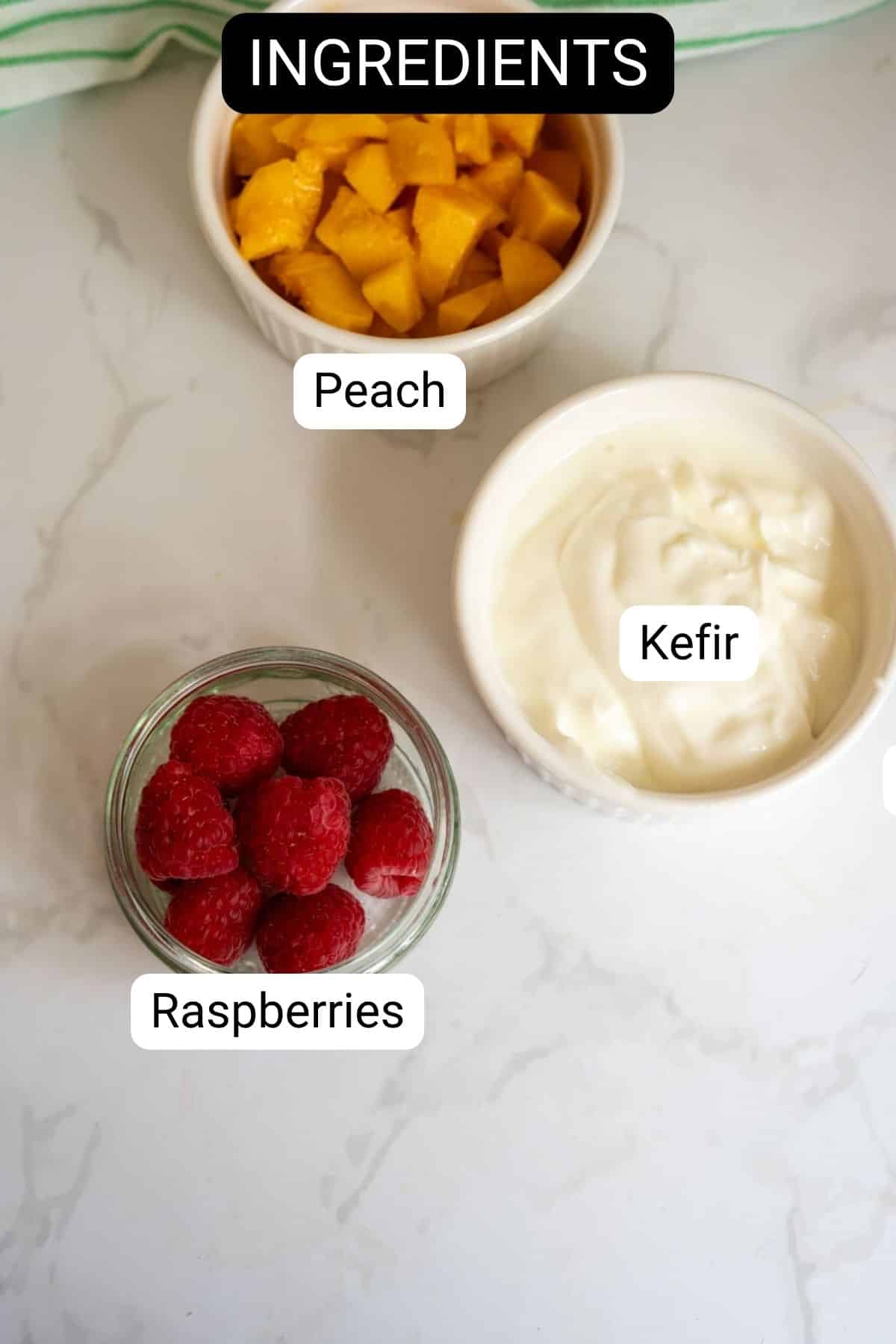
Just 3 ingredients make these creamy frozen dog treats.
How to Make Frozen Peach Raspberry Dog Treats
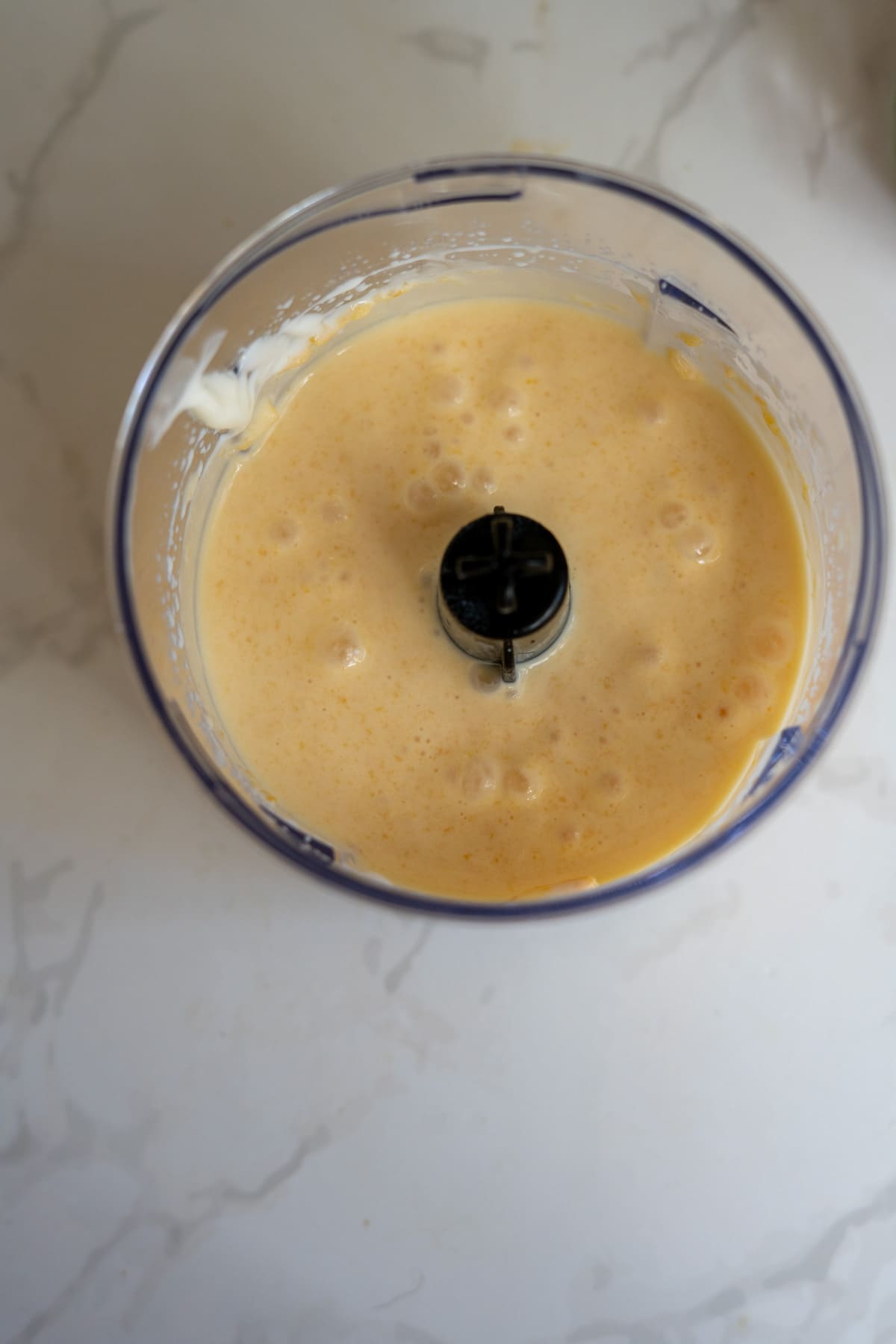
Blend peaches and kefir.
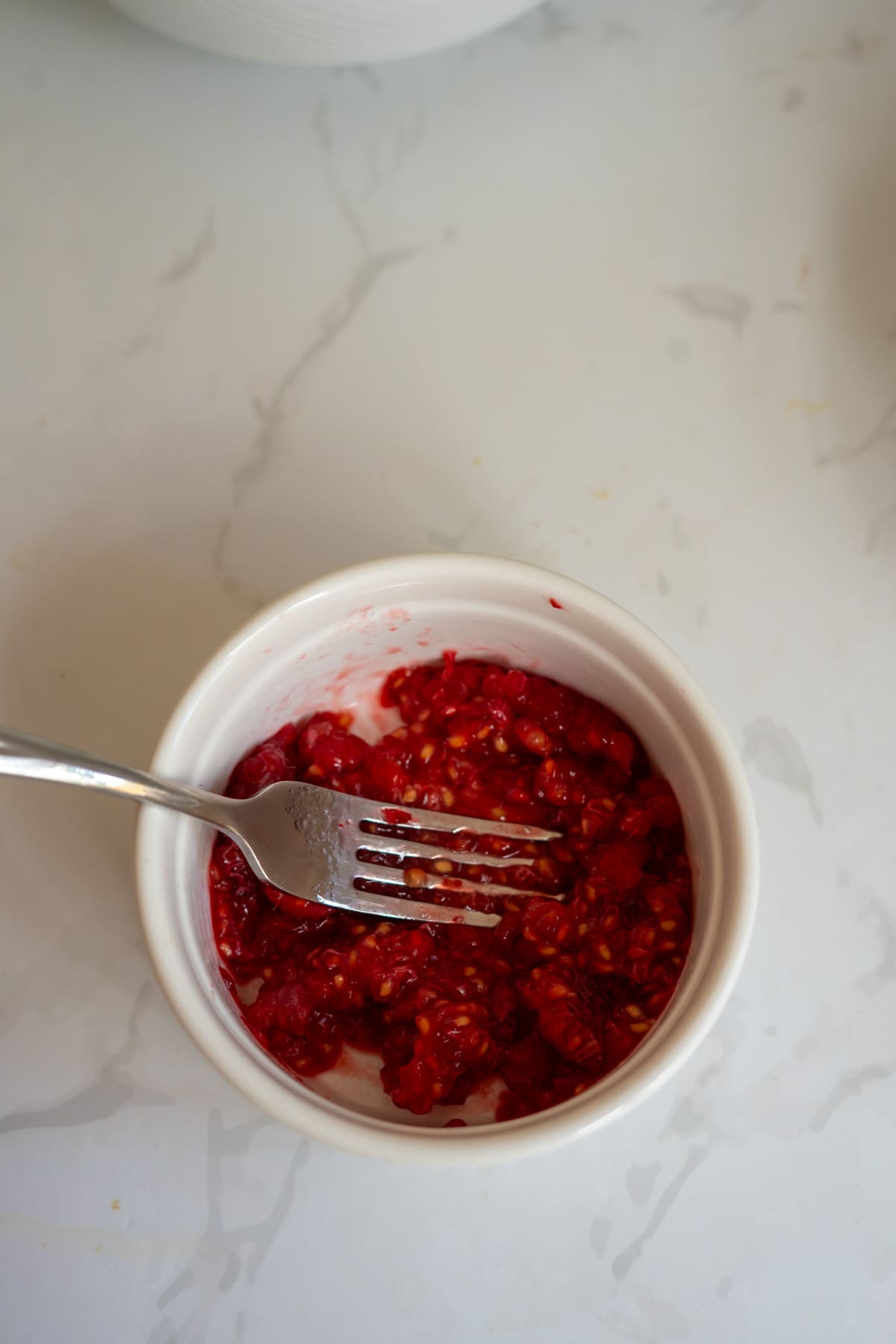
Mash the raspberries.
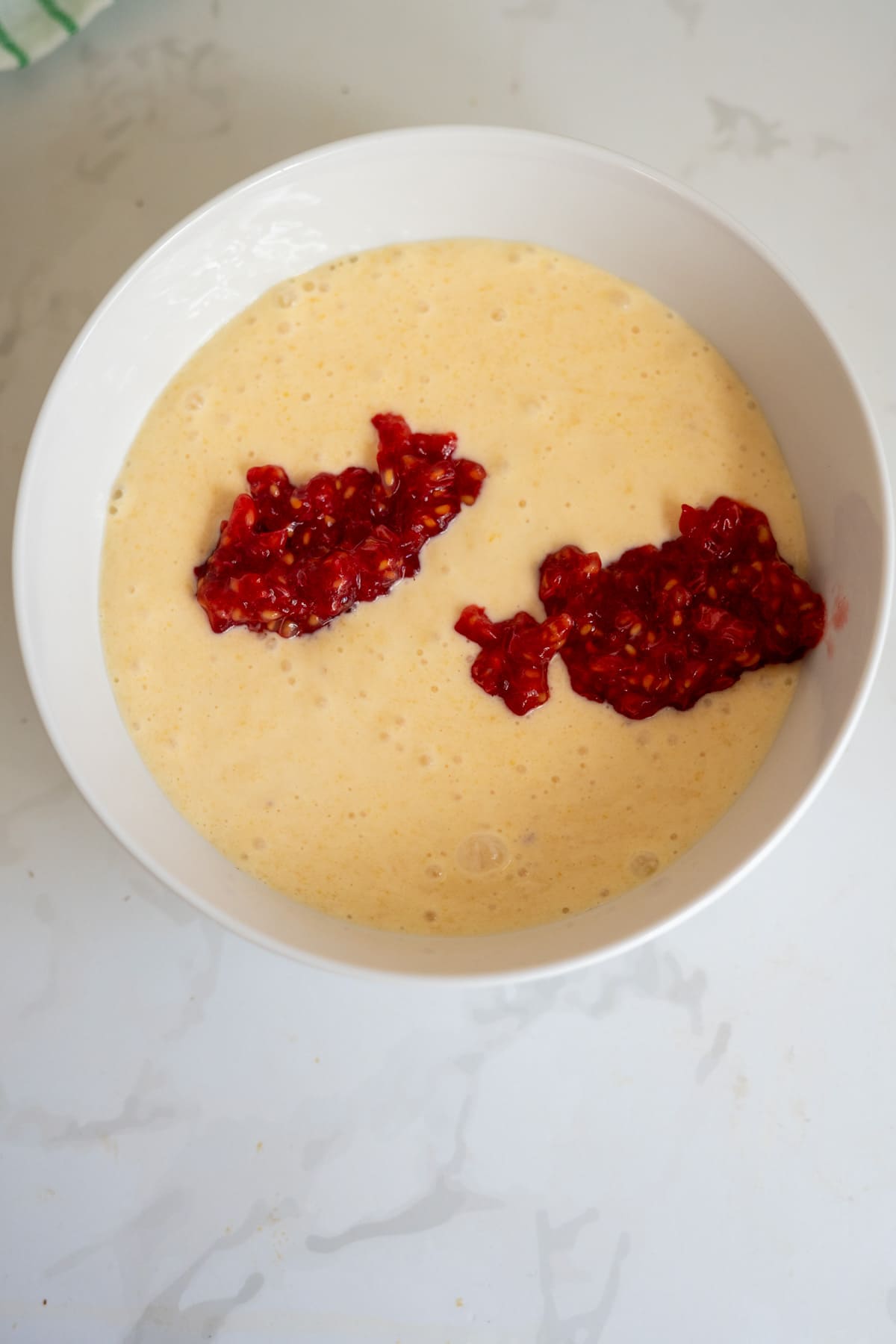
Gently add the raspberries to the peach mixture.
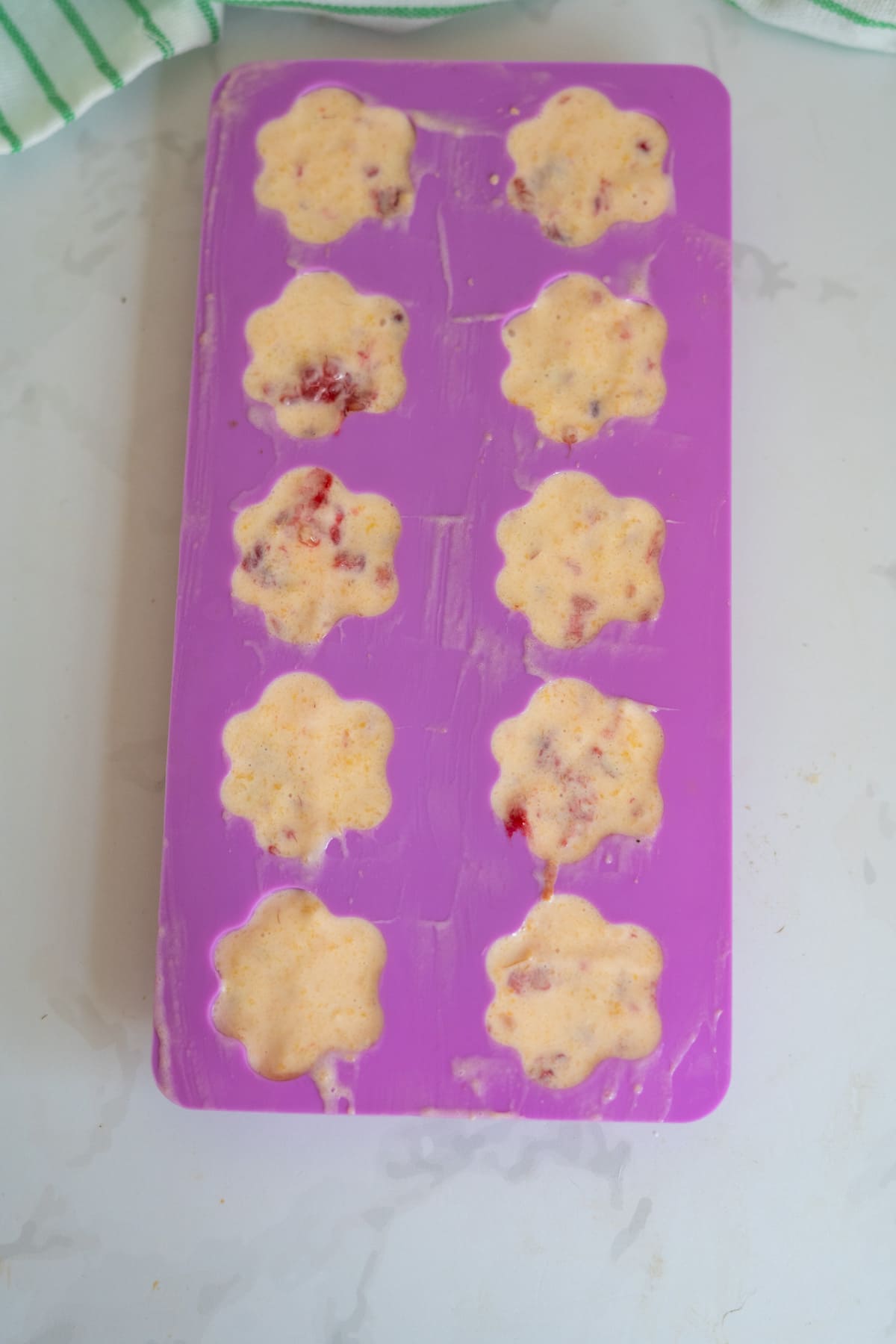
Spoon into molds and freeze.
Recipe Tips
Use ripe peaches. A ripe peach will blend more easily and provide plenty of natural sweetness without needing anything extra.
Remove the peach pit completely. Peach pits should never be given to dogs. They are a choking and intestinal obstruction hazard and contain cyanogenic compounds.
Choose plain kefir. Flavored kefir can contain added sugars, sweeteners and other unnecessary ingredients. If you don’t have kefir, you can use plain Greek yogurt.
Mash rather than blend the raspberries. This gives the treats a more interesting appearance and creates little swirls and specks of raspberry throughout the peach mixture.
Adjust the mold size to your dog. Small silicone molds are particularly useful because frozen treats should be given as treats rather than large portions of food.
Variations
Once you’ve made the basic peach and raspberry version, you can easily change the recipe.
| Variation | What to Use |
|---|---|
| Peach & Blueberry | Replace raspberries with ½ cup blueberries |
| Peach & Strawberry | Use ½ cup chopped strawberries |
| Peach & Pumpkin | Replace raspberries with ½ cup plain pumpkin puree |
| Raspberry & Banana | Replace peach with 1 cup sliced banana |
| Peach & Greek Yogurt | Replace kefir with plain unsweetened Greek yogurt |
When using yogurt, choose a plain variety without added sugar or artificial sweeteners.
How to Store Frozen Dog Treats
Keep the treats frozen until you’re ready to serve them.
Once they are completely frozen, pop them out of the silicone molds and store them in an airtight freezer container or freezer bag. For best quality, use them within 2–3 months.
Because these treats contain kefir and fresh fruit, they will soften and melt when left at room temperature.
Serving Frozen Peach Raspberry Treats
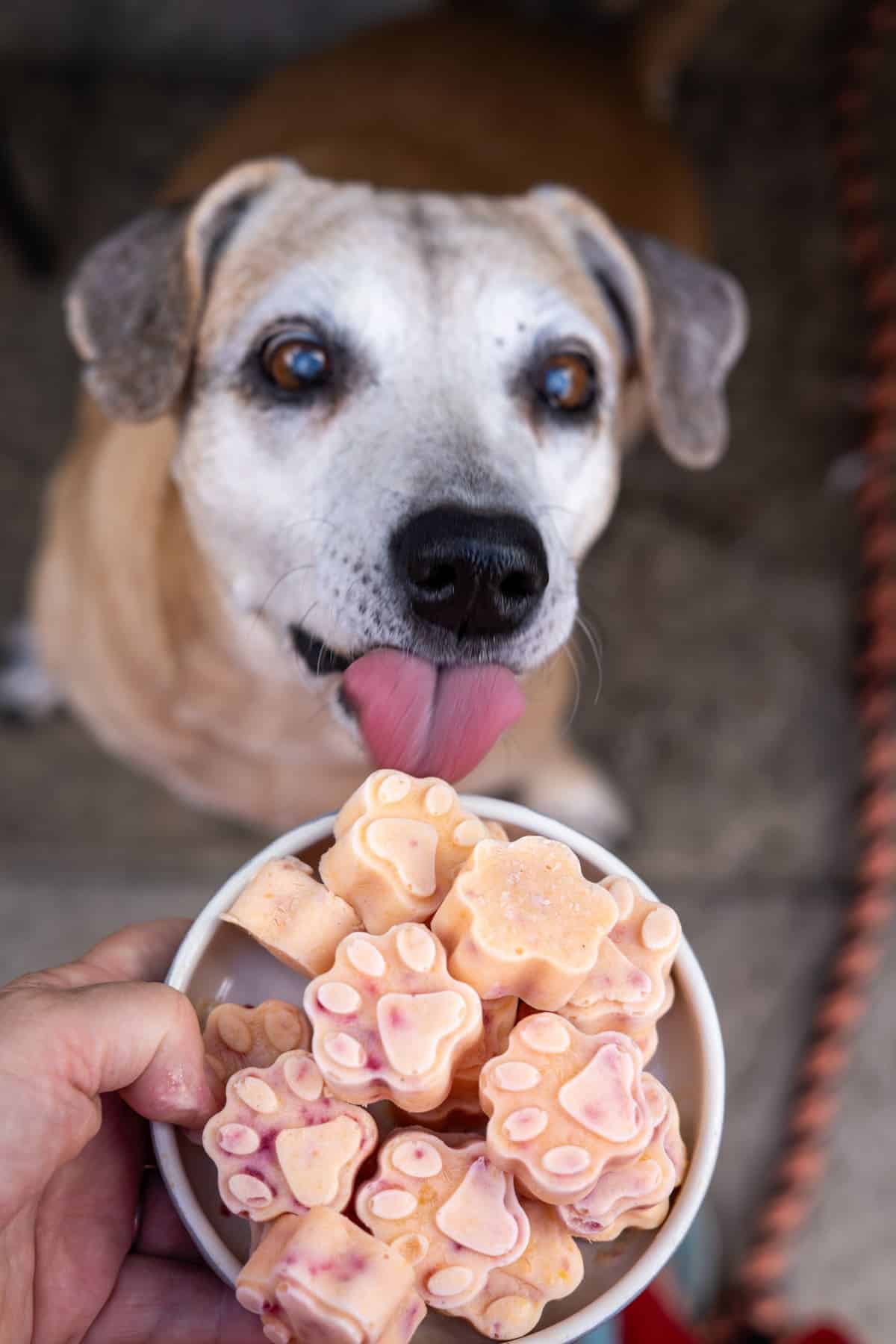
Serve these straight from the freezer as an occasional treat.
The appropriate serving depends on the size of your molds and your dog’s size, normal diet and calorie needs. For small dogs, use miniature molds or cut larger treats into smaller pieces.
If your dog tends to gulp treats rather than chew or lick them, allow the frozen treat to soften slightly before serving or use smaller molds.
Treats and extras should generally make up only a small part of your dog’s daily food intake.
More Frozen Dog Treat Recipes
If your dog enjoys a frozen treat, try these other homemade recipes:
Frozen Carrot Bone Broth Treats
Frozen Peach Blueberry Dog Treats
Frozen Pumpkin Banana Dog Treats
FAQs
Peach skin isn’t considered toxic to dogs, but removing it can make the fruit easier to blend and may be easier for some dogs to digest. We removed the skin for this recipe.
Yes. Allow frozen raspberries to thaw before mashing them so that they stir easily into the peach and kefir mixture.
Yes. Thaw the peaches enough for your blender to process them easily. Make sure you’re using plain frozen peach without added sugar or syrup.
Yes. Plain Greek yogurt is an easy substitute for kefir. Choose an unsweetened yogurt with no artificial sweeteners.
Frozen Peach Raspberry Dog Treats
Need Metric Measurements?
Use the button options below to toggle between US cups and Metric grams.
Ingredients
- 1 cup diced peach, skin and pit removed
- 1 cup kefir plain and unsweetened
- 1/2 cup raspberries
Instructions
- Place the diced peach and kefir in a blender.
- Blend until smooth and creamy.
- Mash the raspberries with a fork in a separate bowl.
- Stir the mashed raspberries into the peach and kefir mixture.
- Spoon or pour the mixture into silicone molds.
- Freeze for approximately 4 hours or until completely firm.
- Remove from the molds and store in an airtight container in the freezer.
Video
Notes
Nutrition
The information shown is an estimate provided by an online nutrition calculator.