
Salmon Meatballs For Dogs
If you’re after a simple, wholesome way to mix up your dog’s meals, these salmon meatballs are a tail-wagging favorite. These soft, nourishing salmon meatballs can be a topper or a high-value treat.
Made with canned salmon in water, these meatballs are convenient and packed with benefits. Pumpkin purée adds gentle digestive support, while oat flour is a gluten-friendly option that’s easy on sensitive stomachs. A touch of dill gives a fresh flavor boost that pairs beautifully with the salmon.
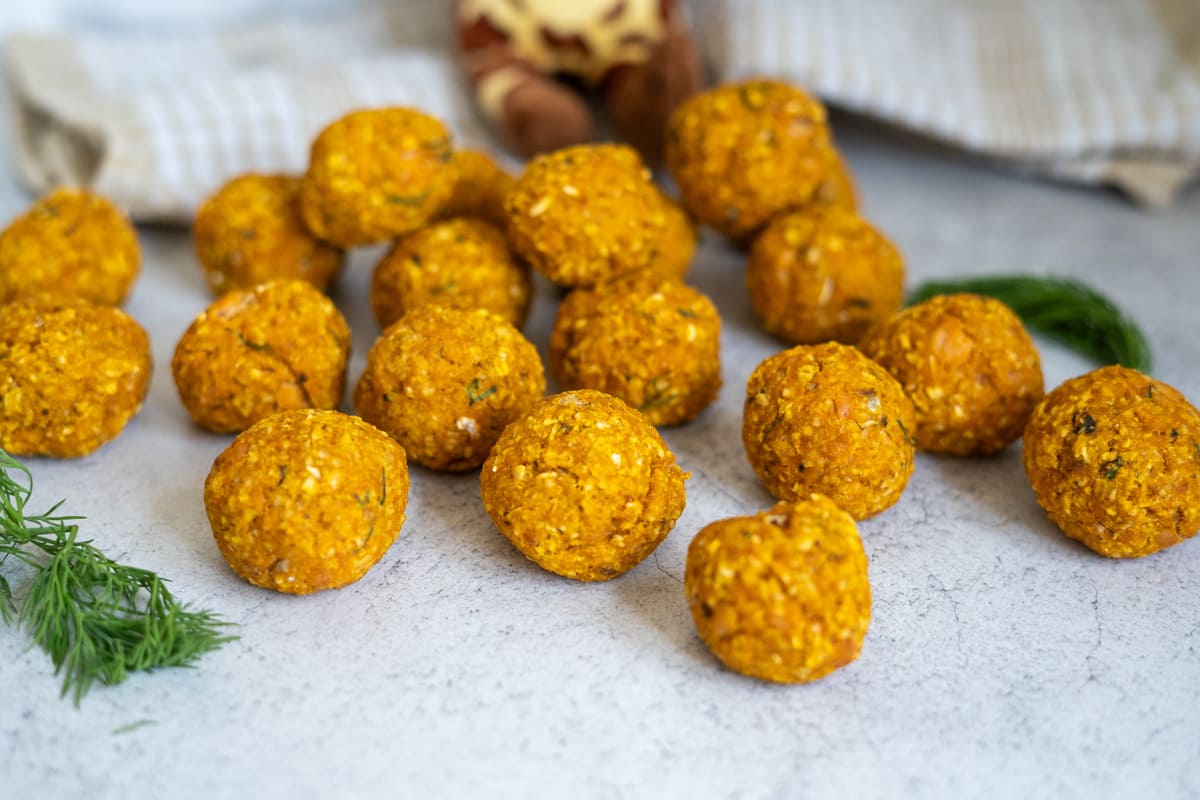
One of my dogs struggles with a stubborn skin issue, and after a bit of trial and error, adding salmon to the mix made a noticeable difference. The natural omega-3s helped support healthier skin and a shinier coat, and salmon quickly became a staple around here, along with wagging tails. Plus this recipe is easy to make. There’s something quite calming about fashioning meatballs!
This post may contain affiliate links. Please read my disclosure policy for more information.
Why Your Dog Will Love This Recipe
These salmon meatballs tick all the boxes for what dogs love most—soft texture, rich aroma, and savory flavor. The natural scent of salmon makes them incredibly enticing, even for picky eaters.
The soft, moist texture makes them easy to chew, which is perfect for puppies, senior dogs, or dogs with dental sensitivities. Plus, the combination of salmon and pumpkin creates a deliciously rich taste that dogs find irresistible.

Can Dogs Eat Canned Salmon?
Canned salmon (in water) is generally safe for dogs and is packed with beneficial nutrients. It’s a convenient, affordable way to add high-quality protein and healthy fats to homemade meals or treats. Salmon supports healthy skin, reduces itching, and promotes a shiny coat. Omega-3s may help reduce inflammation, especially in older dogs.
Always choose salmon in water, not oil or brine. Watch the sodium content as even plain canned salmon can be higher in sodium, so feed in moderation. The small, soft bones in canned salmon are typically safe and are a good source of calcium. However, if you’re unsure, you can mash or remove them.
Avoid feeding canned salmon if your dog:
- Is on a low-sodium diet
- Has kidney or heart issues (consult your vet first)
- Has a known fish allergy
Ingredients
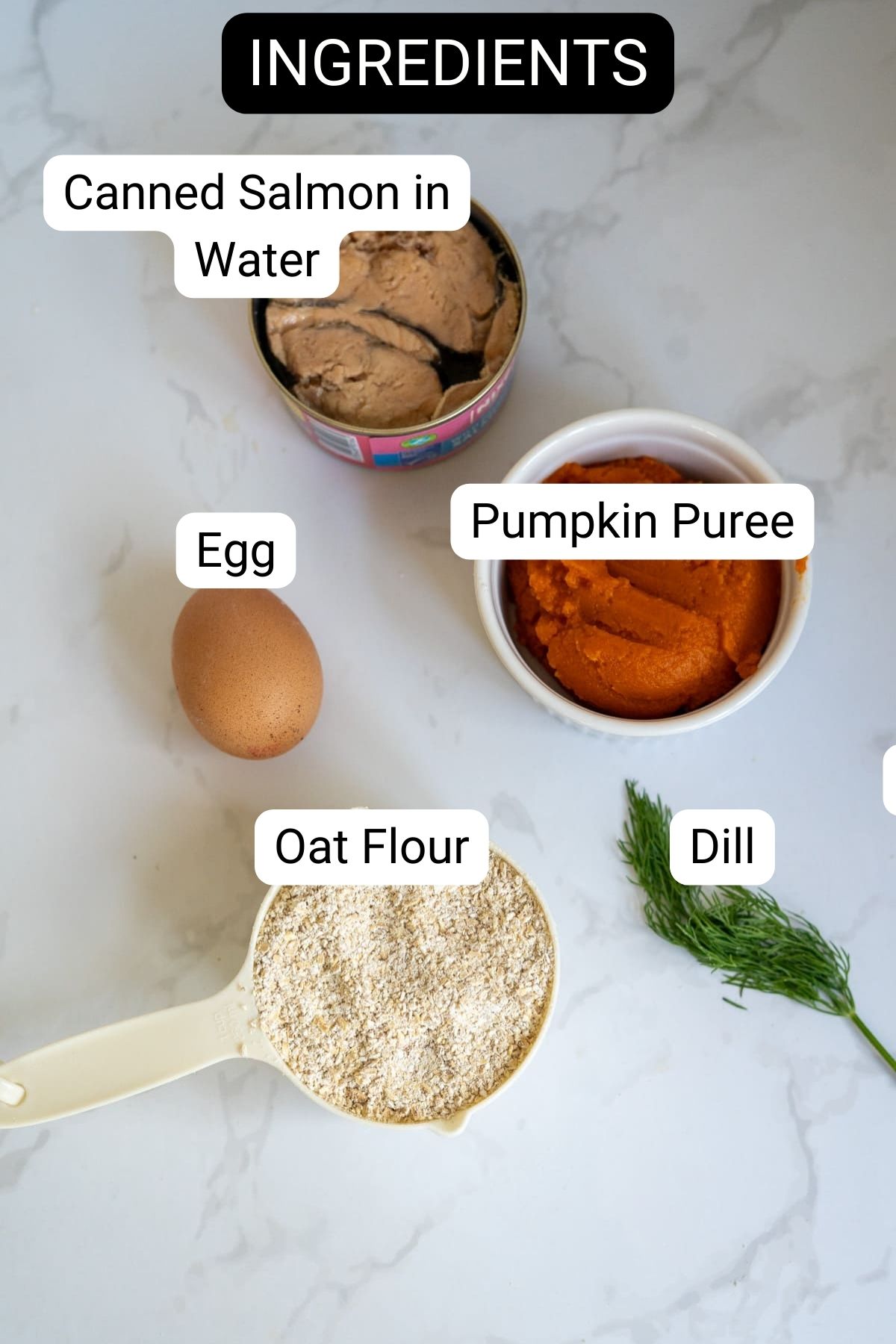
Canned salmon in water – A high-protein, omega-3-rich ingredient that supports healthy skin and a shiny coat.
Egg – Adds protein and helps bind the meatballs together while providing essential nutrients like vitamins and minerals.
Oat flour – A gentle, gluten-free flour that’s easy on sensitive stomachs and adds structure to the meatballs.
Dill – A fresh herb that adds flavor and can support digestion.
Pumpkin purée – Provides fiber for digestive health and is gentle on the stomach, while adding moisture and natural sweetness. Do not use pumpkin pie filling as that has toxic seasonings. Use plain pumpkin puree, or make your own.
How to Make Salmon Meatballs for Dogs
We bake these salmon meatballs but they could be air fried too.
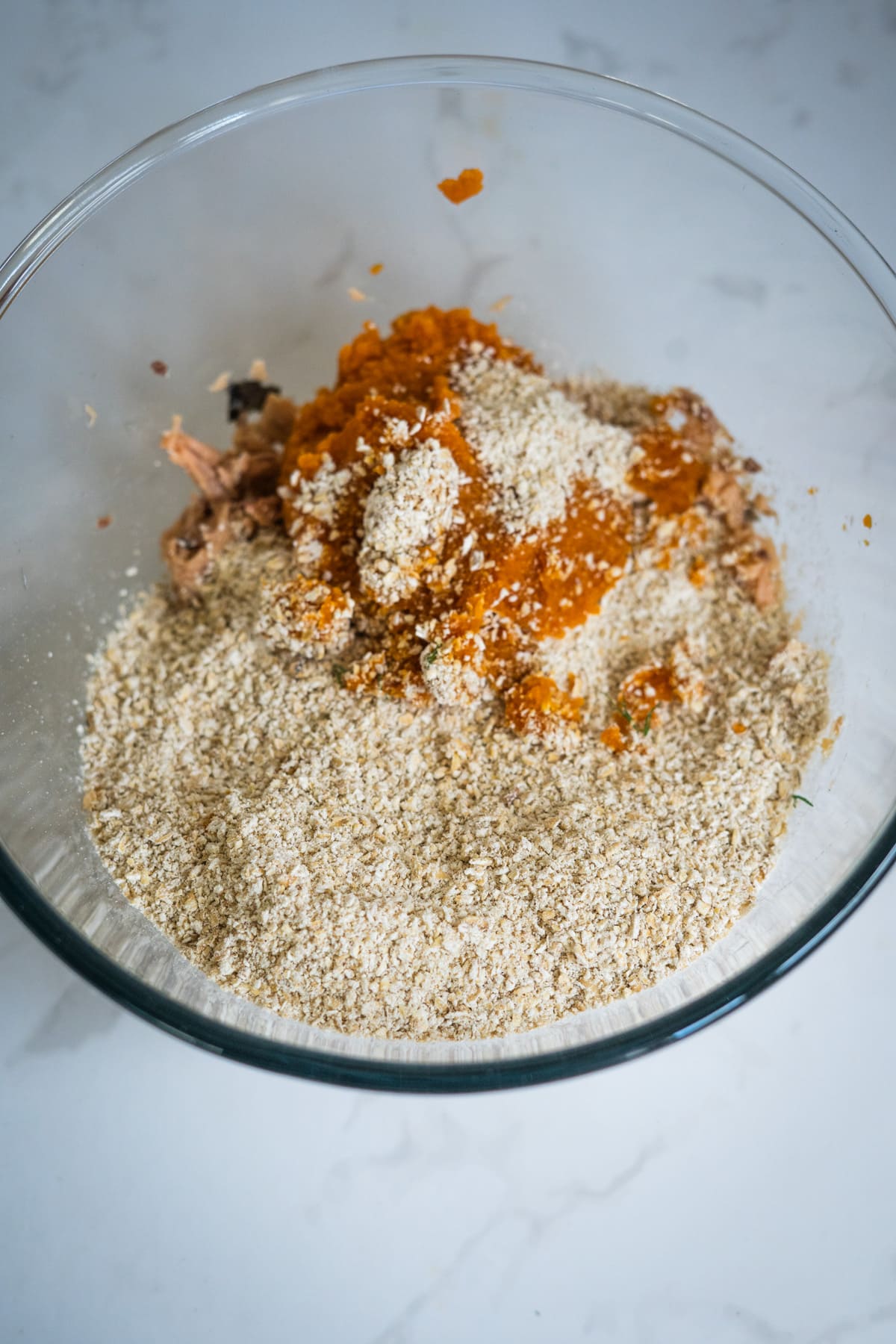
Add all ingredients to a mixing bowl.
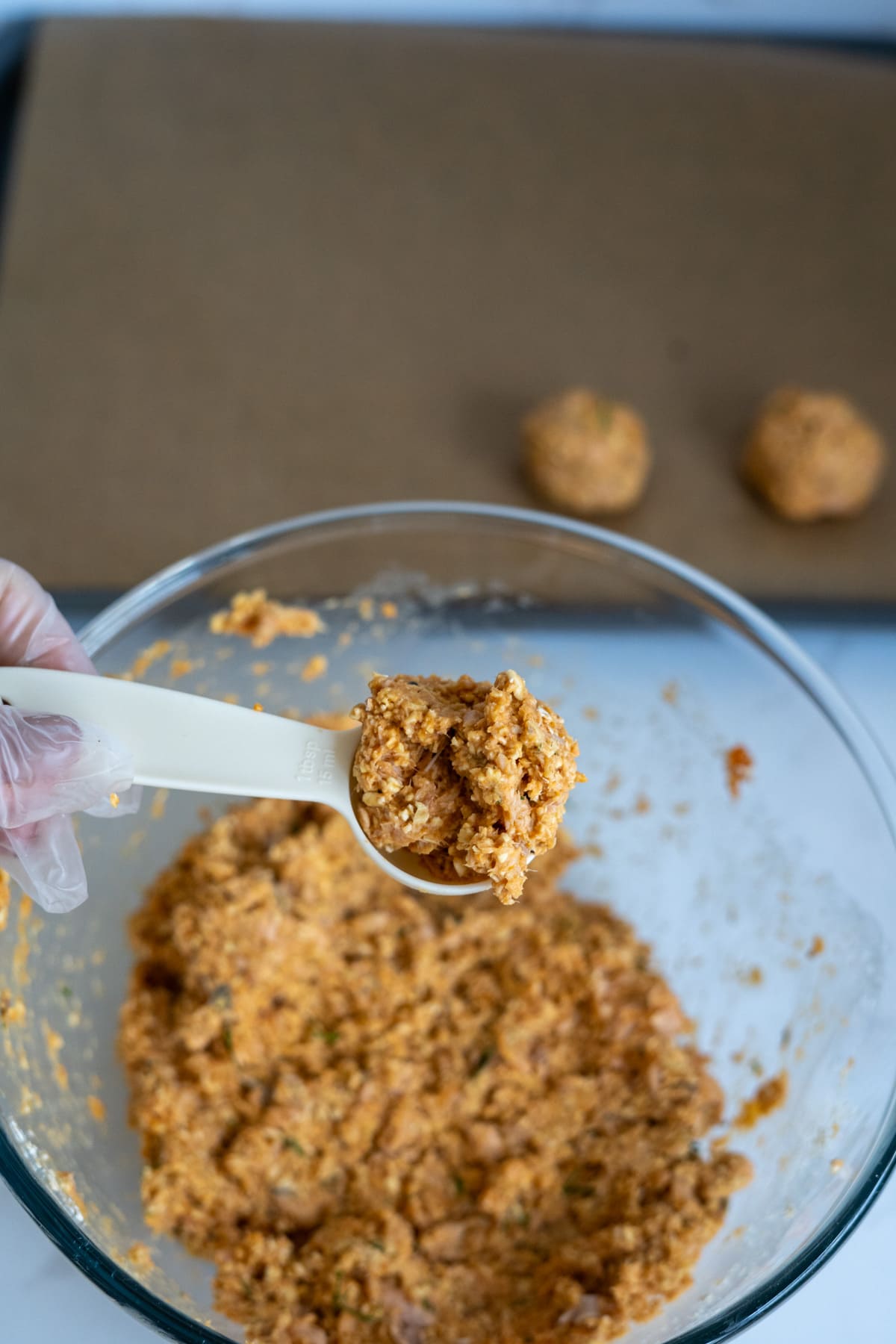
Mix and scoop the mixture into small balls.
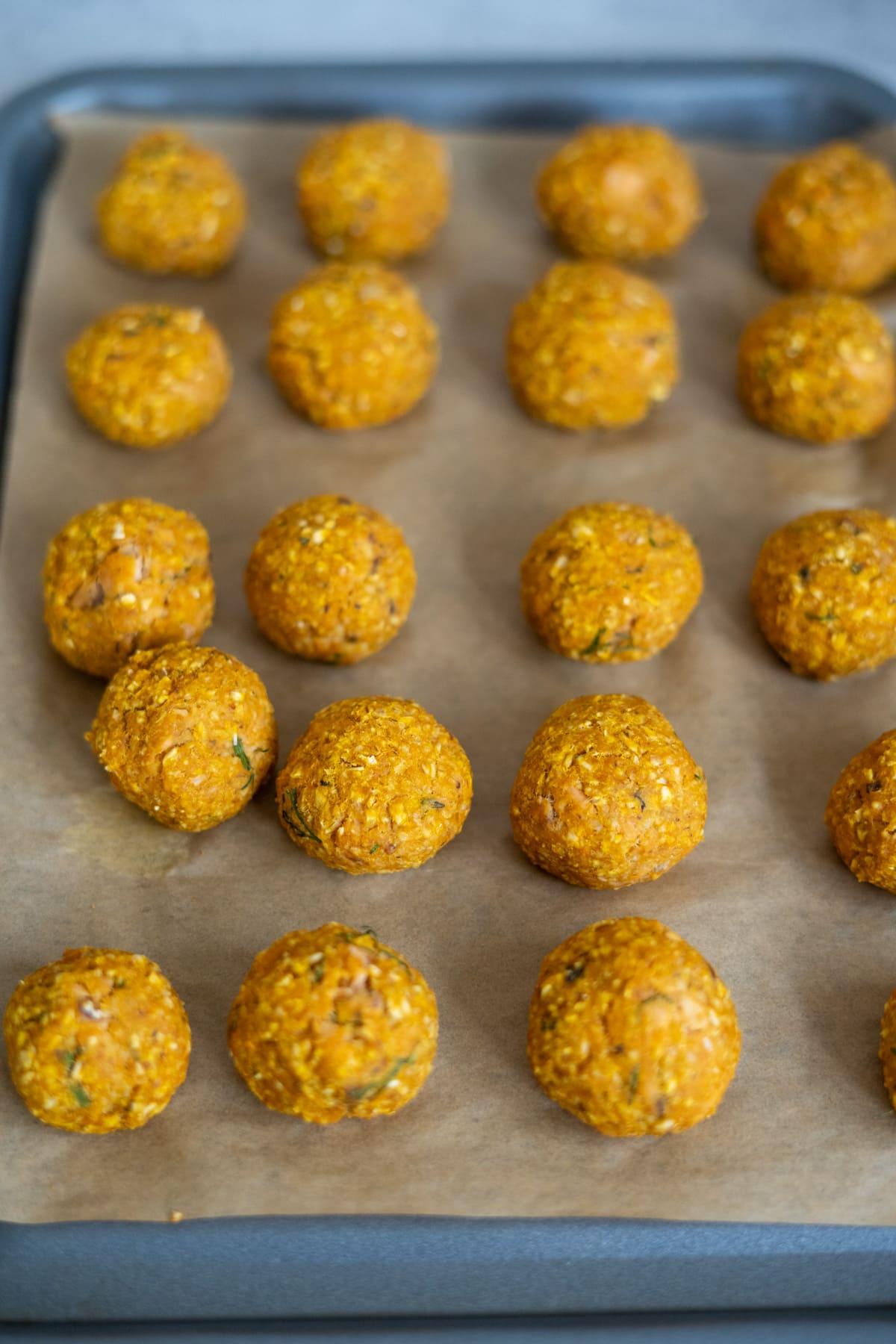
Place on a baking try and bake until firm.
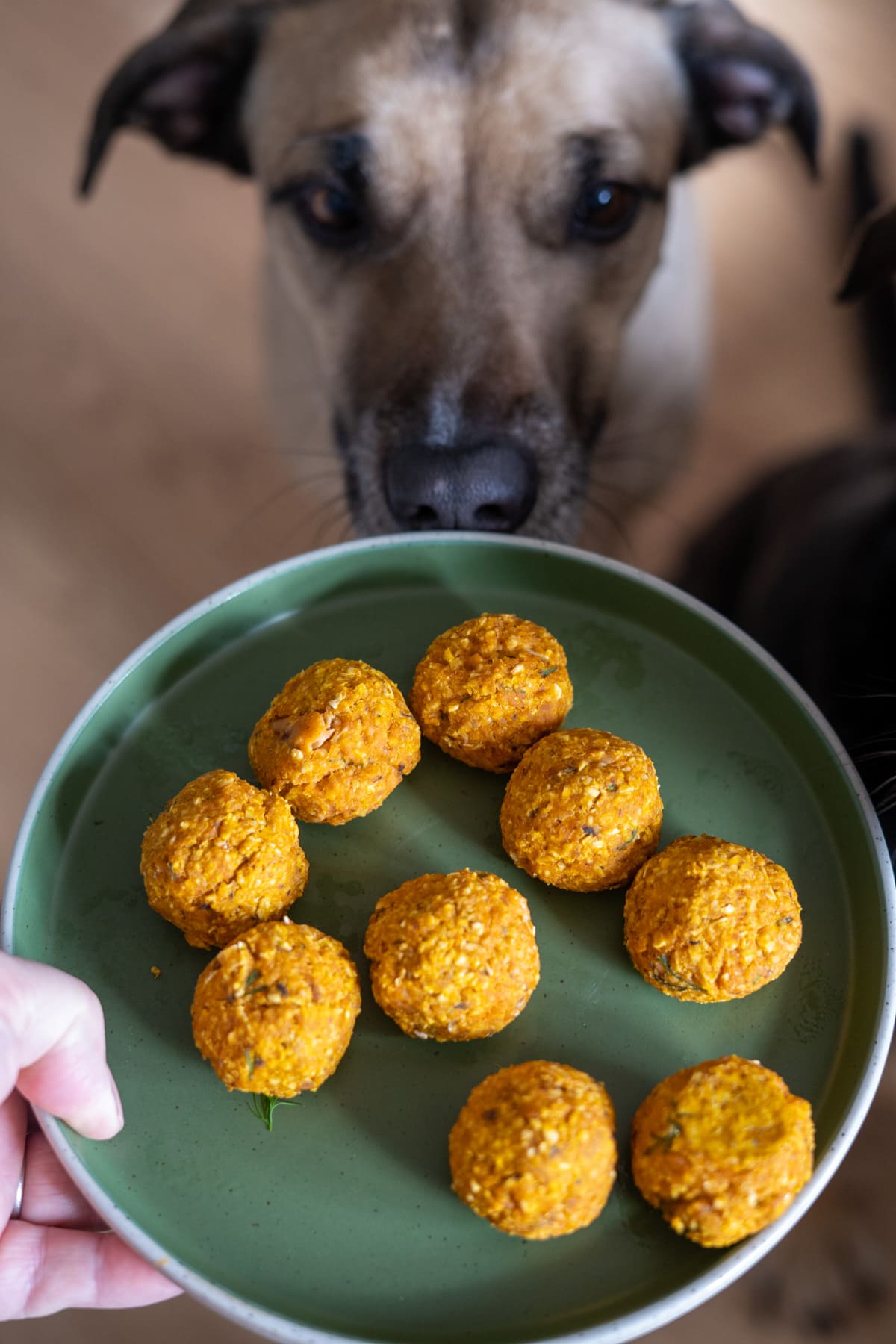
Cool and serve.
Recipe Tips
Drain the salmon well – Too much liquid can make the mixture overly wet. If needed, lightly mash and blot with paper towel before mixing.
Check for bones – Canned salmon may contain soft, edible bones (great for calcium), but you can remove them if you prefer a smoother texture.
Adjust the texture – If the mixture feels too sticky, add a little more oat flour. If it’s too dry, mix in a spoonful of water or extra pumpkin purée.
Keep them small – Smaller meatballs cook more evenly and are easier for dogs of all sizes to eat.
Don’t overbake – Bake just until firm to keep them soft and moist, especially if you’re using them as training treats.
Storage Instructions
Store your salmon meatballs properly to keep them fresh and safe for your dog:
- Refrigerator: Place the cooled meatballs in an airtight container and store in the fridge for up to 3–4 days.
- Freezer: For longer storage, freeze the meatballs in a single layer first, then transfer to a freezer-safe bag or container. They’ll keep well for up to 2–3 months.
- Thawing: Defrost in the refrigerator overnight or let them sit at room temperature for a short time before serving.
- Serving tip: You can serve them cold, bring them to room temperature, or warm slightly (just ensure they’re not hot).
Keeping a batch in the freezer makes it easy to have healthy homemade treats ready whenever your dog needs them!

FAQs
This depends on your dog’s size, weight, and diet. Small dogs may have 1–2 meatballs, while larger dogs can have more. These can be served as a treat, topper, or part of a balanced meal.
Absolutely! Just make sure the salmon is fully cooked and boneless before using it in the recipe.
Salmon is often a good alternative protein for dogs with common allergies to chicken or beef. Plus, the omega-3 fatty acids can help support skin health.
Yes, you can substitute oat flour with a grain-free option like coconut flour, but you may need to adjust the quantity for the right texture.
Yes, dried dill works just fine. Use a smaller amount since dried herbs are more concentrated in flavor.
More Salmon Dog Treat Recipes
If your dog loves salmon, or like one of mine, needs help with her skin, try these other dog treat recipes.

Salmon Meatballs for Dogs
Need Metric Measurements?
Use the button options below to toggle between US cups and Metric grams.
Ingredients
- 7.5 oz canned salmon in water
- 1 large egg
- 1 cup oat flour
- 1 tablespoon fresh dill, chopped
- 1/2 cup pumpkin puree
Instructions
- Preheat the oven to 180C/350F degrees and line a large baking sheet with parchment paper.
- Drain the canned salmon and add it to a large mixing bowl. Flake with a fork.
- Add the egg, pumpkin puree, dill and oat flour. Mix well.
- Use a cookie scooper or a tablespoon to form balls from the mixture and place the balls on the prepared baking sheet.
- Bake for 15 to 20 minutes until firm.
- Cool and serve as a treat or topper.
Notes
Nutrition
The information shown is an estimate provided by an online nutrition calculator.