Can Dogs Eat Coconut Flour
If you love baking for your furry friend, you may have noticed coconut flour popping up in dog treat recipes. But is it really safe for dogs? The short answer is yes! Coconut flour can be a healthy, grain-free alternative for homemade dog treats when used in moderation.
Packed with fiber, protein, and healthy fats, it’s a wonderful ingredient for supporting your dog’s digestion, energy, and overall well-being. In this post, we’ll explore the benefits of coconut flour, how to use it in treats, answer common questions, and link you to some delicious recipes your pup will love.
This post may contain affiliate links. Please read my disclosure policy for more information.
What is Coconut Flour?
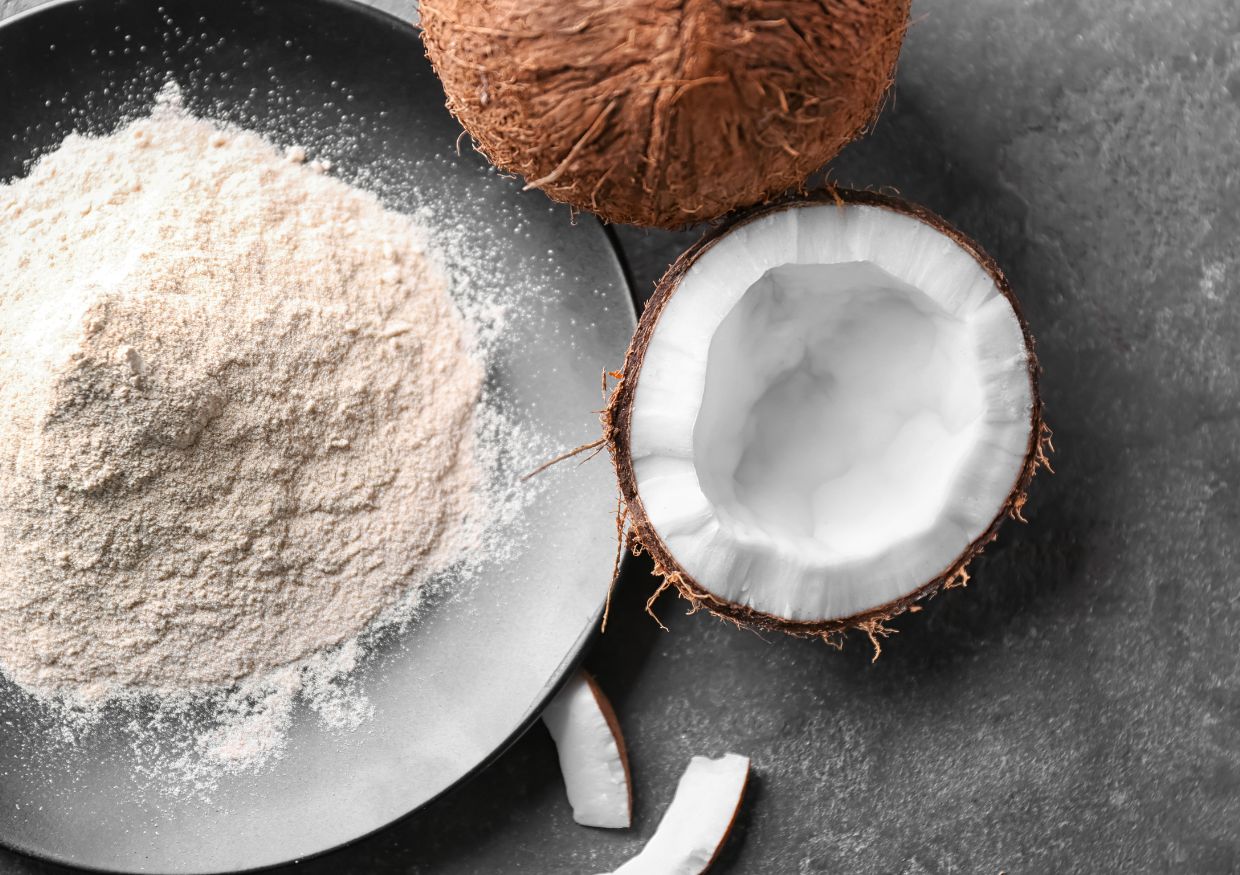
Coconut flour is made from dried coconut meat that has been finely ground into a soft, powdery texture. Unlike traditional wheat flour, it’s grain-free, low in carbs, and naturally gluten-free.
Nutritionally, coconut flour is rich in:
- Fiber – Supports healthy digestion and regular bowel movements.
- Protein – Helps maintain lean muscle.
- Healthy fats (medium-chain triglycerides) – Quick energy source and supports metabolism.
- Vitamins & minerals – Includes iron, potassium, and lauric acid, which can support immunity.
Compared to wheat or other grain flours, coconut flour is more absorbent, which means you’ll need to use less in recipes and often add extra liquid or eggs to get the right texture for dog treats.
Benefits of Coconut Flour for Dogs
Here’s why coconut flour is a great option for your pup:
- Supports Digestion: Its high fiber content helps regulate bowel movements and prevent constipation.
- Boosts Energy & Metabolism: Medium-chain fatty acids provide a quick, healthy energy source.
- Low in Carbs & Gluten-Free: Perfect for dogs with wheat sensitivities or those on low-carb diets.
- Versatile in Treats: Works well in cookies, muffins, biscuits, and even some frozen treats.
How to Use Coconut Flour in Dog Treats
Coconut flour is highly absorbent, so it behaves differently from wheat flour. Keep these tips in mind:
- Use less flour: Start with ¼ to ½ the amount of wheat flour called for in a recipe.
- Add moisture: Eggs, pumpkin puree, or mashed banana help maintain soft, chewy treats.
- Combine with other flours: Mixing coconut flour with oat or rice flour can create a better texture.
For more inspiration, see our full collection of dog treat recipes using coconut flour.
Precautions & Things to Watch
While coconut flour is generally safe, keep these points in mind:
- Moderation is key: Too much fiber can cause diarrhea, bloating, or digestive upset.
- Watch for allergies: Rarely, dogs may have coconut allergies. Introduce small amounts first.
- Puppies need smaller portions: Their digestive systems are sensitive, so start with tiny servings.
FAQs
Yes, most dogs tolerate coconut flour well. Always start with small amounts to monitor for digestive reactions.
Typically, 1–2 tablespoons per batch of treats for small dogs is a safe starting point. Adjust based on size and tolerance.
Many dogs with sensitive stomachs tolerate coconut flour, but consult your vet if your dog has chronic digestive issues.
Yes, but remember it absorbs more liquid than wheat flour, so you’ll need to add extra eggs or wet ingredients.
Recipes Using Coconut Flour
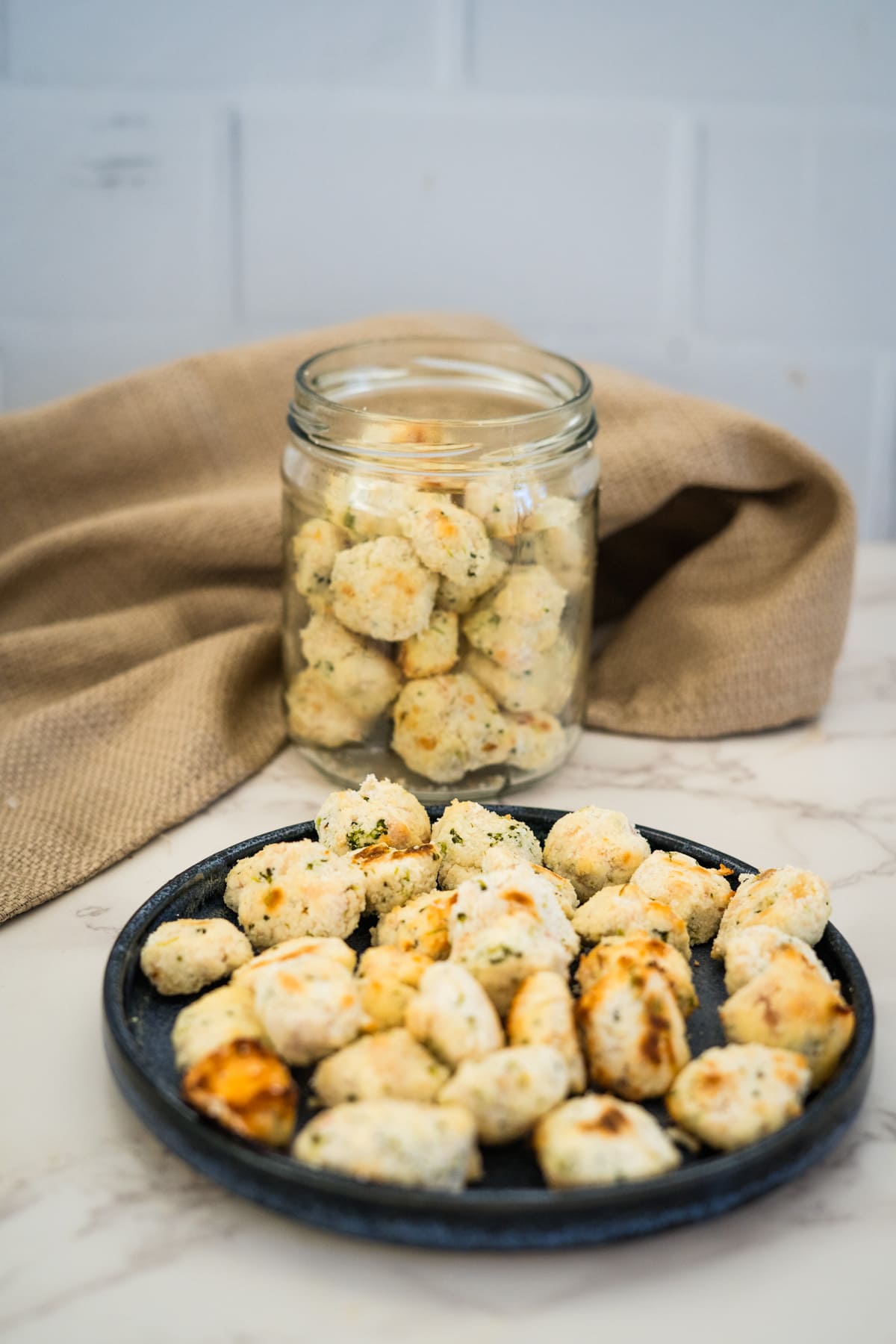
Here are some of our favorite coconut flour dog treat recipes. These recipes are easy to follow, nutritious, and perfect for dogs of all sizes.



Final Thoughts
Coconut flour is a safe, nutritious, and versatile ingredient for homemade dog treats. From biscuits to muffins, it’s an excellent choice for grain-free, low-carb, or sensitive-diet dogs.
Remember to introduce it slowly, monitor your dog’s reaction, and follow trusted recipes. With a little creativity, you can make treats that are both healthy and delicious—your pup will thank you!