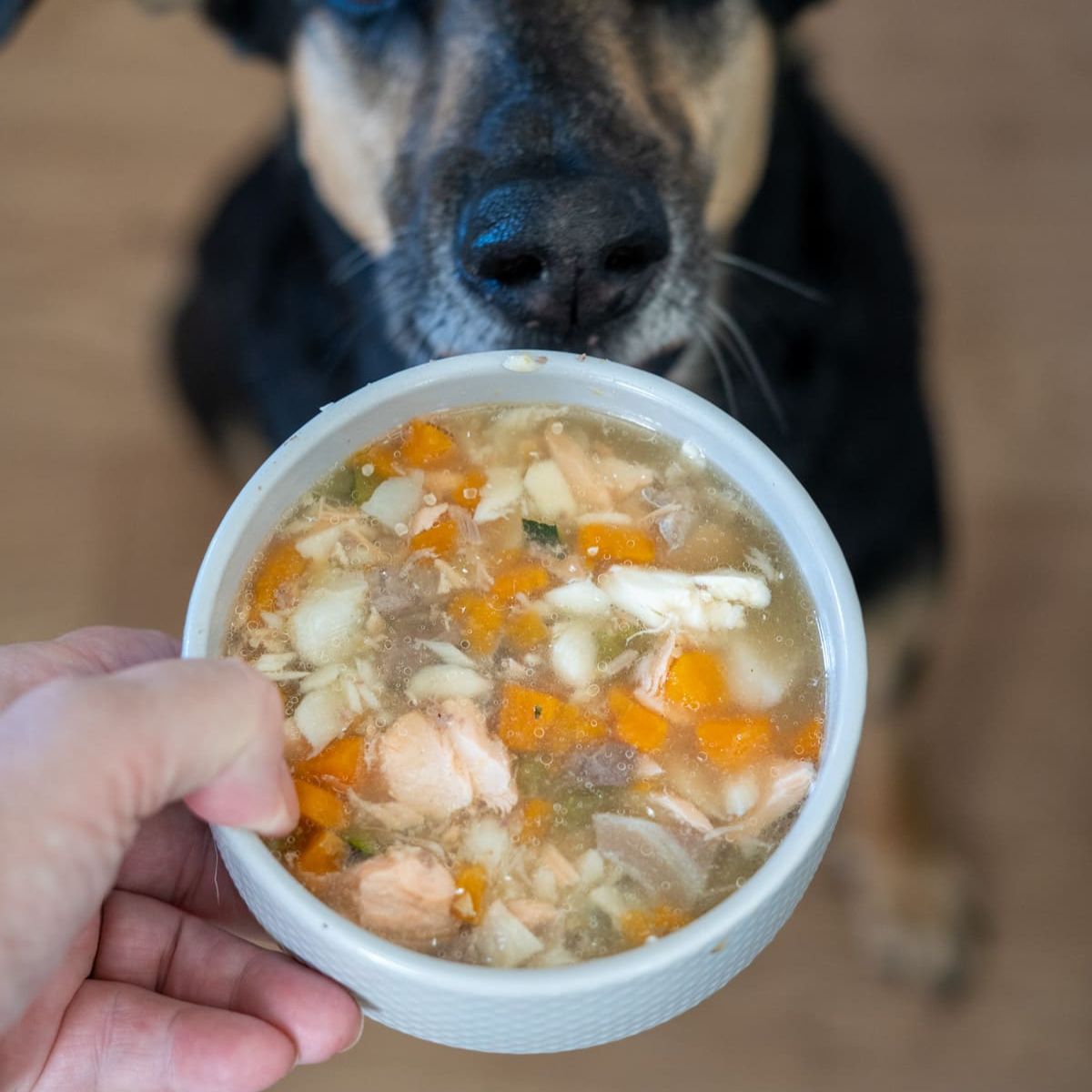
Fish Stew For Dogs
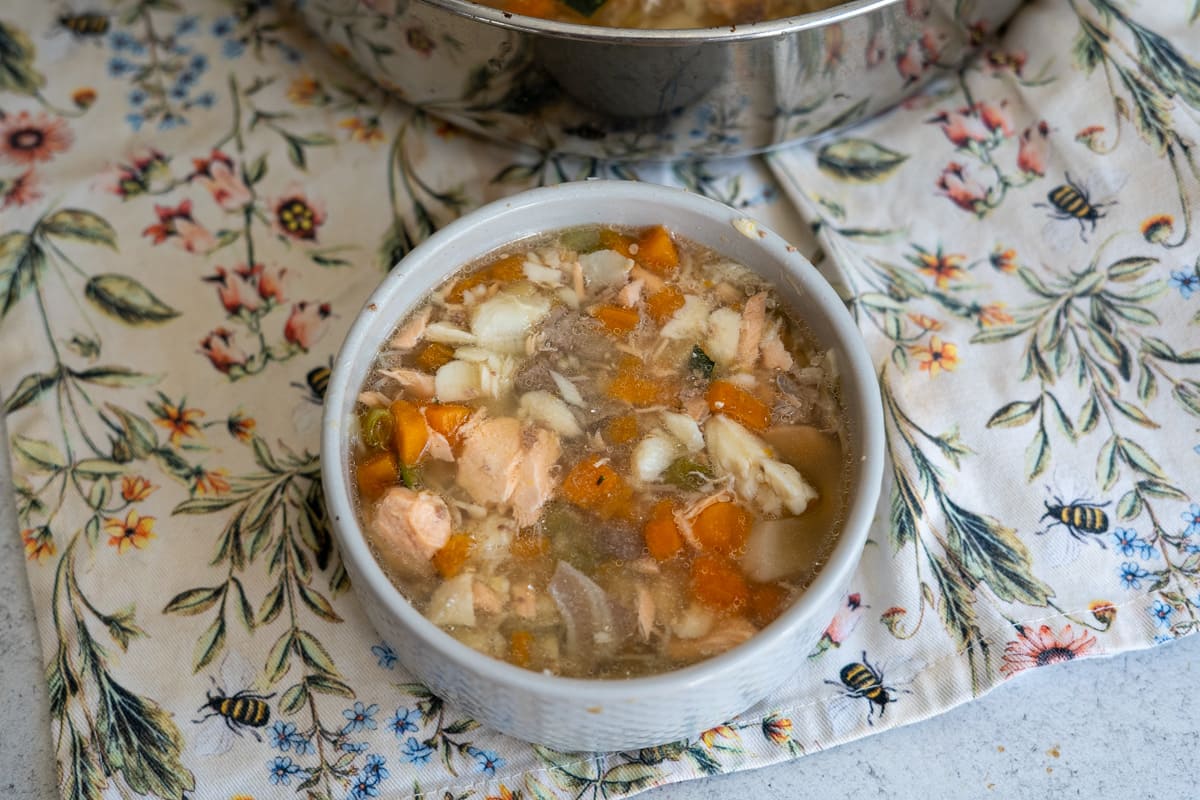
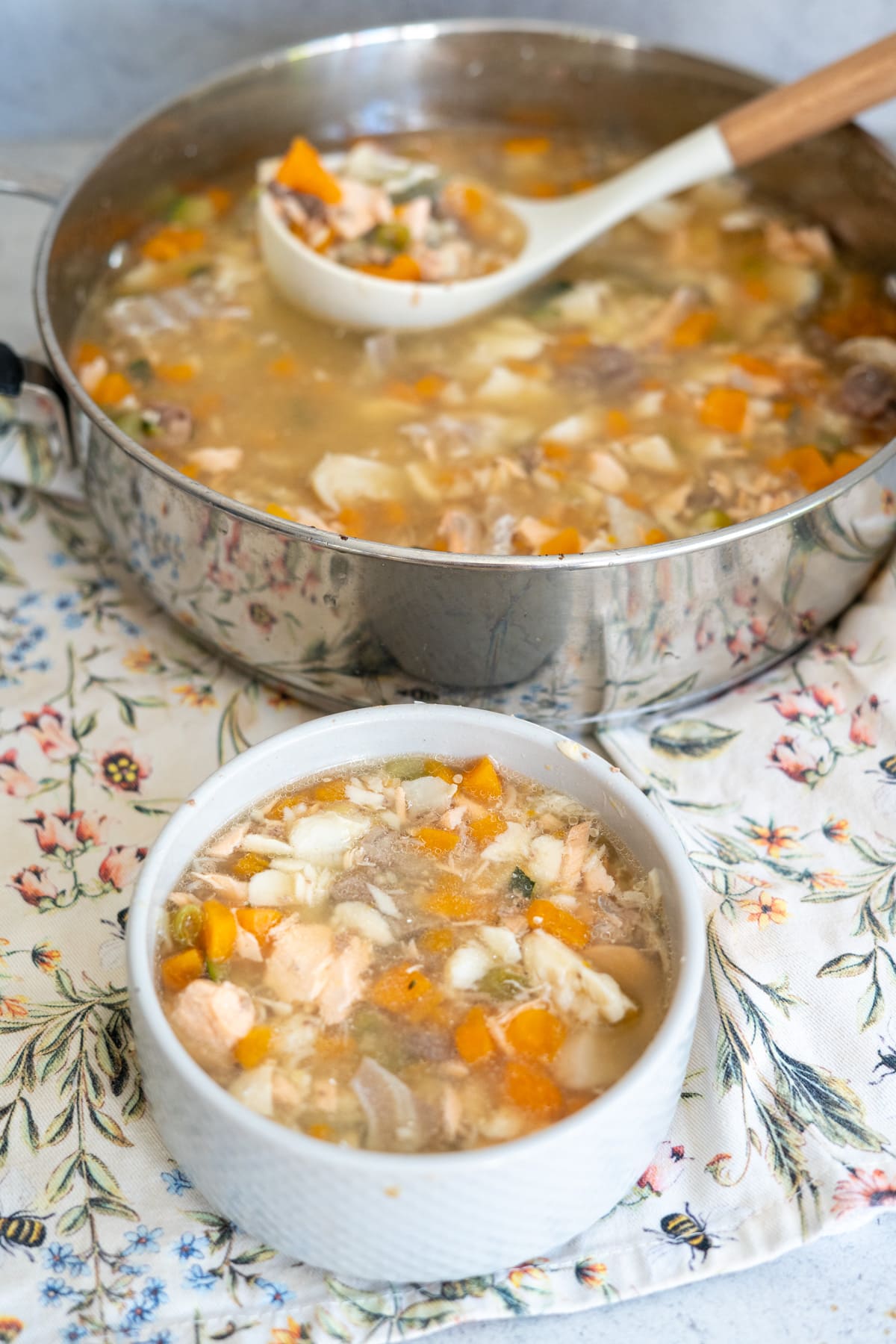
If your dog loves fish, this homemade fish stew for dogs is a lovely way to turn it into a proper dinner. It combines flaky white fish with salmon, a small amount of organ meat and dog-friendly vegetables, all gently simmered together into a soft, hearty stew.
We add eggshell powder for calcium along with a few carefully chosen extras to give the meal a better nutritional balance than a simple fish-and-vegetable recipe. It’s also easy to portion and freeze, so you can make a batch and have homemade fish dinners ready for another day.
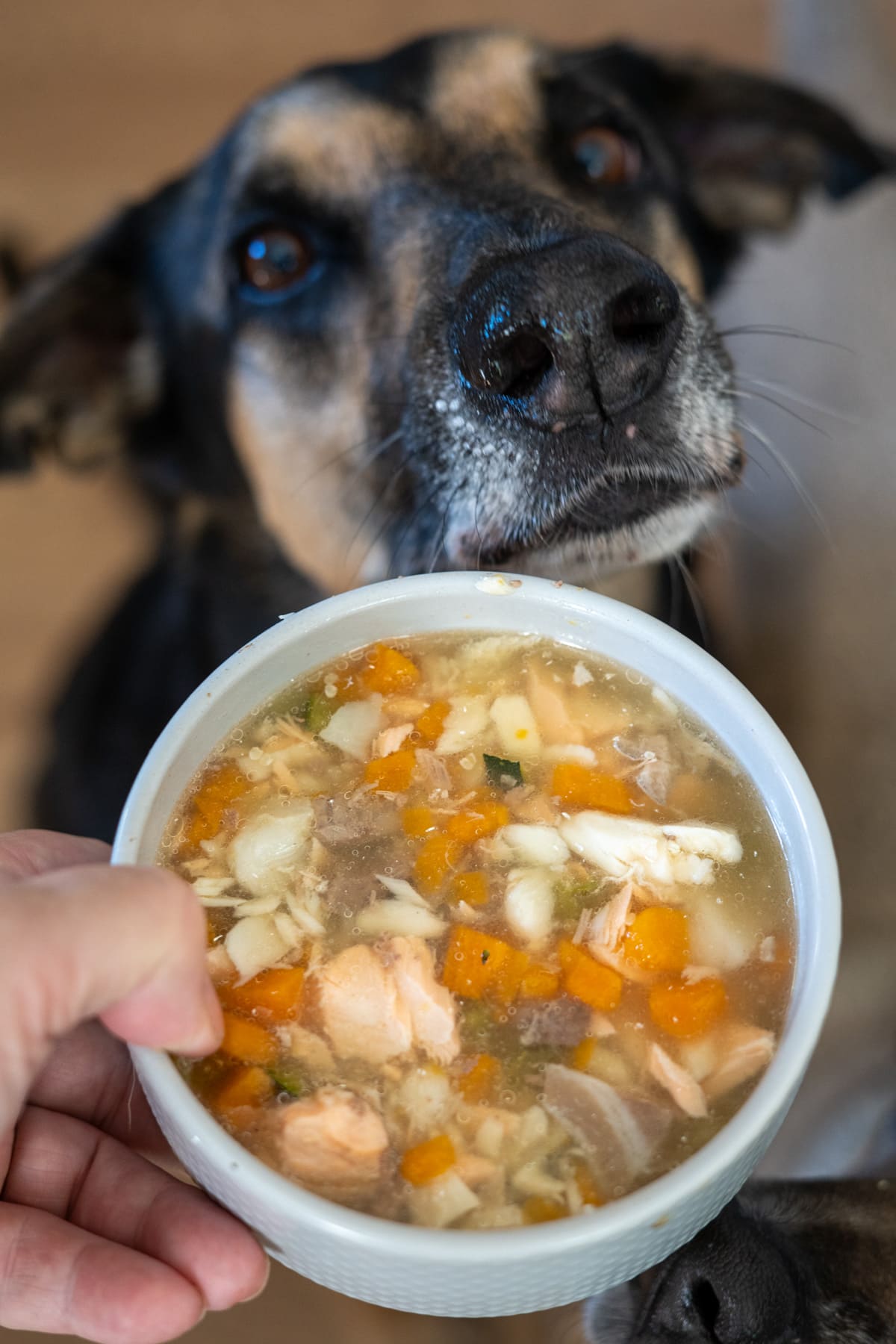
This was given the full paws up by our dogs and they loved slurping the liquid of the stew. I find a stew helps slow down my fast eaters of the pack too. I am looking at you Teddy!!
This post may contain affiliate links. Please read my disclosure policy for more information.
Why Make Fish Stew for Dogs?
Fish is an excellent animal protein to include in a dog’s diet. White fish such as cod, haddock and pollock is relatively lean, while salmon provides more fat and is particularly valuable for its omega-3 fatty acids.
This stew combines the two rather than relying on one type of fish.
It’s also:
- Made without grains
- Free from onion and garlic
- Easy to portion and freeze
- Made with readily available ingredients
- A useful alternative for dogs who don’t eat chicken or other commonly used meats
- Naturally soft and moist, making it particularly easy to eat
Why Your Dog Will Love This Fish Stew
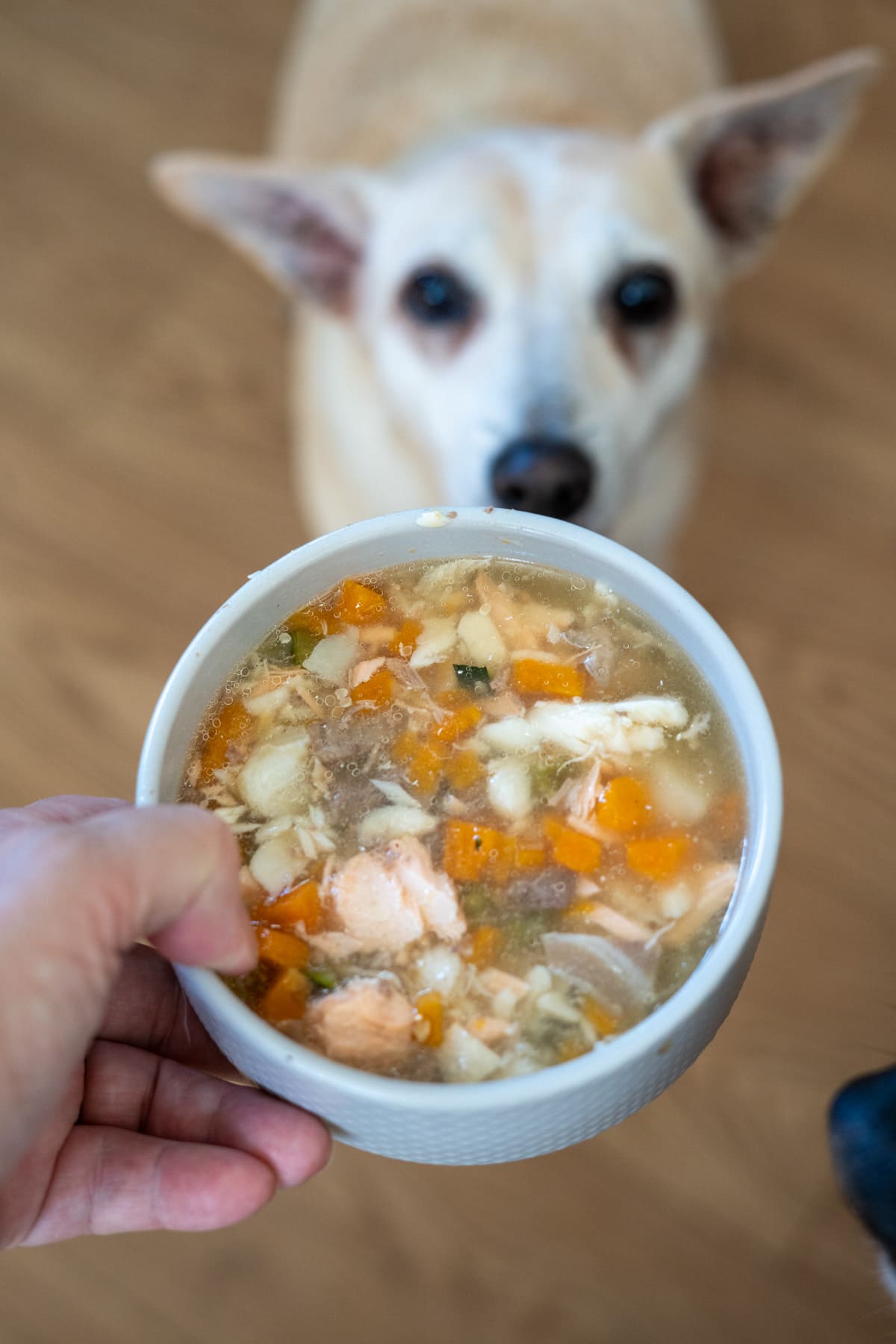
This recipe also has plenty of variety, with chunks of fish, colorful vegetables and a delicious broth that brings everything together. The gentle cooking method keeps the ingredients soft and tender, creating a meal that’s both easy to eat and full of flavor. It’s especially appealing to dogs that enjoy moist foods or have become bored with the same chicken or beef dinners.
Whether you serve it as an occasional treat or as part of your homemade feeding routine, this hearty fish stew is a comforting meal that’s sure to have tails wagging.
Ingredients
This fish stew for dogs recipe is packed with ingredients.
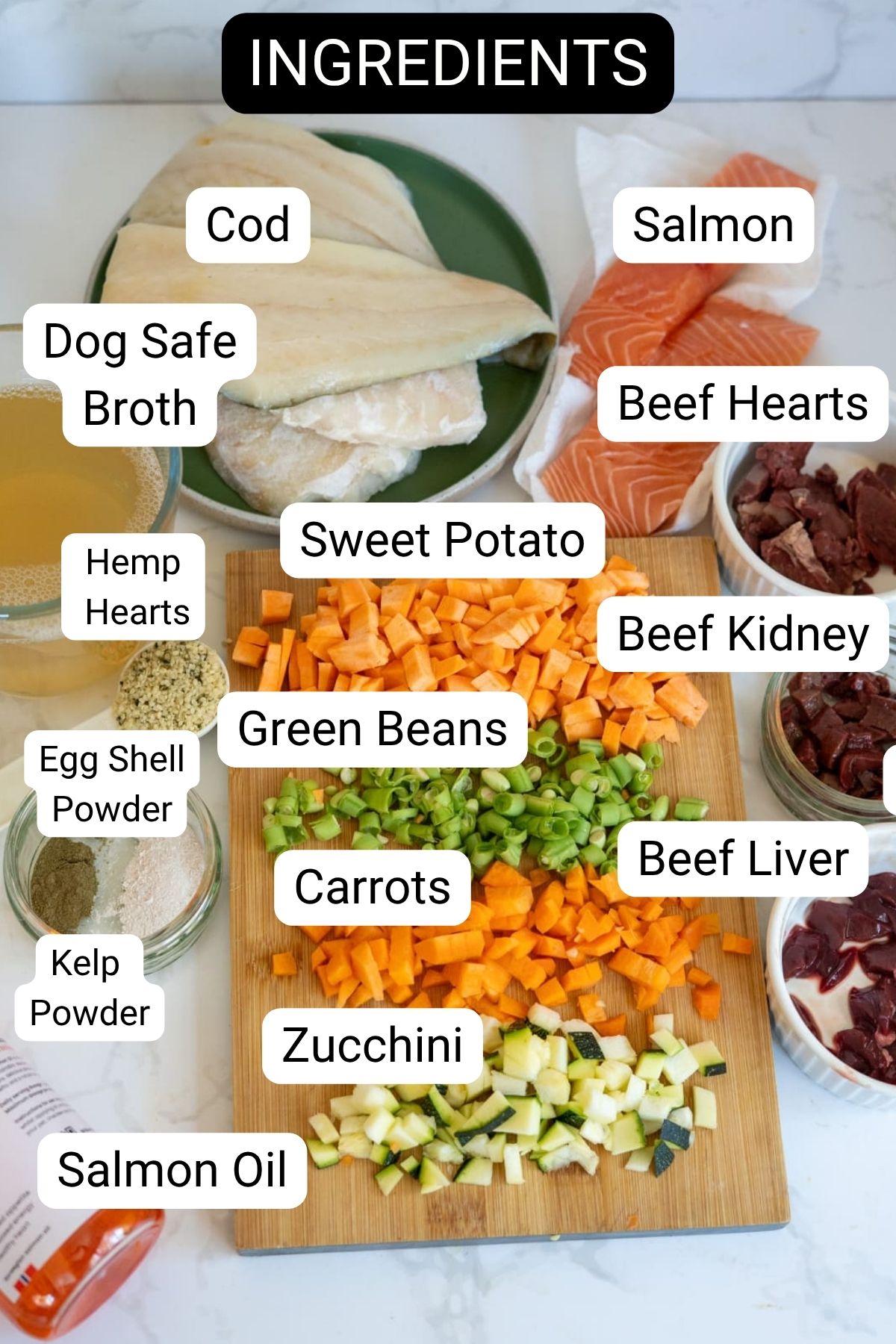
Fish and organs
White fish – Cod, haddock, pollock or coley all work well. Use boneless fillets and check carefully for any remaining bones before cooking.
Salmon – Salmon adds flavor, protein and omega-3 fatty acids, particularly EPA and DHA. We left the skin on, but remove it if you’re deliberately trying to keep the meal lower in fat.
Beef heart – Beef or chicken heart provides additional protein as well as nutrients including iron and B vitamins.
Liver – Liver is nutrient-dense and provides vitamin A, iron, copper and several B vitamins. A little goes a long way, which is why it makes up only a small portion of the recipe.
Kidney – Kidney provides additional vitamins and minerals and helps introduce another secreting organ into the recipe.
Vegetables
Sweet Potato – Provides carbohydrate, fibre, beta-carotene and a naturally sweet flavor.
Carrot – A source of fibre and carotenoids.
Green Beans – Green beans add fibre without contributing many calories.
Zucchini – A mild, moisture-rich vegetable that works particularly well in stews.
Broth/Water – Use enough to achieve your preferred consistency. You can also use a homemade dog friendly fish or meat broth that contains no onion. There are dog friendly broths available is pet stores too!
Added after cooking
These ingredients are added after cooking to help preserve their nutritional value and ensure your dog gets the maximum benefit from each supplement.
- Eggshell powder – Provides an important source of calcium to help balance the phosphorus naturally found in fish and organ meat. Calcium supports healthy bones, teeth and muscle function.
- Hemp hearts – Rich in healthy fats, protein and fibre, hemp hearts also provide minerals such as magnesium, zinc and iron.
- Kelp powder – A natural source of iodine, which plays an important role in supporting normal thyroid function and metabolism.
- Salmon oil (optional) – An extra source of EPA and DHA omega-3 fatty acids, which support healthy skin, a shiny coat, brain function and joint health.
How To Make Fish Stew For Dogs
If you love an easy dog food recipe, this is for you! Everything made in one pot and voila! Dinner is served.
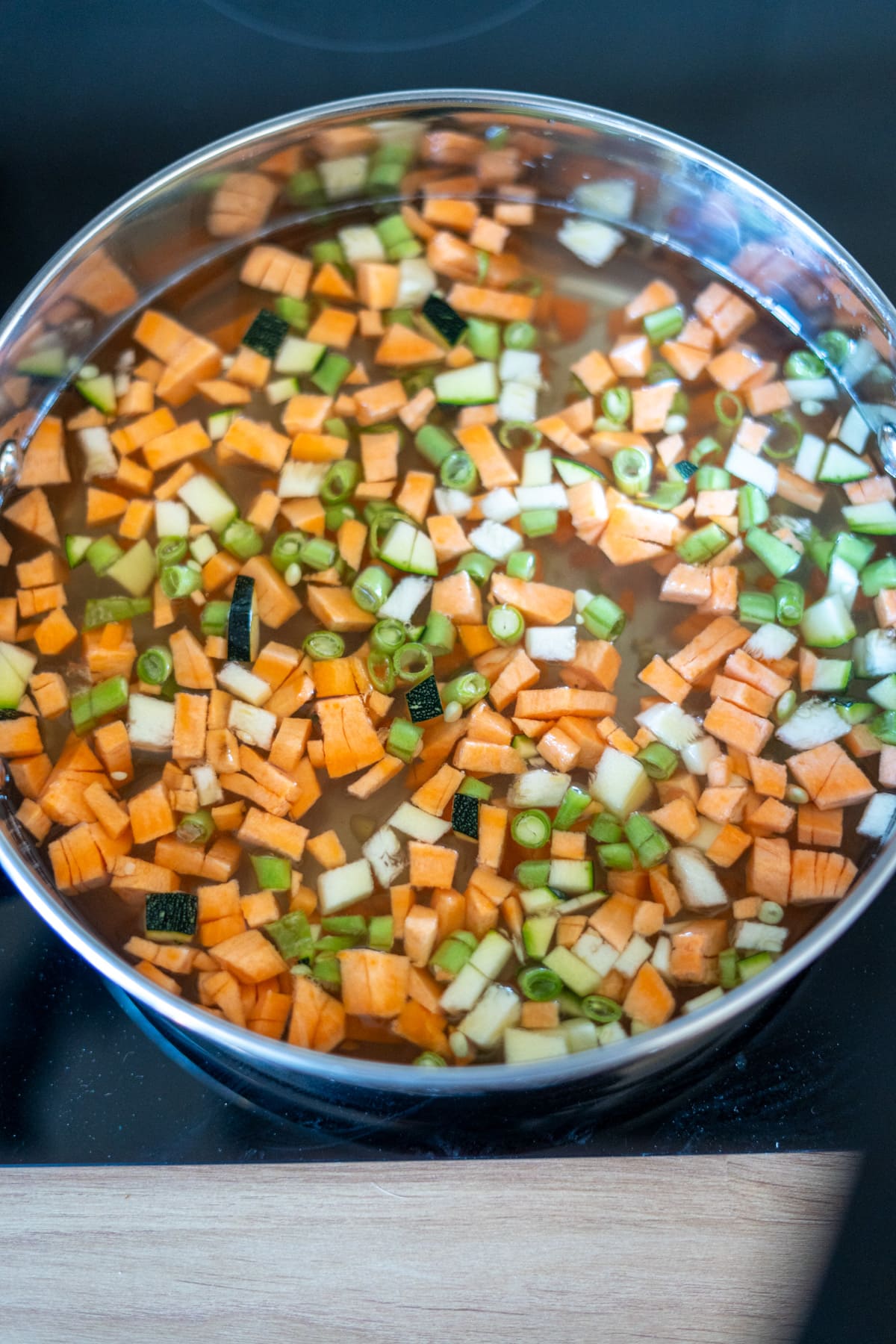
Simmer vegetables in the broth/water.
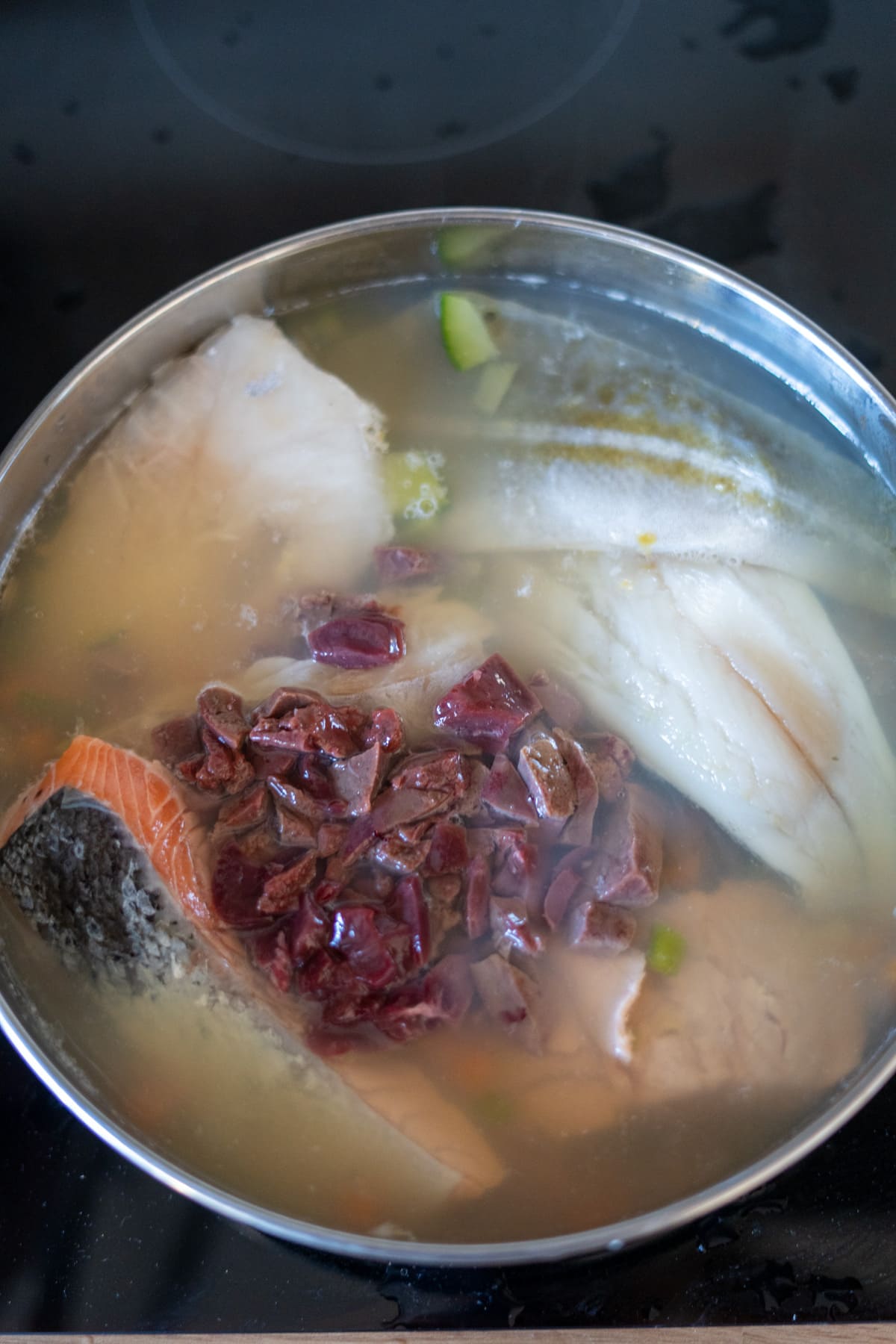
Add the fish and the organs and simmer.
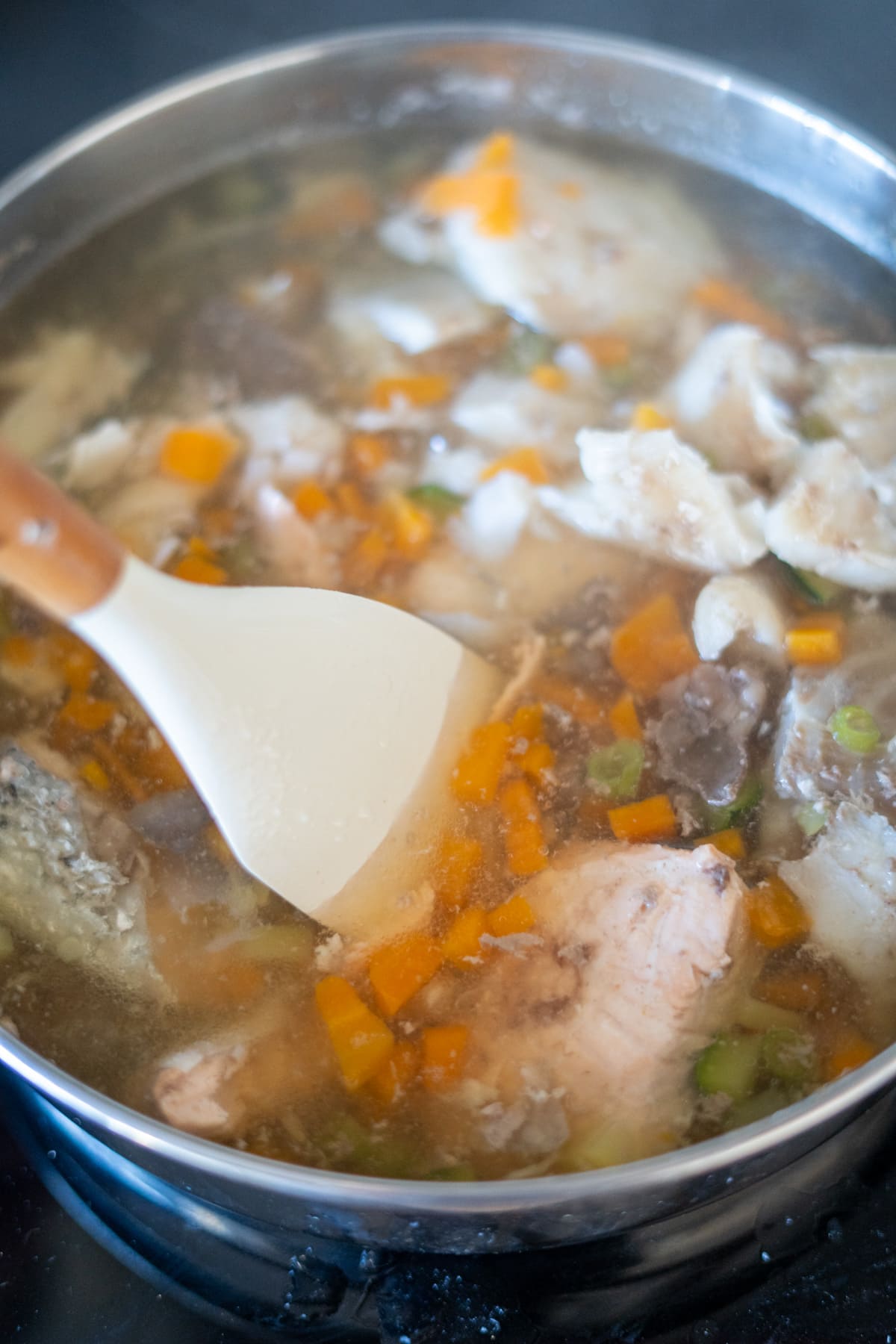
Break up the fish and check for bones.
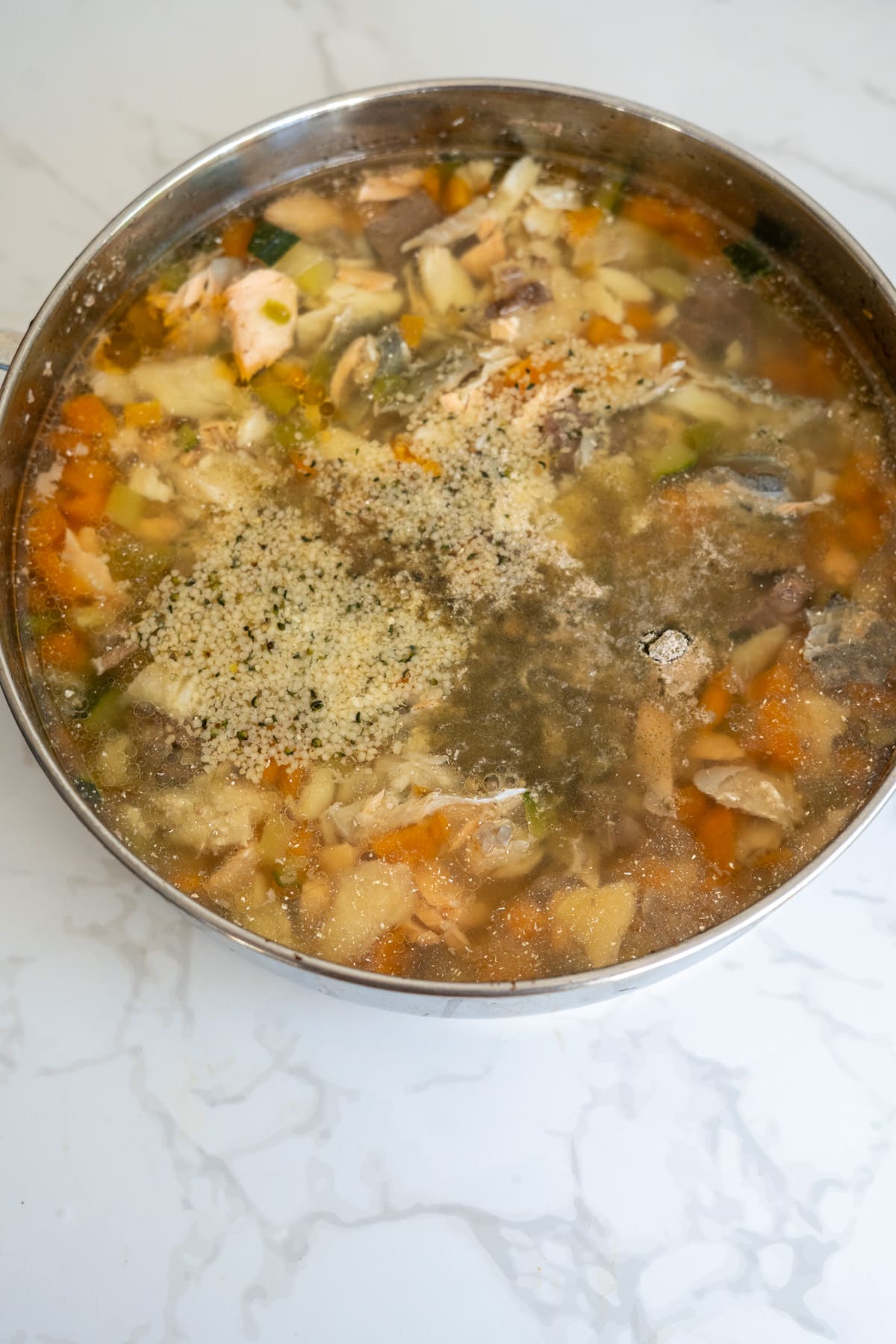
Cool, add the supplements and serve.
Recipe Tips
- Check carefully for bones. Even if you’re using boneless fish fillets, run your fingers through the fish before cooking to make sure no small bones remain.
- Use a mixture of fish. Combining white fish with salmon gives this stew a balance of lean protein and healthy omega-3 fatty acids.
- Cut the vegetables into small pieces. Smaller pieces cook more evenly and are easier for dogs to digest.
- Add supplements after cooking. Eggshell powder, kelp powder, hemp hearts and vitamin E should be stirred in once the stew has cooled slightly.
- Adjust the consistency. Add a little extra water or broth if your dog prefers a soupier stew, or simmer for a little longer for a thicker texture.
- Skip the seasonings. Avoid adding salt, onion, garlic, stock cubes or any other seasonings that are commonly used in human fish stews.
Can I Use Different Fish?
Yes. You can vary the white fish depending on what’s available.
Good choices include:
- Cod
- Haddock
- Pollock
- Coley
- Hake
You can also adjust the proportion of salmon, but remember that increasing oily fish will increase the fat and calorie content of the finished food. Avoid smoked, salted, seasoned or breaded fish.
Can I Use Frozen Fish?
Absolutely. Frozen plain fish fillets are convenient for homemade dog food and can often be less expensive than fresh fish.
Check the ingredient label. Ideally, fish should be the only ingredient.
Thaw before cooking and carefully check for bones.
Storage Instructions
Refrigerator: Allow the fish stew to cool completely before transferring it to an airtight container. Store in the refrigerator for up to 3 days.
Freezer: Divide the stew into individual portions or freezer-safe containers before freezing. Store in the freezer for up to 3 months.
Thawing: Defrost frozen portions overnight in the refrigerator.
Reheating: Serve chilled, at room temperature, or gently warmed. If reheating, make sure the stew is only warmed through and never served hot.
Top tip: Freeze individual portions in silicone trays for quick and convenient meals. Once frozen, transfer the portions to a freezer bag or airtight container to save space.
How Much Fish Stew Should I Feed My Dog?
The total amount of this recipe may vary if you use more or less broth/water, but our recipe yielded approximately 2kg (4.5 lbs) which we have put down as 10 servings, with a serving being 200g each.
Because every dog has different energy requirements, use the feeding guide below as a general guide and adjust portions based on your dog’s age, activity level, body condition and overall diet. A
| Dog Weight | Daily Serving |
|---|---|
| 5kg (11 lbs) | 150–200g |
| 10kg (22 lbs) | 250–300g |
| 15kg (33 lbs) | 350–450g |
| 20kg (44 lbs) | 450–550g |
| 25kg (55 lbs) | 550–650g |
| 30kg (66 lbs) | 600–750g |
| 35kg (77 lbs) | 700–850g |
| 40kg (88 lbs) | 800–950g |
More Homemade Stew Recipes For Dogs
If you dog enjoys a tasty stew for dinner or even as a topper, here are a few more recipes to try:
FAQs
Plain homemade fish stew can be a good way to include fish in your dog’s diet. Fish provides high-quality protein, while oily fish such as salmon provides EPA and DHA omega-3 fatty acids. Avoid traditional human fish stews containing ingredients such as onion, garlic, salt, wine or heavy seasoning.
A combination of white and oily fish works particularly well. White fish such as cod, pollock and haddock provides lean protein, while salmon contributes more omega-3 fatty acids and calories.
Fish can form part of a dog’s regular diet, provided the entire diet is nutritionally complete and appropriately formulated. Feeding plain fish every day wouldn’t provide all the nutrients a dog requires.
Yes. Divide it into meal-sized portions and freeze for up to 2–3 months. Defrost overnight in the refrigerator before serving.
You can substitute plain canned salmon packed in water, preferably with no added salt.
Fish Stew for Dogs
Need Metric Measurements?
Use the button options below to toggle between US cups and Metric grams.
Ingredients
- 21 oz white fish we used cod
- 5 oz salmon fillets
- 2 oz beef heart finely chopped
- 1 oz beef liver finely chopped
- 3/4 oz beef kidney finely chopped
- 3.5 oz sweet potato, peeled and diced
- 1.5 oz carrots, peeled and diced
- 1 oz green beans, finely chopped
- 1 oz zucchini, finely chopped
- 32 floz water or dog friendly bone broth
- 1 1/2 teaspoon eggshell powder
- 1 tablespoon hemp hearts
- 1/4 teaspoon kelp powder
- 1 tablespoon salmon oil
Instructions
- Place the sweet potato, carrot and green beans in a large saucepan. Add approximately 3 to 4 cups of water.
- Bring to a gentle boil, reduce the heat and simmer for about 8–10 minutes.
- Cut the white fish, salmon, heart, liver and kidney into manageable pieces and add them to the pot.
- Cover and gently simmer for approximately 6–8 minutes, or until everything is completely cooked.
- The fish should flake easily with a fork.
- Use a wooden spoon to break the cooked fish into smaller pieces and mix them through the vegetables. Check for bones and remove.
- Add a little more water if you'd prefer a soupier fish stew.
- Remove the pan from the heat and allow the mixture to cool until it's warm rather than piping hot.
- Once cooled, thoroughly stir in the eggshell powder, hemp hearts, kelp and salmon oil if using.
- Divide the stew into portions before refrigerating or freezing.
Video
Notes
Nutrition
The information shown is an estimate provided by an online nutrition calculator.